
 admin
admin 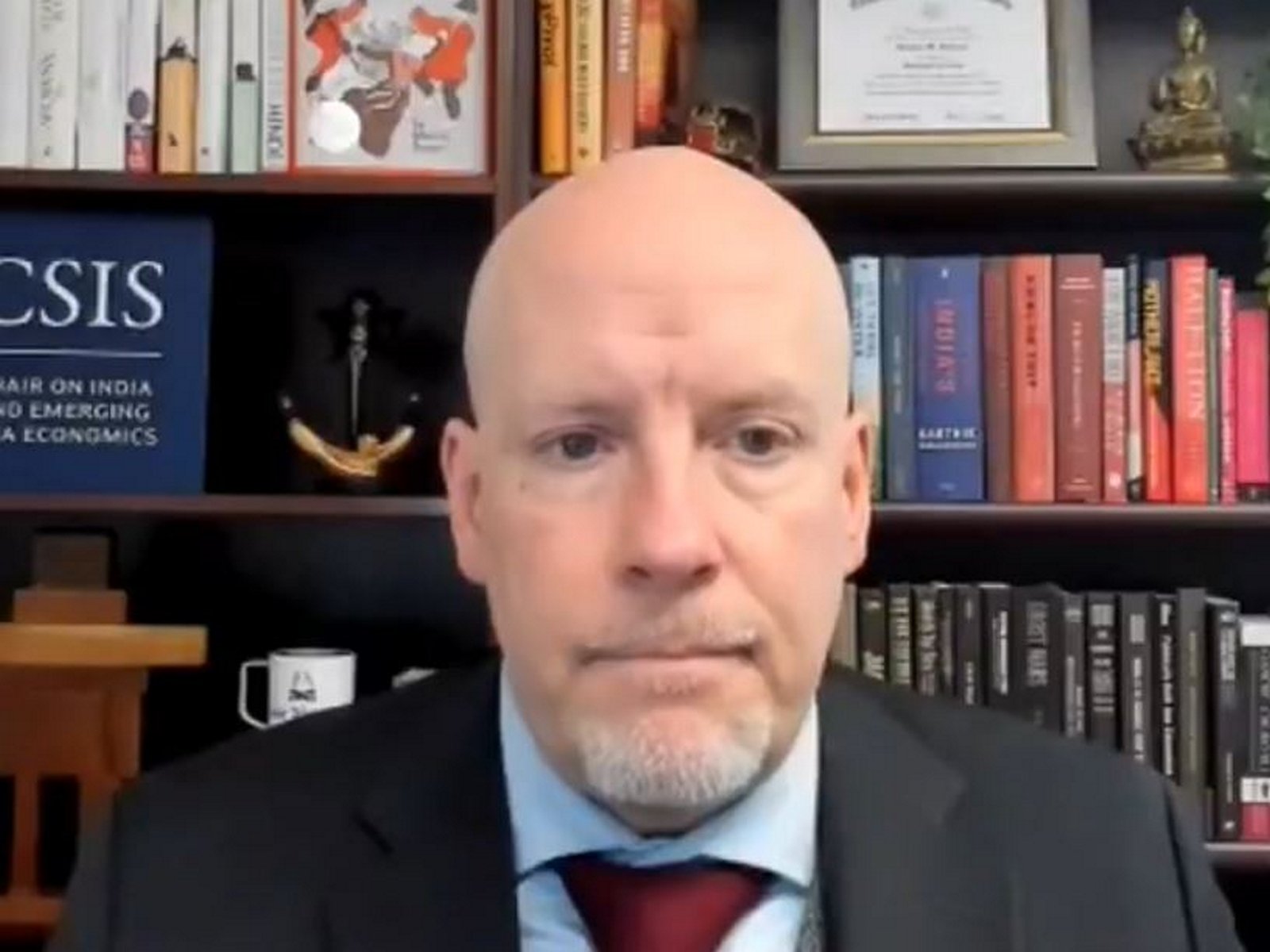
Washington DC | January 28 :
A senior expert from the Center for Strategic and International Studies (CSIS) has described the India-European Union Free Trade Agreement (FTA) as a “celebration”, highlighting a major shift in Prime Minister Narendra Modi’s trade policy.
Speaking to ANI, Richard Rossow, Senior Advisor at CSIS, said the deal reflects India’s move away from protectionism toward deeper global trade integration.
Shift From Protectionism to Openness
Rossow said Prime Minister Narendra Modi followed a protectionist approach during his first term starting in 2014.
That phase included higher customs duties and strict domestic manufacturing rules.
He noted that a clear shift began midway through Modi’s second term.
“PM Modi’s first term was pure-play protectionism. But during the second term, we saw a very different perspective on trade,” Rossow said.
According to him, policymakers started recognising the importance of integrating India into global supply and value chains.
Focus on Global Supply Chains
Rossow said Indian policymakers increasingly stressed the need for lower customs duties.
They also pushed for reduced trade barriers on raw materials and input goods.
He added that such steps strengthen India’s manufacturing sector and attract global investment.
Rossow said state governments also played a role by improving policies to attract multinational companies.
India-EU FTA Marks a Turning Point
The expert called the conclusion of the India-EU Free Trade Agreement in 2026 the defining moment of this shift.
He described it as the “mother of all deals” and a move away from inward-looking policies.
The agreement links the world’s second- and fourth-largest economies.
It creates a combined market of nearly 2 billion people.
The total market size is estimated at USD 24 trillion, offering massive opportunities for trade and innovation.
Balancing Liberalisation and Protection
Rossow said India is now focusing on partnerships with developed economies.
He noted that labour-intensive industries remain one of India’s biggest strengths.
At the same time, India continues to protect sensitive sectors like agriculture.
“India is opening up, but it is also being careful about protecting basic agriculture,” he said.
He also praised India for rolling back some restrictive import standards and review mechanisms.
Deeper Trade Commitments in Recent Deals
Rossow said earlier trade negotiations showed India’s hesitation toward deep market access commitments.
However, recent agreements include firmer and more advanced provisions.
He said the positive optics around the India-EU FTA reflect the strength of its substance.
“What a celebration. A quarter of the world’s population is coming together under one major trade agreement,” Rossow added.
India Expands Global Trade Partnerships
In recent years, India has signed several major trade agreements.
These include:
- India-EFTA Trade and Economic Partnership Agreement (TEPA) with Iceland, Liechtenstein, Norway, and Switzerland
- India-UK Free Trade Agreement, signed in July 2025
- India-Australia Economic Cooperation and Trade Agreement (ECTA)
Under ECTA, over 85% of Australian exports to India are tariff-free.
By January 2026, this will rise to 90%.
Nearly 96% of Indian exports to Australia are already tariff-free and will reach 100% by 2026.
About The Author