
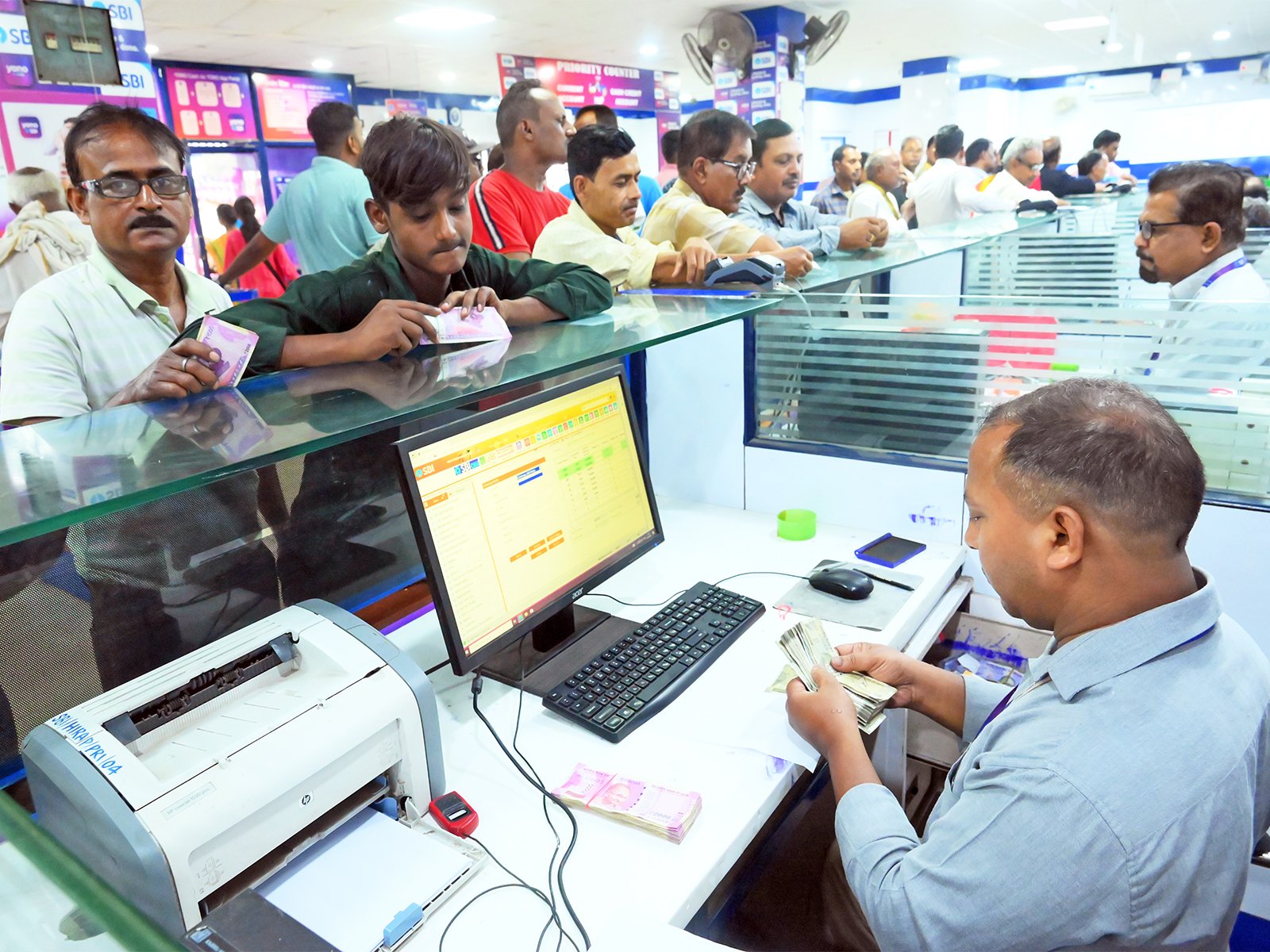
The Indian banks NIM pressure situation may be showing early signs of improvement as banks move towards lower-cost funding sources, according to a report by Kotak Institutional Equities. The brokerage expects net interest margins (NIMs) to stabilise or improve slightly in the coming quarters as banks replace expensive wholesale deposits with retail and FCNR deposits.
The recent trend indicates that funding costs could gradually decline, reducing the pressure on bank profitability. The report suggests that a better deposit mix and stable asset quality may support the financial performance of Indian lenders.
The Indian banks NIM pressure issue has remained a key concern for the banking sector as higher funding costs affected margins despite strong credit growth.
5 Key Updates on Indian Banks NIM Pressure and Margin Outlook
1. Lower-Cost Funding May Support Bank Margins
Kotak Institutional Equities expects banks to improve their funding structure by increasing their dependence on lower-cost sources.
The shift from expensive wholesale deposits towards retail deposits and FCNR deposits could help reduce funding expenses and ease the Indian banks NIM pressure.
A healthier deposit mix is expected to provide support to banks as they manage profitability challenges in the upcoming quarters.
2. Bank Earnings Show Strong Performance in FY27 First Quarter
The positive outlook comes after banks covered by Kotak reported a 14 per cent year-on-year increase in earnings during the first quarter of FY27.
Net interest income grew by 11 per cent, supported by strong loan expansion, while provisions declined by 32 per cent compared to the previous year.
These results indicate that despite the ongoing Indian banks NIM pressure, lenders have maintained strong operational performance.
3. Credit Growth Remains Strong but May Slow Ahead
According to Kotak, loan growth among banks under its coverage increased by around 200 basis points sequentially to 17 per cent during the quarter.
Both public sector banks and private banks recorded 17 per cent year-on-year loan growth, while small finance banks reported stronger growth between 25-30 per cent.
However, the brokerage expects credit growth to moderate as corporate borrowing returns to more normal levels after recent high demand.
Retail Credit Growth Supports Banking Sector
Retail lending continued to show strength, with credit growth reaching 16 per cent in June 2026.
Several retail loan categories performed well:
- Gold loans increased by around 100 per cent year-on-year
- Housing loans grew strongly
- Education and vehicle loans recorded growth between 11-19 per cent
Strong retail demand has helped banks maintain loan expansion despite challenges related to the Indian banks NIM pressure.
Corporate Loan Growth May Normalise
Corporate credit growth increased to 20 per cent during the quarter. However, Kotak noted that some of this growth was influenced by temporary factors.
Companies increased borrowing to maintain financial buffers, secure inventory, and avoid disruptions to capital expenditure plans amid geopolitical uncertainties.
The brokerage expects corporate loan demand to gradually return to sustainable levels, which may moderate overall credit growth in the banking sector.
Public Sector Banks Perform Better on Margins
Public sector banks performed better compared to private lenders during the quarter, with margins remaining largely stable.
Most private banks experienced greater pressure on net interest margins due to higher funding costs.
Regional banks also delivered strong results, supported by healthy loan growth and stable margins.
The difference in performance highlights how funding strategies and deposit management are playing an important role in addressing the Indian banks NIM pressure challenge.
Asset Quality Remains Positive for Indian Banks
Apart from margin concerns, asset quality remained supportive across banks.
According to Kotak, gross and net non-performing loan (NPL) ratios improved sequentially to 1.7 per cent and 0.4 per cent respectively.
Retail, SME, and corporate asset quality remained stable, while fresh loan defaults continued to stay under control.
Improving asset quality provides additional confidence for banks dealing with profitability challenges.
Future Outlook for Indian Banking Sector
Kotak Institutional Equities expects the Indian banks NIM pressure to gradually ease as funding costs decline and deposit structures improve.
The brokerage maintained a positive outlook on asset quality and credit costs in the near term.
It also showed preference for leading private banks and State Bank of India among public sector lenders.
The banking sector is expected to focus on balancing credit growth, deposit mobilisation, and profitability improvement as market conditions evolve.
Leave a Reply