

 admin
admin 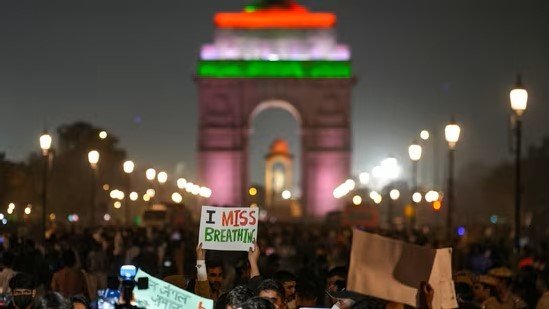
Delhi’s air quality improved a little on Monday morning after touching a season-high AQI of 391 the day before. Yet, the air stayed toxic and unsafe to breathe.
Residents woke up to dense smog and a morning temperature of 11.6°C. The Central Pollution Control Board (CPCB) recorded the city’s average AQI at 346, indicating the “very poor” range.
Pollution Levels Across the Capital
Monitoring stations across Delhi reported pollution in the “very poor” to “severe” range.
According to CPCB’s Sameer app (6 am data):
- Bawana: AQI 412
- Wazirpur: AQI 397
- Jahangirpuri: AQI 394
- Nehru Nagar: AQI 386
Experts say the slight relief came from stronger winds and less stubble burning. On Sunday, over half of Delhi’s 39 monitoring stations had slipped into the “severe” category.
Delhi’s Air Quality in NCR: Noida and Ghaziabad Remain Polluted
In the National Capital Region (NCR), air pollution levels were only marginally better.
- Noida: AQI 335
- Ghaziabad: AQI 302
- Greater Noida: AQI 314
All three cities fell under the “very poor” category. Experts warn that such levels can trigger breathing problems and eye irritation, especially in vulnerable groups.
Delhi’s Air Quality Management: GRAP Stage 3 on Hold
The Commission for Air Quality Management (CAQM) reviewed the situation on Sunday evening. Since the average AQI remained high but below the “severe” mark, GRAP Stage 3 restrictions were not implemented.
If activated, GRAP Stage 3 would:
- Ban non-essential construction activities
- Shift schools (up to grade V) to online mode
- Restrict BS-III petrol and BS-IV diesel vehicles in Delhi and NCR (with exemptions for disabled persons)
Public Protest Over Delhi’s Air Quality Crisis
Frustrated residents took to the streets to demand action. Delhi Police detained several protesters at India Gate on Sunday. Students and professionals carried placards reading “Clean Air for Children” and “Stop the Air Emergency.”
Protesters accused the government of showing “a lack of political will” to tackle worsening pollution levels. Their message was clear: Delhi’s air quality needs urgent, long-term solutions.
Forecast: Delhi’s Air Quality to Stay ‘Very Poor’
The Air Quality Early Warning System predicts that Delhi’s air quality will remain in the “very poor” category over the next few days. Unless wind speed increases or emissions fall significantly, pollution levels are unlikely to drop further.
Conclusion
Despite a slight improvement, Delhi’s air quality continues to threaten public health. Authorities must focus on enforcing anti-pollution rules, promoting cleaner transport, and reducing stubble burning to ensure cleaner air for the capital.
About The Author