
 admin
admin 
New Delhi, April 7, 2026:
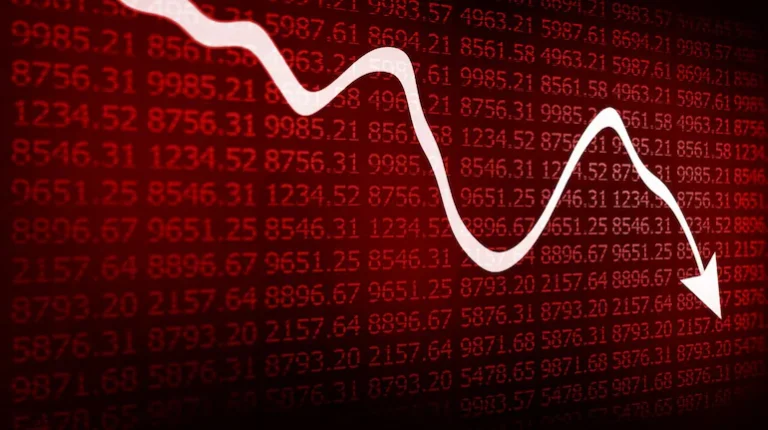
Indian stock markets opened on a negative note on Tuesday, with benchmark indices BSE Sensex and NSE Nifty 50 witnessing sharp declines in early trade, tracking global uncertainty and rising crude oil prices.
Market Opens Lower
At around 9:16 AM:
- Sensex fell by 735.65 points (0.99%) to 73,371.20
- Nifty 50 dropped by 226.95 points (0.99%) to 22,741.30
The decline reflects cautious investor sentiment amid global developments.
Brent Crude Surge Impacts Markets
The fall in equities comes as Brent Crude prices surged to USD 111.43, rising by 1.51%.
📌 Key Concerns:
- Rising oil prices may increase inflation pressure
- Higher import bills for India
- Reduced investor risk appetite
Geopolitical Tensions Weigh on Sentiment
Market sentiment has been affected by escalating tensions involving Donald Trump and Iran, particularly around the strategic Strait of Hormuz.
The situation has created uncertainty across global markets, impacting investor confidence.
Expert Views on Market Trend
Market expert Ajay Bagga noted that continued foreign institutional investor (FII) selling is adding pressure on Indian markets.
Meanwhile, Shrikant Chouhan from Kotak Securities highlighted key technical levels:
Support Levels:
- Nifty: 22,500
- Sensex: 72,700
Resistance Levels:
- Nifty: 23,200 – 23,300
- Sensex: 74,500 – 75,000
He suggested buying on dips and selling on rallies as a strategy for traders.
Global Market Influence
Despite the weak opening in India, US markets showed strength:
- S&P 500 and Nasdaq extended gains
- Dow Jones closed in positive territory
However, domestic factors and oil price concerns outweighed global optimism.
Why This Matters
- Impacts stock market investors and traders
- Reflects global geopolitical risks
- Signals potential inflationary pressure
- Influences economic outlook and policy decisions
The Indian stock market’s weak opening highlights the sensitivity of global cues and energy prices on domestic equities. With geopolitical tensions and crude oil prices in focus, market volatility is likely to persist in the near term.
About The Author