
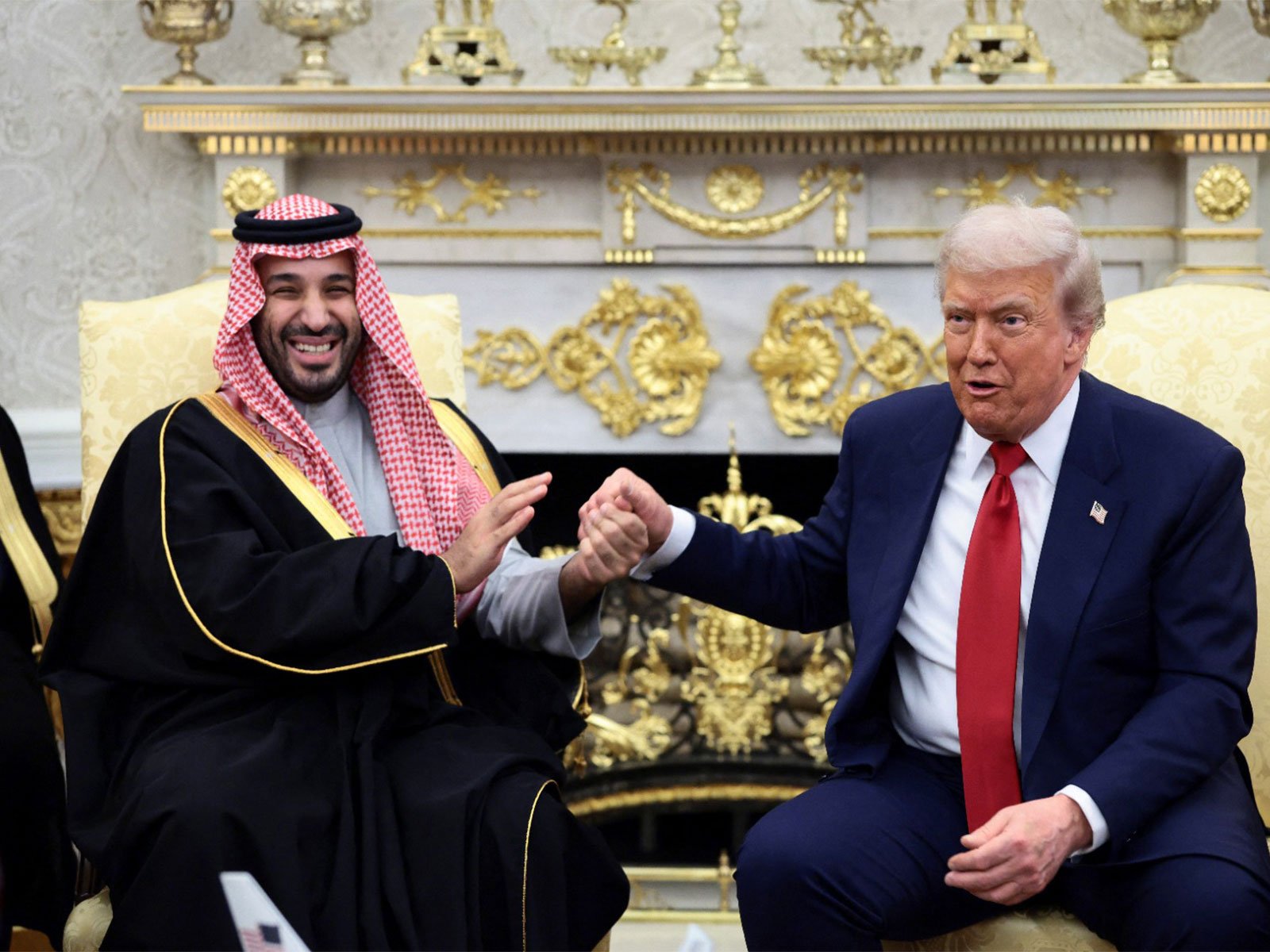
Trump Pauses Hormuz Naval Escorts Amid Rising Gulf Crisis
Washington DC [US], May 7: In a major geopolitical development that could significantly impact global maritime trade and Middle East diplomacy, Trump pauses Hormuz naval escorts after Saudi Arabia reportedly refused to allow American military aircraft to use its airspace and military facilities for the planned naval mission in the Strait of Hormuz.
The decision has triggered widespread international attention because the Strait of Hormuz is one of the most strategically important waterways in the world. The route is responsible for transporting a large percentage of global oil exports, making stability in the region critical for the global economy.
According to reports by NBC News, US President Donald Trump temporarily halted “Project Freedom,” a US-led operation intended to escort commercial vessels safely through the Strait of Hormuz amid rising tensions involving Iran.
The latest reports indicate that Saudi Arabia’s refusal to cooperate militarily became a major reason why Trump pauses Hormuz naval escorts despite growing security concerns in Gulf waters.
What Is Project Freedom?
“Project Freedom” was announced by Trump as a temporary maritime security initiative aimed at protecting commercial ships operating in the Gulf region. The project was designed to ensure the safe passage of oil tankers and cargo vessels through the Strait of Hormuz after increasing fears of naval blockades, attacks on shipping routes, and escalating military tensions between the United States and Iran, Trump pauses Hormuz naval escorts.
The operation reportedly included plans for American naval escorts supported by military aircraft operating from Gulf bases. However, reports suggest that Saudi Arabia denied the United States permission to use Prince Sultan Airbase southeast of Riyadh and also restricted access to Saudi airspace for aircraft connected to the mission.
Because of this refusal, Trump pauses Hormuz naval escorts while Washington reviews diplomatic and military alternatives.
Saudi Arabia’s Position on the Operation
Reports suggest that Saudi Arabia and several Gulf nations were surprised by the sudden public announcement of the naval operation. According to NBC News, Trump personally contacted Saudi Crown Prince Mohammed bin Salman in an effort to gain support for the mission.
However, the discussions reportedly failed to produce an agreement.
A Saudi source quoted in the report said that developments in the region are happening “quickly in real time,” indicating that Gulf nations may not have had enough time to fully evaluate the operation before it was publicly announced.
The refusal is being viewed by analysts as a sign that Saudi Arabia may currently prefer diplomatic de-escalation over direct military involvement in any confrontation linked to Iran.
Despite refusing operational support, Saudi officials reportedly expressed support for diplomatic efforts led by Pakistan to mediate between Washington and Tehran.
Pakistan Emerges as a Key Diplomatic Mediator
One of the most important aspects of the crisis is Pakistan’s emerging role in regional diplomacy. Reports suggest that Pakistan has been actively engaging with both the United States and Iran to help reduce tensions and encourage negotiations.
Trump himself stated on Truth Social that the temporary suspension of “Project Freedom” came after requests from Pakistan and other countries seeking a peaceful solution.
The US President also claimed that recent military developments and ongoing diplomatic discussions with Iranian representatives created an opportunity for a possible agreement.
As a result, Trump pauses Hormuz naval escorts to allow additional time for diplomatic negotiations that could potentially reduce military tensions in the Gulf region.
Pakistan’s mediation efforts are being closely watched internationally because successful negotiations could help avoid a broader regional conflict that may impact oil prices, shipping routes, and international markets.
Iran Responds With Maritime Support Announcement
Shortly after reports confirmed that Trump pauses Hormuz naval escorts, Iran’s Ports and Maritime Organisation issued a statement announcing that it is fully prepared to provide maritime assistance and technical support services to commercial vessels operating near Iranian waters and the Strait of Hormuz.
According to Iran’s state-run IRNA news agency, the organisation informed ship commanders that Iran can provide:
- Fuel supply services
- Medical assistance
- Technical and repair support
- Health services for crew members
- Maritime guidance and communication support
Iranian authorities said the initiative demonstrates Tehran’s commitment to ensuring safe maritime traffic in one of the world’s most critical shipping lanes.
The organisation further stated that all vessels navigating near Iranian territorial waters can contact nearby Vessel Traffic Service centres using regional communication channels, including VHF channel 16.
The announcement is significant because it signals Iran’s attempt to present itself as a stabilizing maritime authority despite ongoing tensions with the United States.
Strategic Importance of the Strait of Hormuz
The Strait of Hormuz remains one of the world’s most strategically sensitive waterways. Nearly one-fifth of the world’s oil supply passes through the narrow channel connecting the Persian Gulf to international waters on Trump pauses Hormuz naval escorts.
Countries including Saudi Arabia, the United Arab Emirates, Kuwait, Iraq, and Qatar rely heavily on the route for energy exports.
Any disruption in the region can immediately affect:
- Global oil prices
- International shipping costs
- Energy security
- Global financial markets
- Trade supply chains
Because of these risks, the decision that Trump pauses Hormuz naval escorts is being closely monitored by governments, investors, shipping companies, and global energy markets.
Regional Allies Reportedly Divided
A White House official reportedly claimed that regional allies had been informed in advance about the operation. However, another West Asian diplomat told NBC News that the United States coordinated with Oman only after Trump publicly announced the initiative.
The diplomat reportedly stated, “The US made an announcement and then coordinated with us.”
This has raised questions regarding the level of coordination between Washington and its regional allies before launching the initiative.
Analysts believe that Gulf countries may be cautious about becoming directly involved in any operation that could increase military tensions with Iran.
This caution may explain why Trump pauses Hormuz naval escorts despite the United States emphasizing maritime security concerns.
Global Impact of the Decision
The suspension of the operation may temporarily reduce the immediate risk of military confrontation in the Gulf region. However, experts warn that uncertainty surrounding the Strait of Hormuz continues to remain high due to Trump pauses Hormuz naval escorts .
Shipping companies and oil markets are expected to closely monitor future developments, especially any signs of renewed negotiations or military activity.
If diplomatic talks between Washington and Tehran succeed, tensions in the region could decrease significantly. However, if negotiations fail, the United States may reconsider military escort operations in the future.
For now, the international community remains focused on whether diplomacy can succeed before the Gulf crisis escalates further.
As the situation develops, Trump pauses Hormuz naval escorts remains one of the most important geopolitical developments affecting global trade, energy security, and Middle East stability.
Leave a Reply