
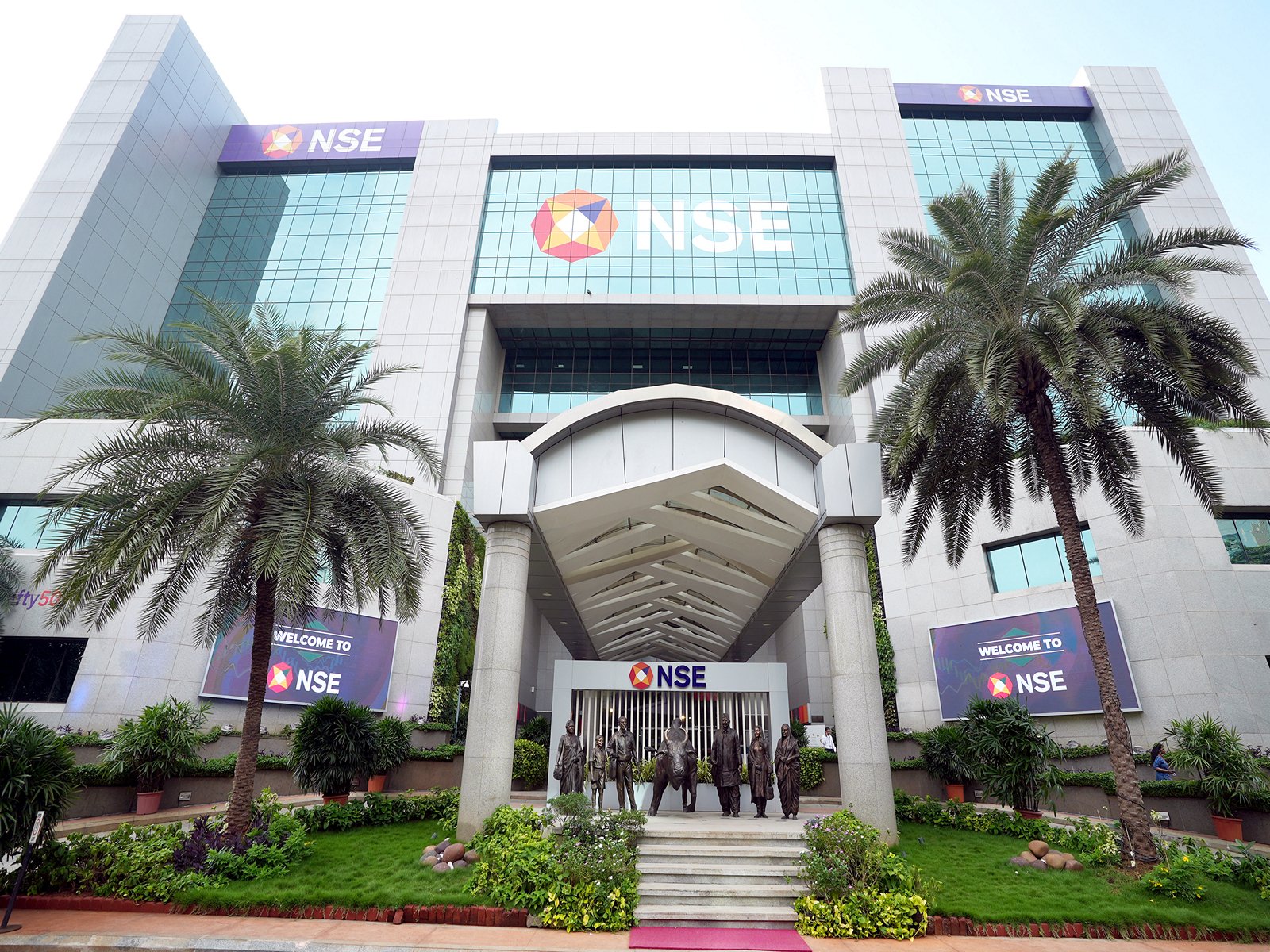
Sensex drops dominated market headlines on Friday as India’s benchmark equity indices ended the trading session in negative territory. The Sensex drops by 455.59 points while the Nifty 50 also closed lower due to broad-based profit booking, weakness in private banking stocks, and cautious investor sentiment driven by global uncertainties.
The decline in the Indian stock market reflects investor caution amid rising crude oil prices, mixed global market trends, and concerns over geopolitical developments in the Middle East. Despite strong quarterly earnings from several companies, the Sensex drops highlighted the pressure on heavyweight financial and banking stocks.
Sensex Drops 455 Points as Banking Stocks Drag Markets Lower
The Sensex drops 455.59 points, or 0.58%, to settle at 78,499.17, while the NSE Nifty 50 declined 65.35 points, or 0.27%, to close at 24,570.65.
Private banks and financial stocks witnessed significant selling pressure throughout the trading session. Investors booked profits after recent market gains, leading to weakness in benchmark indices.
Market experts believe the Sensex drops mainly because traders preferred to lock in profits after the market’s recent rally rather than because of any major deterioration in economic fundamentals.
Profit Booking Triggers Sensex Drops
According to market analysts, profit booking remained the primary reason behind the Sensex drops during Friday’s session.
After several sessions of gains, investors chose to reduce exposure to high-valued stocks, particularly in banking and financial services.
Analysts noted that such corrections are healthy for long-term market stability and help markets consolidate before the next upward move.
Despite the correction, experts maintain that the broader trend remains positive as long as key technical support levels remain intact.
Geopolitical Concerns Add Pressure
Another major factor contributing to the Sensex drops was uncertainty surrounding geopolitical tensions in the Middle East.
According to market experts, the absence of a clear geopolitical resolution has kept crude oil prices volatile. Since India imports a significant portion of its crude oil requirements, higher oil prices often impact investor confidence by increasing inflation risks.
Volatile global commodity prices continue to influence market sentiment, prompting investors to adopt a cautious approach.
Gold Rises While Sensex Drops
While the Sensex drops, gold prices continued to strengthen as investors shifted toward safe-haven assets.
Gold gained more than 1.6% during the session as the US dollar weakened and investors awaited the latest US non-farm payroll data for clues regarding future interest rate decisions by the US Federal Reserve.
The rise in gold prices indicates that investors are becoming more defensive amid uncertainty in global financial markets.
Strong Corporate Earnings Provide Support
Although the Sensex drops, India’s corporate earnings season has provided encouraging signs for investors.
Several major companies reported earnings that met or exceeded market expectations, supporting confidence in selective sectors.
State Bank of India (SBI) remained one of the standout performers. Healthy credit growth, improving asset quality, and stable margins reinforced investor confidence in the banking sector despite weakness in several private banks.
Market experts believe strong earnings could help limit further downside in benchmark indices over the coming weeks.
Global Markets Show Mixed Performance
The Sensex drops also reflected mixed global market sentiment.
Across Asia, several major indices traded lower:
- Nikkei 225 declined.
- KOSPI ended in negative territory.
- Taiwan Weighted Index slipped.
- GIFT Nifty also traded lower.
However, some Asian markets performed positively:
- Hang Seng Index gained.
- Shanghai Composite Index moved higher.
- Straits Times Index registered solid gains.
US futures also presented a mixed picture, suggesting investors remain cautious ahead of important economic data releases.
Analysts Remain Optimistic Despite Sensex Drops
Market experts believe the recent Sensex drops should be viewed as a healthy market correction rather than the beginning of a prolonged decline.
According to analysts, profit booking after a sustained rally is common and allows markets to stabilize before resuming their upward trend.
They emphasize that India’s economic fundamentals remain strong, supported by:
- Healthy corporate earnings
- Stable domestic demand
- Strong banking sector performance
- Continued government infrastructure spending
- Positive long-term growth outlook
As long as major support levels remain intact, analysts expect the Indian stock market to maintain its long-term bullish trend.
Crude Oil and Gold Update
Commodity markets also remained in focus during the trading session.
Brent Crude traded around USD 81.99 per barrel, while WTI crude remained near USD 77.07 per barrel.
Meanwhile, gold prices surged to approximately USD 4,308, benefiting from increased safe-haven demand.
Higher crude prices remain a concern for Indian markets because they can increase import costs and inflation, while stronger gold prices often indicate cautious investor sentiment.
What Investors Should Watch Next
Following the Sensex drops, investors will closely monitor several key factors in the coming days:
- US non-farm payroll data
- Federal Reserve policy expectations
- Crude oil price movements
- Corporate earnings announcements
- Foreign Institutional Investor (FII) activity
- Global geopolitical developments
These factors are expected to determine the near-term direction of Indian equity markets.
Leave a Reply