
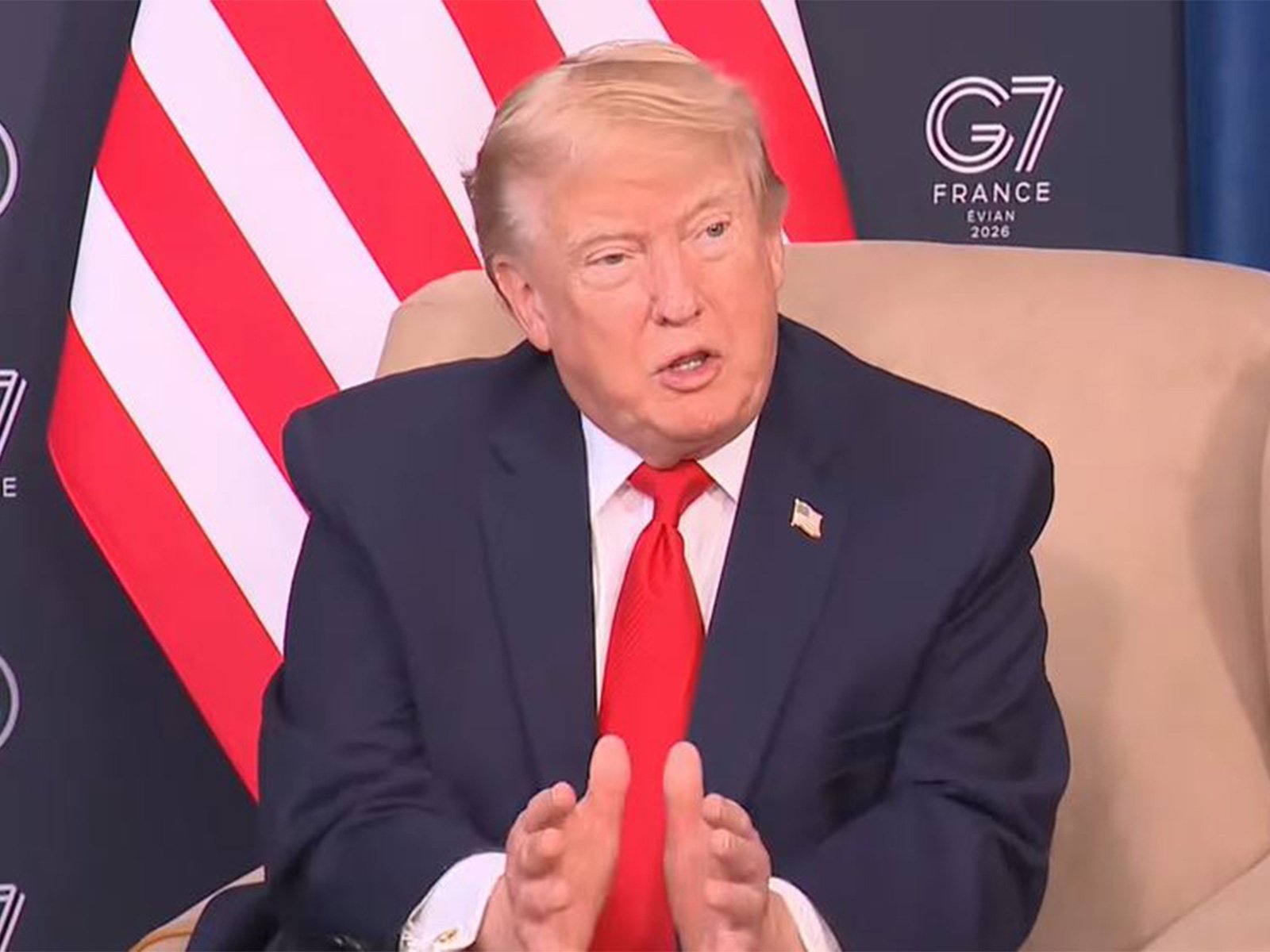
Evian, France, June 16: US President Donald Trump expressed confidence about the future of the ongoing Iran Talks, stating that the second phase of negotiations with Tehran would be easier than the first. Speaking during a bilateral meeting with Qatar’s Emir Sheikh Tamim bin Hamad Al Thani on the sidelines of the G7 Summit in Evian, France, Trump also firmly denied reports suggesting that the United States would provide financial assistance to Iran as part of the agreement.
The latest developments in the Iran Talks come after a reported peace agreement aimed at ending hostilities in West Asia and reopening diplomatic channels between Washington and Tehran. The negotiations have attracted global attention due to their potential impact on regional security, oil markets, and international relations.
Trump Optimistic About Iran Talks
Addressing reporters, Trump said that the initial phase of the Iran Talks had already resulted in a successful agreement and expressed optimism regarding the next stage of discussions.
“We have our deal done with Iran, and it should be successful. It goes to a second stage, which I think will be actually easier,” Trump stated.
The US President described the outcome of the first phase of the Iran Talks as a fair and balanced agreement that could contribute to long-term stability in the Middle East.
According to Trump, the progress achieved so far demonstrates that diplomacy remains an effective tool for resolving complex international disputes. He emphasized that continued cooperation between regional stakeholders would be essential for ensuring the success of the Iran Talks.
Military Actions and Diplomatic Efforts
During his remarks, Trump also referred to recent military actions involving Iran. He acknowledged that his administration had preferred to avoid military intervention but argued that circumstances had left limited alternatives.
“I didn’t want to attack them last week, but we had no choice, and we did it twice, actually. We’re doing it a third time, and we’re able to not have to do that, but we have a deal that’s a fair deal. It’s a good deal,” Trump said.
His comments underscored the delicate balance between diplomacy and security considerations that have shaped the ongoing Iran Talks. Analysts believe that reducing tensions through negotiation remains a critical objective for all parties involved.
Trump Rejects Funding Rumours
A major point of discussion surrounding the Iran Talks has been speculation regarding financial assistance from the United States to Iran. Trump categorically rejected these reports and described them as inaccurate.
“We are not investing any money in Iran, by the way, that rumour got out there yesterday; it was ridiculous,” Trump said.
He further clarified that the United States has no obligation to provide direct funding to Tehran under the current framework of the Iran Talks.
“We are not investing any money. We have no obligation to invest any money in Iran,” he added.
The statement was aimed at addressing concerns among policymakers and observers who questioned whether economic incentives would form part of the broader agreement.
Focus of the Next Phase of Iran Talks
According to reports, the next phase of the Iran Talks is expected to focus on several technical and strategic issues. These include Iran’s nuclear programme, economic relief measures, regional security arrangements, and mechanisms related to maritime trade.
One of the key topics under discussion is the reopening of the Strait of Hormuz, a vital shipping route for global energy supplies. The successful resolution of these issues could significantly strengthen the outcome of the Iran Talks and contribute to stability in international oil markets.
Experts believe that technical negotiations often require detailed discussions and verification measures, making the second phase of the Iran Talks particularly important.
Proposed Reconstruction Fund
Reports have also suggested the possibility of a USD 300 billion reconstruction fund linked to the broader regional agreement. However, officials indicate that this fund would primarily be financed by Gulf countries rather than the United States.
The proposed fund has become an important aspect of discussions surrounding the Iran Talks, as it could support infrastructure development and economic recovery initiatives across the region.
While the exact structure of the fund remains under consideration, policymakers view it as a potential tool for encouraging long-term cooperation and economic growth.
JD Vance on Economic Assistance
US Vice President JD Vance recently addressed questions regarding economic support linked to the Iran Talks. During an interview, Vance stated that Iran could potentially access reconstruction-related benefits if it fulfills the obligations outlined in the agreement.
At the same time, he rejected claims that the deal would result in the release of USD 24 billion in frozen Iranian assets.
Vance emphasized that while the United States remains open to various options within the framework of the Iran Talks, any economic relief would depend on compliance with agreed conditions.
His remarks highlighted the cautious approach being adopted by Washington as negotiations move forward.
Strait of Hormuz and Regional Stability
A significant objective of the ongoing Iran Talks is the reopening and stabilization of the Strait of Hormuz. This strategic waterway plays a crucial role in global energy transportation, with a substantial percentage of the world’s oil shipments passing through the region.
Trump recently stated that the agreement would allow oil to flow freely once again, benefiting both regional economies and global markets.
Observers believe that securing uninterrupted access to the Strait of Hormuz could become one of the most important achievements of the current Iran Talks.
Global Reactions to Iran Talks
The international community continues to closely monitor developments in the Iran Talks. Governments, energy companies, and financial markets are assessing the potential implications of the agreement on geopolitical stability and economic growth.
Supporters argue that successful Iran Talks could reduce tensions across West Asia, encourage diplomatic cooperation, and strengthen regional security. Critics, however, remain cautious and stress the importance of transparent implementation and strict compliance mechanisms.
Regardless of differing viewpoints, there is broad recognition that the outcome of the Iran Talks could have far-reaching consequences for global politics and trade.
President Donald Trump’s latest remarks signal confidence in the future of the Iran Talks as negotiations move into their next phase. While rejecting reports of US financial assistance to Tehran, Trump emphasized that the agreement already reached represents a fair and constructive step toward regional peace.
With discussions expected to focus on nuclear issues, economic relief, maritime security, and the reopening of the Strait of Hormuz, the coming weeks will be critical for the success of the Iran Talks. As world leaders continue to watch developments closely, the negotiations have the potential to reshape the political and economic landscape of West Asia while contributing to broader international stability.
Leave a Reply