
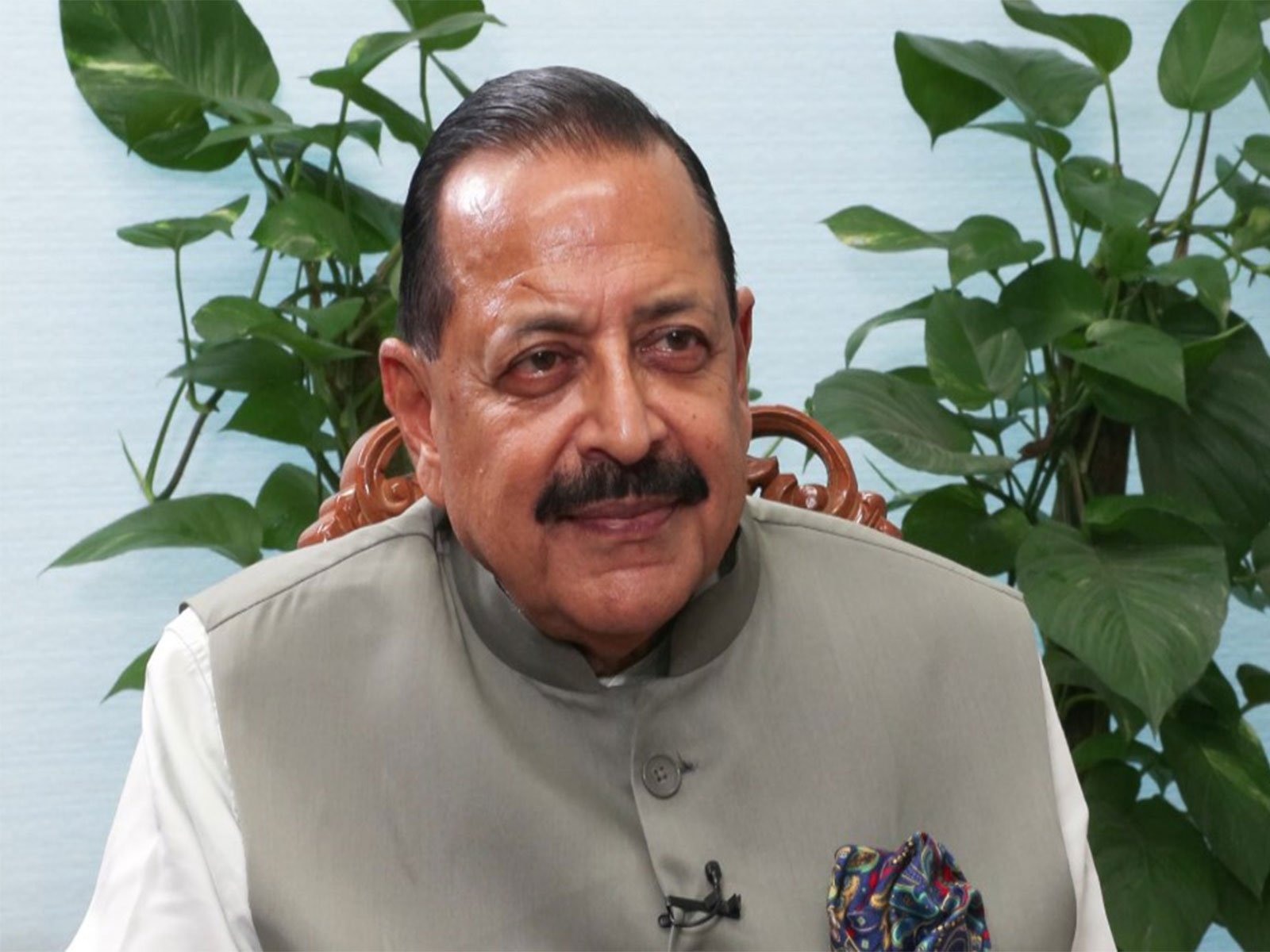
New Delhi, June 20: Union Minister for Science and Technology Jitendra Singh has praised the Narendra Modi-led government’s initiatives in the fields of space exploration, nuclear energy, and scientific innovation, calling the government’s tenure a “hit” while highlighting India’s remarkable achievements in research and technology over the last decade.
Jitendra Singh Space and Nuclear Energy Reforms Speaking in an interview with ANI, Singh said that despite occasional setbacks, the government’s long-term vision has consistently delivered bigger successes. Referring to India’s landmark achievements in space exploration, he said that the country’s scientific progress demonstrates resilience and determination.
Jitendra Singh Says Government’s Tenure Has Been a Hit
Responding to questions about whether the government’s performance has seen more “hits or misses,” Jitendra Singh confidently stated that the administration’s journey has been overwhelmingly successful.
According to the minister, temporary setbacks are a natural part of scientific progress, but India’s ability to recover and achieve greater milestones proves the effectiveness of its policy framework.
He remarked that every challenge has eventually paved the way for larger achievements, particularly in sectors such as space technology, nuclear research, and innovation.
Chandrayaan Success Highlights India’s Scientific Growth
Jitendra Singh Space and Nuclear Energy Reforms Highlighting India’s ambitious lunar missions, Singh pointed to the Chandrayaan programme as a perfect example of perseverance.
He recalled that while Chandrayaan-2 did not fully achieve its intended soft landing objectives, Indian scientists learned valuable lessons that ultimately led to the historic success of Chandrayaan-3.
India became the first country in the world to successfully land a spacecraft near the Moon’s South Pole, marking a historic moment in global space exploration.
The minister emphasized that India entered the space race much later than countries like the United States and Russia. Despite the delayed start, India has rapidly emerged as one of the world’s leading space powers due to consistent policy support and increased investment in scientific research.
The success of the Jitendra Singh Space and Nuclear Energy Reforms agenda, he said, is evident in the growing international recognition of India’s capabilities.
PM Modi’s Vision Driving Scientific Innovation Jitendra Singh Space and Nuclear Energy Reforms
Jitendra Singh credited Prime Minister Narendra Modi for promoting scientific thinking and encouraging innovation across multiple sectors.
He stated that the government’s focus has been on strengthening research institutions, supporting young scientists, and creating an ecosystem where innovation can thrive.
According to Singh, India is no longer just adopting global technologies but is increasingly developing indigenous solutions that are attracting worldwide attention.
He added that reforms introduced over the past several years have significantly improved collaboration between government agencies, private companies, startups, and research organizations.
Nuclear Energy Reforms Opening New Opportunities
A major highlight of Singh’s interview was the government’s push to liberalize India’s nuclear energy sector.
He explained that recent reforms are designed to increase private sector participation while maintaining strict national security and safety standards.
The minister noted that the opening up of the nuclear sector has already begun attracting substantial investments and is expected to accelerate India’s clean energy transition.
Under the Jitendra Singh Space and Nuclear Energy Reforms, foreign direct investment (FDI) in science, technology, and space-related industries has also increased due to regulatory relaxations introduced by the government.
He said these reforms are helping position India as an attractive destination for global technology partnerships.
SHANTI Bill to Strengthen India’s Nuclear Sector
Singh also highlighted the recently passed Sustainable Harnessing and Advancement of Nuclear Energy for Transforming India (SHANTI) Bill, calling it a landmark legislation.
The SHANTI Bill aims to promote the peaceful development and expansion of nuclear energy while allowing participation by joint ventures and private enterprises under comprehensive regulatory oversight.
The legislation covers nuclear power generation, healthcare applications, food preservation, water management, agriculture, industrial development, environmental protection, scientific research, and innovation.
The government believes the Bill will strengthen India’s energy security while ensuring safe and secure utilization of nuclear technologies.
Experts believe the Jitendra Singh Space and Nuclear Energy Reforms introduced through the SHANTI Bill could significantly boost India’s long-term economic growth.
Nuclear Energy to Play Major Role by 2047 Jitendra Singh Space and Nuclear Energy Reforms
Jitendra Singh Space and Nuclear Energy Reforms Speaking about India’s future energy roadmap, Singh said the government is working aggressively to reduce dependence on imported energy sources.
He projected that by 2047, nuclear power could contribute nearly 15 percent of India’s total electricity generation.
At the same time, renewable energy sources such as solar, wind, and hydroelectric power are expected to account for nearly 75 percent of the country’s energy production.
The minister also mentioned ongoing research into ocean energy as another promising source of clean electricity for future generations.
These projections, he said, align with India’s long-term commitment to sustainable development and climate responsibility.
Research and Development Spending Has Doubled
Addressing concerns regarding India’s investment in research and development (R&D), Jitendra Singh Space and Nuclear Energy Reforms Singh said government spending has witnessed substantial growth since 2014.
According to him, India’s gross expenditure on research and development has nearly doubled over the past decade.
However, Jitendra Singh Space and Nuclear Energy Reforms he cautioned against making direct comparisons with countries such as the United States and China, where private corporations and philanthropic organizations contribute significantly to research funding.
India, he said, is steadily expanding private participation, and the reforms currently underway are expected to further increase investment in scientific innovation.
Gaganyaan Mission Progressing Rapidly Jitendra Singh Space and Nuclear Energy Reforms
The minister also shared updates on India’s ambitious human spaceflight programme, Gaganyaan.
He confirmed that preparations are progressing steadily and that the government aims to send at least one Indian astronaut into space next year under the mission.
The Gaganyaan programme represents another major milestone under the broader Jitendra Singh Space and Nuclear Energy Reforms, showcasing India’s growing capabilities in advanced space technologies.
The mission is expected to place India among a select group of nations capable of independently launching astronauts into space.
Comments on Jammu and Kashmir Development
Beyond science and technology, Singh spoke about the changing social landscape in Jammu and Kashmir.
He observed that students from smaller towns are demonstrating greater confidence and ambition, reflecting changing aspirations across the region.
According to him, development initiatives have encouraged greater educational participation and career opportunities for young people.
He also contrasted developmental progress in Jammu and Kashmir with Pakistan-occupied Kashmir, stating that visible improvements are evident on the Indian side.
Remarks on Political Organisations Jitendra Singh Space and Nuclear Energy Reforms
Commenting on political systems, Jitendra Singh said cadre-based political parties generally demonstrate greater organizational stability over time.
He argued that parties built around family leadership Jitendra Singh Space and Nuclear Energy Reforms often face challenges related to internal cohesion and long-term sustainability.
According to Singh, institutional strength and ideological commitment are essential for the continued growth of any political organization.
Conclusion
The Jitendra Singh Space and Nuclear Energy Reforms reflect the government’s broader strategy of strengthening India’s scientific ecosystem, expanding clean energy capacity, encouraging private sector participation, and positioning the country as a global technology leader. From the historic Chandrayaan-3 Moon landing to the upcoming Gaganyaan mission and sweeping nuclear energy reforms under the SHANTI Bill, the government believes India is entering a new era of scientific advancement. While acknowledging that setbacks are inevitable in ambitious national programmes, Union Minister Jitendra Singh maintained that perseverance, innovation, and consistent policy support have transformed challenges into remarkable successes, reinforcing India’s emergence as a major force in global science, technology, and space exploration.
Leave a Reply