
 admin
admin 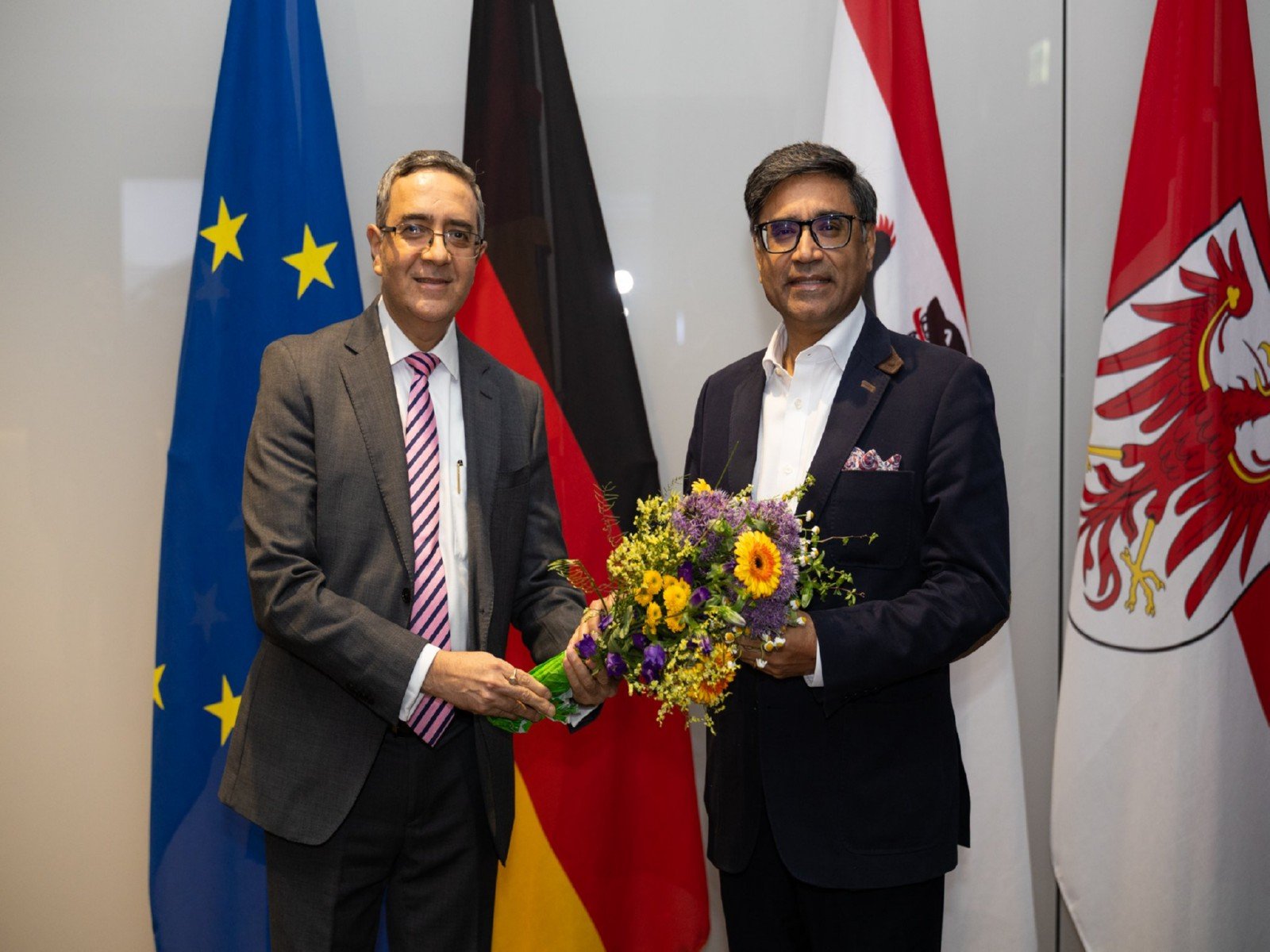
Berlin (Germany), April 14, 2026: India’s Foreign Secretary Vikram Misri arrived in Berlin on Tuesday to participate in the India-Germany Foreign Office Consultations, marking another significant step in strengthening bilateral ties between the two nations.
The visit comes shortly after German Chancellor Friedrich Merz visited India in January 2026, signaling continued high-level diplomatic engagement between the two countries.
High-Level Diplomatic Engagement Continues
According to the Indian Embassy in Berlin, the visit reflects the growing frequency of high-level exchanges between India and Germany. These consultations are part of a structured dialogue mechanism aimed at enhancing cooperation across multiple sectors.
During his visit, Vikram Misri is scheduled to co-chair the consultations with Geza Andreas von Geyr, State Secretary at the German Foreign Office.
The discussions are expected to focus on a broad range of strategic and economic issues, including:
- Trade and investment opportunities
- Defence and security cooperation
- Technology and innovation
- Green energy partnerships
- Development cooperation
- Education and cultural exchanges
- Regional and global geopolitical developments
This comprehensive agenda highlights the depth and diversity of India-Germany relations.
Focus on Trade, Technology, and Green Energy
India and Germany share a strong economic partnership, with Germany being one of India’s largest trading partners in Europe. The consultations are expected to further boost trade ties, especially in sectors like manufacturing, renewable energy, and digital technology.
Germany’s expertise in green energy and sustainability aligns well with India’s ambitious climate goals. Both countries are likely to explore enhanced collaboration in:
- Solar and wind energy projects
- Hydrogen energy initiatives
- Sustainable urban development
- Climate change mitigation strategies
Such cooperation is crucial as both nations aim to transition towards cleaner and more sustainable economies.
Strategic Importance of Defence and Security Cooperation
Defence and security are also key pillars of the India-Germany partnership. In recent years, both countries have increased cooperation in areas such as maritime security, cybersecurity, and counter-terrorism.
The consultations in Berlin are expected to address:
- Indo-Pacific security dynamics
- Joint military training and exchanges
- Cybersecurity frameworks
- Emerging global threats
With evolving geopolitical challenges, including tensions in Europe and the Indo-Pacific, stronger defence collaboration is becoming increasingly important.
Strengthening People-to-People and Educational Ties
Beyond strategic and economic cooperation, India and Germany have a long-standing relationship in education and cultural exchange.
Germany is a popular destination for Indian students pursuing higher education, particularly in engineering, science, and technology fields. The consultations are expected to further strengthen:
- Academic collaborations between universities
- Student exchange programs
- Skill development initiatives
- Cultural partnerships
These people-to-people connections play a vital role in deepening mutual understanding and long-term cooperation.
Earlier Engagement in France
Before arriving in Berlin, Vikram Misri held high-level discussions in France as part of his European tour. He co-chaired the India-France Foreign Office Consultations with Martin Briens.
The discussions in France covered a wide spectrum of cooperation areas, including:
- Civil nuclear energy
- Defence and space collaboration
- Cyber and digital technologies
- Artificial intelligence and innovation
- Cultural and people-to-people ties
Misri also met Jean-Noël Barrot, where both sides discussed global challenges, including the evolving situation in the Middle East.
India’s Expanding Diplomatic Footprint in Europe
The back-to-back consultations in France and Germany highlight India’s proactive diplomatic approach in Europe. As global dynamics shift, India is strengthening partnerships with key European nations to enhance its strategic positioning.
Key objectives of India’s European engagement include:
- Diversifying trade partnerships
- Enhancing technological collaboration
- Addressing global security challenges
- Promoting sustainable development
- Building resilient supply chains
Germany and France, being major European powers, play a crucial role in India’s foreign policy strategy.
Global Context and Strategic Relevance
The consultations come at a time when the global geopolitical landscape is undergoing significant changes. Issues such as the Russia-Ukraine conflict, tensions in the Middle East, and evolving Indo-Pacific dynamics are reshaping international relations.
India and Germany, as major global players, are expected to:
- Coordinate on multilateral platforms
- Support rules-based international order
- Address global economic uncertainties
- Collaborate on climate action
Such discussions are essential for maintaining global stability and fostering international cooperation.
A Growing Strategic Partnership
India-Germany relations have evolved into a robust strategic partnership over the years. Regular high-level visits, such as Chancellor Friedrich Merz’s recent trip to India and Vikram Misri’s current visit to Berlin, demonstrate the commitment of both nations to deepen ties.
The partnership is characterized by:
- Strong economic engagement
- Shared democratic values
- Commitment to sustainability
- Cooperation in science and technology
These factors make the India-Germany relationship one of the most important bilateral partnerships in Europe.
Vikram Misri’s visit to Berlin for the India-Germany Foreign Office Consultations underscores the growing importance of bilateral ties between the two nations. With discussions spanning trade, defence, technology, and global issues, the consultations are expected to pave the way for deeper cooperation and stronger strategic alignment.
As India continues to expand its global diplomatic outreach, partnerships with countries like Germany will play a key role in shaping its future on the world stage.
About The Author