
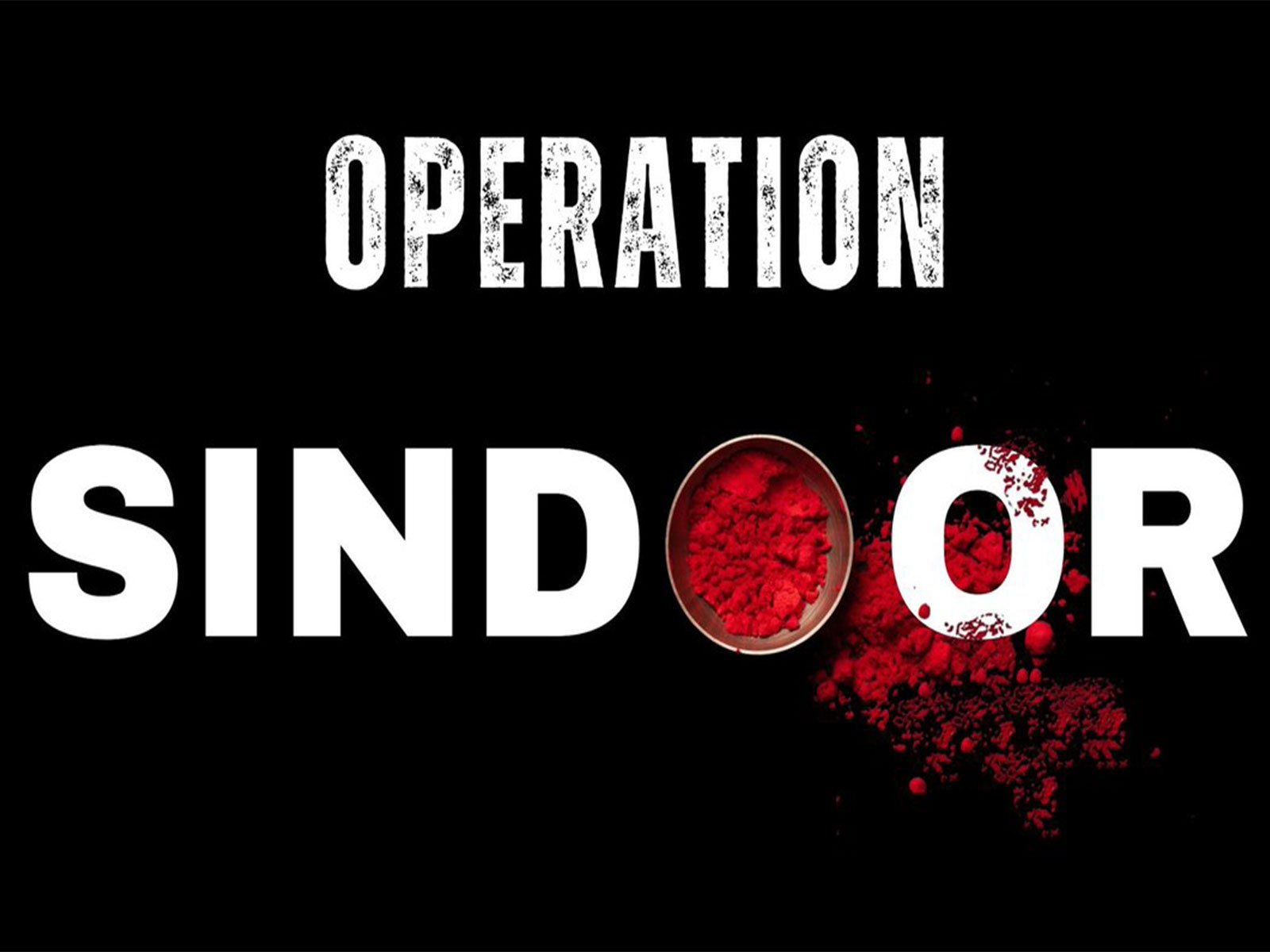
Operation Sindoor Completes 1 Year After Pahalgam Terror Attack
One year after the launch of Operation Sindoor, India continues to view the mission as one of the most decisive counter-terror operations in recent history. What began as a response to the horrific terror attack in Pahalgam’s Baisaran Valley evolved into a large-scale multi-domain operation involving the Indian Army, Indian Air Force, Indian Navy, cyber units and diplomatic channels.
The Pahalgam attack on April 22, 2025, shocked the country. Terrorists linked to The Resistance Front (TRF), considered a proxy of Lashkar-e-Taiba, targeted civilians after reportedly identifying them based on religion. Twenty-six people, including Indian citizens and a Nepali national, lost their lives in the brutal assault.
The attack triggered national grief and outrage. However, India’s response through Operation Sindoor was carefully planned, highly coordinated and strategically executed. Rather than reacting emotionally, India launched a precise military and diplomatic campaign aimed at dismantling terror infrastructure and restoring deterrence.
Today, one year later, Operation Sindoor is seen not only as a military action but also as a defining moment in India’s evolving national security doctrine.
How Operation Sindoor Began
Within days of the terror attack, India initiated Operation with a clear objective — destroy terror infrastructure operating from Pakistan and Pakistan-occupied Jammu and Kashmir.
In the early hours of May 7, 2025, the Ministry of Defence confirmed that Indian Armed Forces had carried out precision strikes on nine terror-linked locations. Officials described the mission as “focused, measured and non-escalatory.”
The operation specifically targeted terror camps linked to:
- Lashkar-e-Taiba
- Jaish-e-Mohammed
- Hizbul Mujahideen
Among the major targets were Muridke’s Markaz Taiba complex and Bahawalpur’s Markaz Subhan Allah, both long associated with terrorist recruitment and operational planning.
The opening phase of Operation Sindoor demonstrated India’s intent to strike directly at terror infrastructure while avoiding unnecessary escalation.
Indian Air Force Played a Key Role in Operation Sindoor
Air operations formed the backbone of Operation Sindoor. According to military officials, the Indian Air Force focused on precision targeting rather than large-scale destruction.
Advanced fighter aircraft including Rafale jets and Su-30 MKI platforms were used during the mission. The Indian Air Force reportedly launched BrahMos cruise missiles, SCALP missiles, Rampage systems and Crystal Maze missiles against strategic targets.
The operation targeted several Pakistani airbases and military facilities including:
- Nur Khan
- Rahim Yar Khan
- Sargodha
- Jacobabad
- Bholari
- Chaklala
Military assessments later suggested that the strikes disrupted Pakistan Air Force operations significantly.
One of the most discussed aspects of Operation Sindoor was India’s ability to bypass and jam Chinese-supplied air defence systems deployed by Pakistan. Officials said the operation was completed in just 23 minutes during the opening strike phase.
India’s Integrated Air Defence System Proved Effective
Following the Indian strikes, Pakistan attempted retaliation through drones, missiles and loitering munitions. However, India’s layered defence network successfully intercepted most incoming threats.
During Operation Sindoor, India relied heavily on:
- S-400 air defence systems
- Akash missile systems
- Integrated Air Command and Control System (IACCS)
- Counter-UAS technology
- Low-level air defence guns
Military officials later confirmed that hundreds of drones and UAVs were intercepted during the conflict.
Air Chief Marshal Amar Preet Singh later described the operation using three words: “Achuuk, Abhed, Sateek” — meaning precise, impenetrable and accurate.
According to official statements, Operation Sindoor also saw one of the longest-range aerial interceptions conducted by India’s S-400 system.
Indian Navy Created Strategic Pressure During Operation Sindoor
While the air campaign dominated headlines, the Indian Navy quietly played a major strategic role during Operation Sindoor.
INS Vikrant and its carrier battle group maintained a strong presence in the Arabian Sea. The deployment restricted Pakistani naval movement and created what defence experts described as “psychological pressure.”
Defence Minister Rajnath Singh later stated that if the Indian Navy had fully entered the conflict, Pakistan would have faced far greater consequences.
The Navy’s posture during Operation Sindoor effectively established maritime deterrence without escalating into direct naval warfare.
Admiral Dinesh K Tripathi later revealed that Indian naval forces were only minutes away from launching sea-based strikes before hostilities paused.
Ground Forces and Border Security During Operation Sindoor
The Indian Army and Border Security Force maintained stability along the International Border and Line of Control during Operation Sindoor.
Pakistan reportedly attempted infiltration and drone attacks in several sectors. Indian forces responded with strong surveillance and defensive measures.
Security forces also carried out humanitarian operations for civilians affected by shelling in Jammu and Kashmir.
Several religious sites, including temples and gurdwaras, came under attack during cross-border shelling. Indian security agencies described these actions as attempts to create communal division.
However, officials said Operation Sindoor successfully prevented escalation on the ground while maintaining civilian safety in sensitive border regions.
Diplomatic and Economic Measures Became Part of Operation Sindoor
Apart from military action, India also launched major diplomatic and economic measures under Operation Sindoor.
The most significant decision was the suspension of the Indus Waters Treaty. Prime Minister Narendra Modi stated that “blood and water cannot flow together.”
India also:
- Suspended trade routes through Attari-Wagah
- Reduced diplomatic staff
- Revoked Pakistani visas
- Restricted cultural exchanges
- Tightened economic engagement
These steps showed that Operation Sindoor extended far beyond military strikes and represented a broader strategic response.
Prime Minister Modi Declared a “New Normal”
Prime Minister Narendra Modi repeatedly described Operation Sindoor as part of India’s new security approach against terrorism.
According to the Prime Minister, India would no longer differentiate between terrorists and their sponsors. He also declared that future terror attacks would be treated as acts of war.
During a speech at Adampur Air Base, PM Modi praised the Indian Armed Forces and said India had shown the world its ability to respond with precision and confidence.
His remarks reinforced the idea that Operation Sindoor was designed not only to punish terror groups but also to establish long-term deterrence.
Information Warfare During Operation Sindoor
Another major aspect of Operation Sindoor was the information war that unfolded alongside military operations.
Indian agencies actively countered misinformation campaigns and fake narratives circulating on social media and international platforms.
Officials used regular press briefings, verified updates and strategic communication to maintain transparency and counter false propaganda.
Analysts believe that India’s communication strategy during Operation Sindoor helped maintain public confidence and international credibility.
Operation Sindoor Changed India’s Security Doctrine
One year later, defence experts believe Operation Sindoor fundamentally changed India’s counter-terror strategy.
The operation demonstrated several important shifts:
- Faster military response timelines
- Multi-domain coordination
- Precision strike capability
- Integrated defence systems
- Diplomatic pressure alongside military action
- Stronger strategic deterrence
The operation also showed India’s willingness to strike deep inside hostile territory if national security is threatened.
According to military analysts, Operation Sindoor will likely shape India’s future security planning for years to come.
As Operation Sindoor completes one year, it remains one of the most significant military and strategic operations carried out by India in recent decades.
The mission began after the devastating Pahalgam terror attack but evolved into a broader assertion of India’s national security doctrine. Through precision air strikes, integrated defence systems, maritime dominance, diplomatic pressure and information management, India demonstrated a new approach to counter-terror operations.
For many Indians, Operation Sindoor symbolises justice for the victims of the Pahalgam attack. For the armed forces, it showcased operational coordination and technological capability. And for the world, it reflected India’s growing confidence in defending its sovereignty with precision, restraint and strategic clarity.
Leave a Reply