

 admin
admin 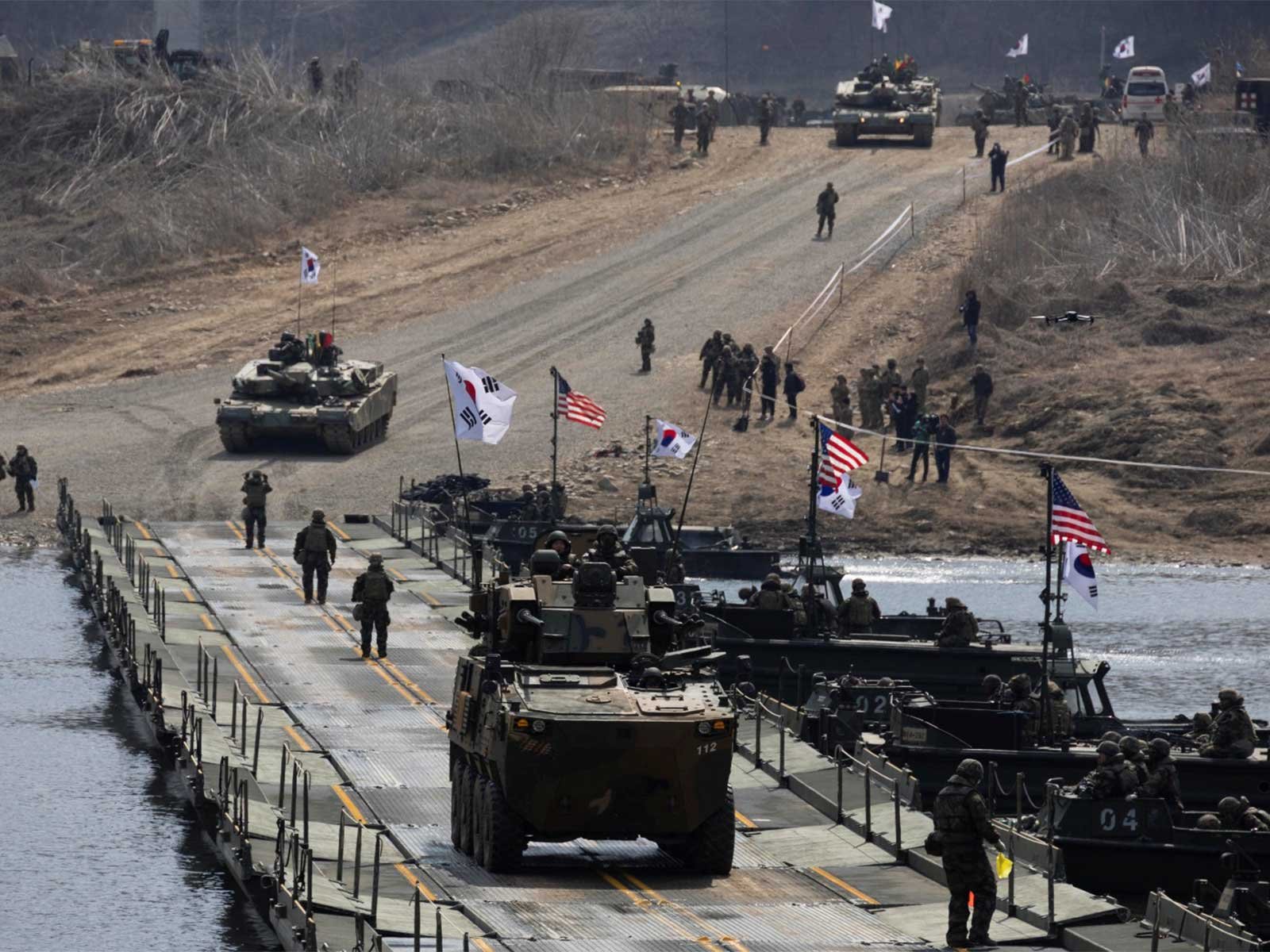
The Ulchi Freedom Shield joint military exercise between the United States and South Korea has been shortened, with the annual drills now scheduled to conclude on Friday instead of August 27.
The Ulchi Freedom Shield exercise began on August 17 and was originally planned to continue until August 27. South Korea’s Joint Chiefs of Staff (JCS) confirmed that the exercise period has been reduced by almost half following an agreement between Washington and Seoul.
The decision comes after US President Donald Trump announced a move to scale back the joint military drills. The latest development has drawn attention because the Ulchi Freedom Shield exercise is considered an important part of maintaining the combined defence readiness of the United States and South Korea.
According to Yonhap News Agency, the JCS said both countries would continue discussions on measures needed to achieve the objectives of the exercise while maintaining a strong combined defence posture.
Ulchi Freedom Shield Field Training Also Reduced
A major change to the Ulchi Freedom Shield exercise involves its field training component. The JCS said field training exercises, which form a core part of the annual drills, will also be reduced to some extent.
Detailed plans regarding the changes are still being discussed by the two militaries. The objective is to ensure that the exercise continues to support the defence readiness of South Korean and US forces despite the shorter schedule.
The Ulchi Freedom Shield exercise is designed to prepare the allies for potential contingencies on the Korean Peninsula. It combines command-post training with field exercises intended to improve coordination between US and South Korean forces.
The reduction means that the second half of the exercise, which reportedly focuses on counterattack scenarios following enemy aggression, has been cancelled.
Why Ulchi Freedom Shield Is Important
The Ulchi Freedom Shield drills are primarily designed around scenarios involving North Korean aggression. The exercise provides an opportunity for American and South Korean forces to improve their ability to coordinate operations in a rapidly changing security environment.
The drills also allow the two countries to test command structures, communication systems and operational procedures.
This year’s Ulchi Freedom Shield was reportedly designed to address North Korea’s evolving military capabilities. According to CNN, training was expected to include scenarios involving drones, GPS disruption and cyberattacks.
At least 18,000 South Korean troops were expected to participate in the exercise.
The focus on emerging technologies demonstrates how the Ulchi Freedom Shield has evolved beyond traditional battlefield scenarios. Modern military planning increasingly includes cyber operations, electronic warfare, unmanned systems and disruptions to satellite-based navigation.
US and South Korea Aim to Maintain Defence Readiness
Despite shortening the Ulchi Freedom Shield, Washington and Seoul have stressed the importance of maintaining a robust combined defence posture.
The South Korean Joint Chiefs of Staff said the two allies would discuss and implement various measures to achieve the objectives of the exercise.
The statement suggests that the reduction in the exercise schedule does not necessarily mean a complete shift away from military preparedness. Instead, the allies are expected to focus on maintaining essential training and operational capabilities.
The Ulchi Freedom Shield remains an important mechanism for strengthening interoperability between South Korean and American forces stationed on the Korean Peninsula.
North Korea Condemns the Military Exercise
Despite the decision to scale back the Ulchi Freedom Shield, North Korea continued to criticise the joint military drills.
According to North Korea’s Korean Central News Agency (KCNA), Pyongyang warned that it would take measures to counter what it considers a military threat.
North Korea has historically condemned US-South Korea military exercises, arguing that they are rehearsals for an invasion. Washington and Seoul, however, have consistently maintained that the Ulchi Freedom Shield is defensive in nature.
The latest North Korean response shows that reducing the size of the exercise has not eliminated Pyongyang’s concerns about allied military activities.
South Korea Defends Defensive Nature of Drills
South Korean President Lee Jae Myung has previously maintained that joint military exercises with the United States are defensive in nature.
Following the decision to scale back the Ulchi Freedom Shield, Lee said the drills do not represent an intention to attack North Korea or escalate tensions on the Korean Peninsula.
His comments come amid continued efforts to manage security concerns while maintaining South Korea’s defence capabilities.
The president also called for faster progress in acquiring nuclear-powered submarines after the decision to reduce the joint military exercises.
The issue highlights the wider security challenges facing South Korea as North Korea continues to develop its military capabilities.
Ulchi Freedom Shield Was Also Scaled Back During Trump’s First Term
The latest changes to the Ulchi Freedom Shield are not without precedent.
Joint military exercises between Washington and Seoul were also scaled back in 2019 during Trump’s first presidential term. At that time, high-level nuclear diplomacy between the United States and North Korea was underway.
The reduction of military drills was viewed as part of broader diplomatic efforts involving Washington and Pyongyang.
The current decision to shorten the Ulchi Freedom Shield therefore comes amid renewed discussions about the role and scale of military exercises on the Korean Peninsula.
What the Changes Mean for Regional Security
The decision to shorten the Ulchi Freedom Shield could have implications for the security environment in Northeast Asia.
For South Korea and the United States, the challenge will be to balance military readiness with diplomatic considerations. The allies need to ensure that their forces remain capable of responding to potential threats while avoiding unnecessary escalation.
For North Korea, however, even a reduced Ulchi Freedom Shield remains a significant security concern.
The situation also highlights the changing nature of military preparedness. With cyberattacks, drone warfare and GPS interference becoming increasingly important, future exercises are likely to focus more heavily on technology-driven threats.
Ulchi Freedom Shield Remains Key to US-South Korea Alliance
Despite the reduction in the schedule, the Ulchi Freedom Shield continues to play an important role in the US-South Korea security partnership.
The exercise helps the allies test their readiness, improve coordination and strengthen interoperability between their armed forces.
The latest decision to conclude the drills on August 22 and reduce field training represents a significant adjustment to this year’s exercise. However, both countries have indicated that they will continue working together to achieve the core objectives of the Ulchi Freedom Shield.
As discussions continue between Washington and Seoul, attention will remain focused on how the allies balance defence preparedness, military cooperation and efforts to manage tensions with North Korea.
Key Takeaways
- The Ulchi Freedom Shield exercise has been shortened and will conclude on August 22.
- The drills were originally scheduled to run from August 17 to August 27.
- Field training, a core component of the exercise, will also be reduced.
- The second half of the exercise reportedly focused on counterattack scenarios has been cancelled.
- At least 18,000 South Korean troops were expected to participate.
- Training was designed to address threats involving drones, GPS disruption and cyberattacks.
- North Korea continues to oppose the US-South Korea military drills.
- South Korea maintains that the exercises are defensive in nature.
- President Lee Jae Myung has urged faster progress on nuclear-powered submarine capabilities.
About The Author