
Asaduddin Owaisi Blames Indian National Congress for Partition of India, Rejects BJP ‘B-Team’ Allegations
 admin
admin 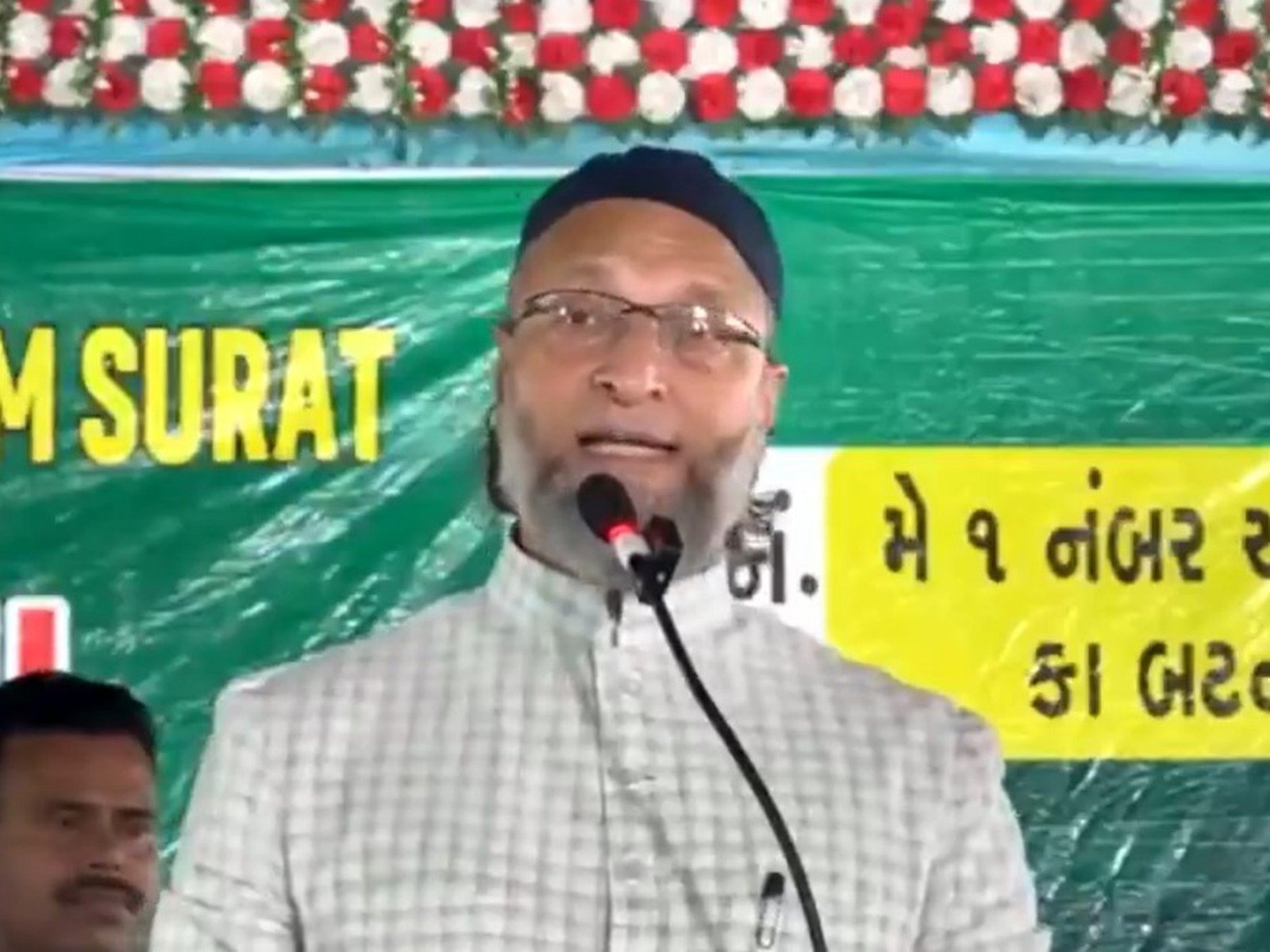
Limbayat (Gujarat), April 20:
AIMIM chief Asaduddin Owaisi on Sunday stated that the Indian National Congress shared responsibility for the Partition of India. He emphasized that blaming Muslims for the country’s division is incorrect.
During a public rally in Limbayat, Gujarat, Owaisi referred to India Wins Freedom, authored by Maulana Abul Kalam Azad. According to him, Azad had appealed to Mahatma Gandhi and Jawaharlal Nehru to prevent the division of India.
“Muslims were not responsible for Partition. Congress must accept its role,” he said.
Response to ‘B-Team’ Allegations
Responding to criticism, Owaisi dismissed claims that AIMIM acts as a “B-team” of the BJP. Leaders from the All India Trinamool Congress (TMC) and Congress have raised such allegations in West Bengal.
Highlighting electoral participation, he pointed out that AIMIM contests a limited number of seats compared to larger parties. He questioned why his party faces criticism despite contesting only a few constituencies.
“They should focus on winning elections instead of targeting us,” he remarked.
Political Strategy and Representation
While addressing supporters, Owaisi stressed the need for independent political thinking. In his view, communities should develop their own leadership rather than depend solely on established parties.
Comparing seat distribution, he noted that major parties contest hundreds of seats, whereas AIMIM participates in only a small number. Such comparisons, he argued, expose the weakness of allegations against his party.
He also positioned AIMIM as a constitutional force capable of challenging the Bharatiya Janata Party. The leader urged citizens to stand up for their rights through democratic means.
Criticism of TMC and Mamata Banerjee
At a separate rally in Asansol, Owaisi targeted West Bengal Chief Minister Mamata Banerjee and her party. According to him, the rise of the BJP in the state reflects failures in governance by the ruling party.
“If the BJP is strong in Bengal, TMC is responsible,” he stated.
Governance Concerns in Minority Areas
Raising local issues, Owaisi highlighted the condition of minority-dominated regions in West Bengal. He pointed to the absence of proper schools and healthcare facilities.
In many places, hospitals lack beds and qualified doctors. Access to clean drinking water also remains a challenge for residents. These gaps, he said, reflect poor governance.
Farmers, according to Owaisi, continue to face difficulties due to limited support. Economic challenges affect rural communities significantly. Women, he added, deal with daily hardships and require better policy support.
Political Context
Amid rising political activity, such remarks have intensified debates among parties. Election campaigns in several states have increased competition and sharpened rhetoric.
By raising historical and current issues together, Owaisi has attempted to shape public discourse. His statements also underline ongoing tensions within opposition politics.
Through his speeches, Owaisi has addressed history, governance, and political representation. The remarks have triggered fresh discussion across political circles. As elections approach, such narratives are expected to influence voter opinion and political strategies.
About The Author