

 admin
admin 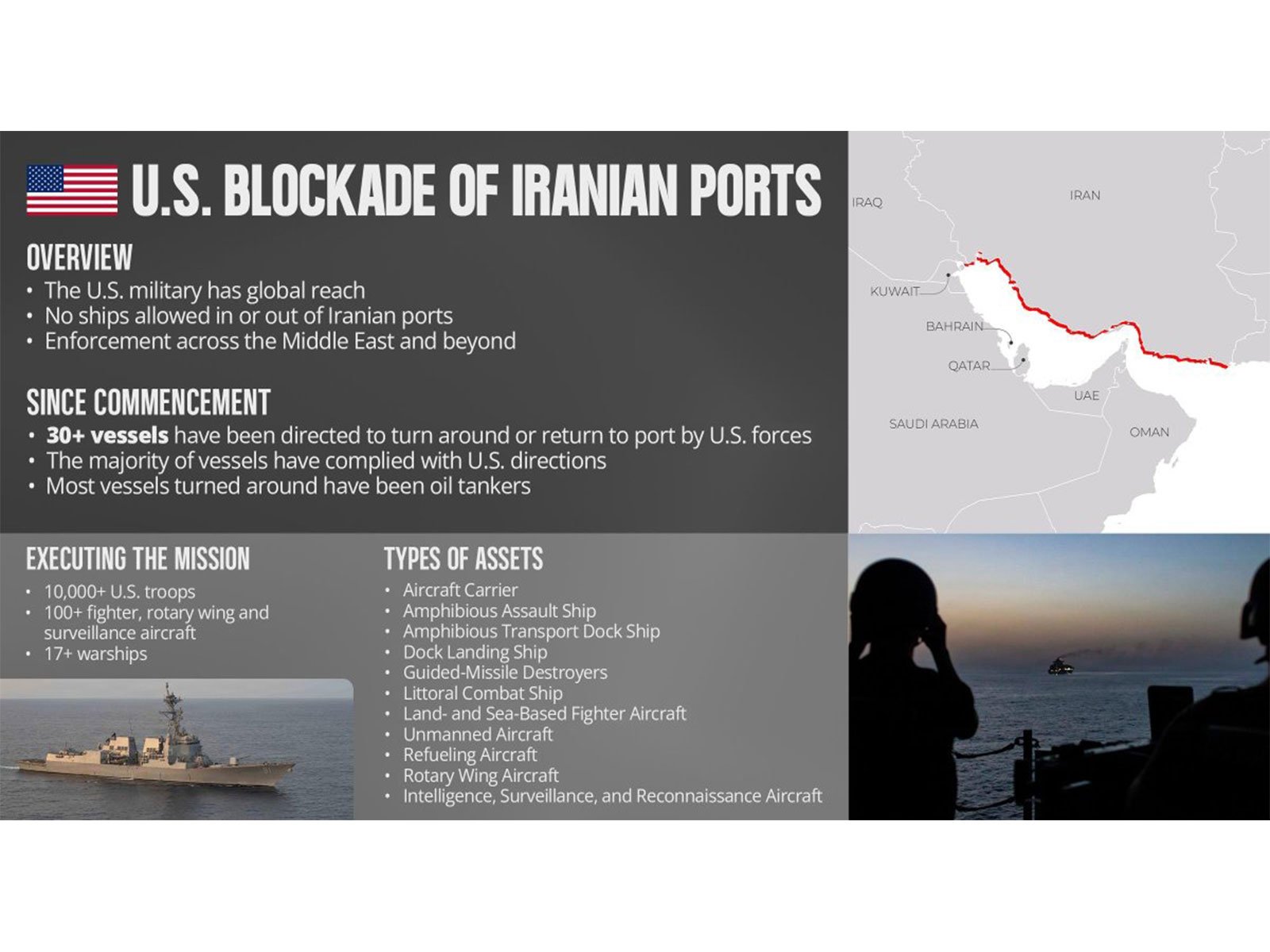
Florida, United States | April 23
The United States military has intensified its maritime blockade against Iran. Officials confirmed that 31 vessels were turned back or redirected to ports, with most identified as oil tankers.
The move highlights rising tensions in the Middle East. It also signals a stronger enforcement strategy by Washington.
US Blockade Forces Ships to Retreat
The United States Central Command (CENTCOM) confirmed the operation in an official update.
According to the statement, US forces instructed 31 vessels to turn around during enforcement actions. Most ships complied without resistance.
Officials emphasized that cooperation from vessels has remained high so far. Therefore, the operation has progressed without major disruptions.
U.S. forces have directed 31 vessels to turn around or return to port as part of the U.S. blockade against Iran. 🇺🇸 pic.twitter.com/lG5ACEt7LR
— U.S. Central Command (@CENTCOM) April 23, 2026
Large-Scale Military Deployment
The blockade involves a massive military presence.
- Over 10,000 US troops
- Around 17 warships
- More than 100 aircraft
This deployment shows the scale of the operation. It also reflects Washington’s commitment to controlling maritime activity in the region.
As a result, the blockade has become one of the most significant naval operations in recent years
Rising Tensions in Strait of Hormuz
Tensions escalated sharply after the enforcement actions.
In the Strait of Hormuz, Iranian forces reportedly opened fire on three commercial ships. They also seized two vessels.
This development has increased fears of further conflict. Moreover, the Strait of Hormuz remains one of the world’s most critical oil routes.
Any disruption here can impact global energy markets.
US Strategy: Pressure and Diplomacy
US President Donald Trump has adopted a dual approach.
On one hand, the US continues the blockade. On the other hand, it keeps diplomatic channels open with Iran.
Officials stated that Washington wants Iran to present a unified proposal for negotiations.
However, the US has set clear expectations. Iran must agree to strict conditions, including limits on its nuclear program.
Ceasefire Remains Fragile
The current ceasefire remains temporary and conditional.
White House officials confirmed that no fixed deadline exists. Still, the US expects progress soon.
Therefore, the situation remains uncertain. Any delay in negotiations could lead to further escalation.
Iran Responds Strongly
Iran has strongly criticized the US blockade.
Foreign Minister Abbas Araghchi called the naval restrictions an “act of war.”
He warned that Iran will resist any coercive measures. As a result, tensions between the two countries continue to grow.
Global Impact and Concerns
The situation has global implications.
- Oil supply chains may face disruptions
- Shipping routes could become unsafe
- Energy prices may rise
Therefore, international observers are closely monitoring developments.
Any escalation in the Strait of Hormuz could affect economies worldwide.
The US blockade against Iran has entered a critical phase. With 31 vessels turned back, Washington has tightened its grip on maritime activity.
At the same time, rising tensions in the Strait of Hormuz and Iran’s strong response have increased the risk of conflict.
While diplomacy continues, the coming days will be crucial. The global community now watches closely as the situation unfolds.
About The Author