
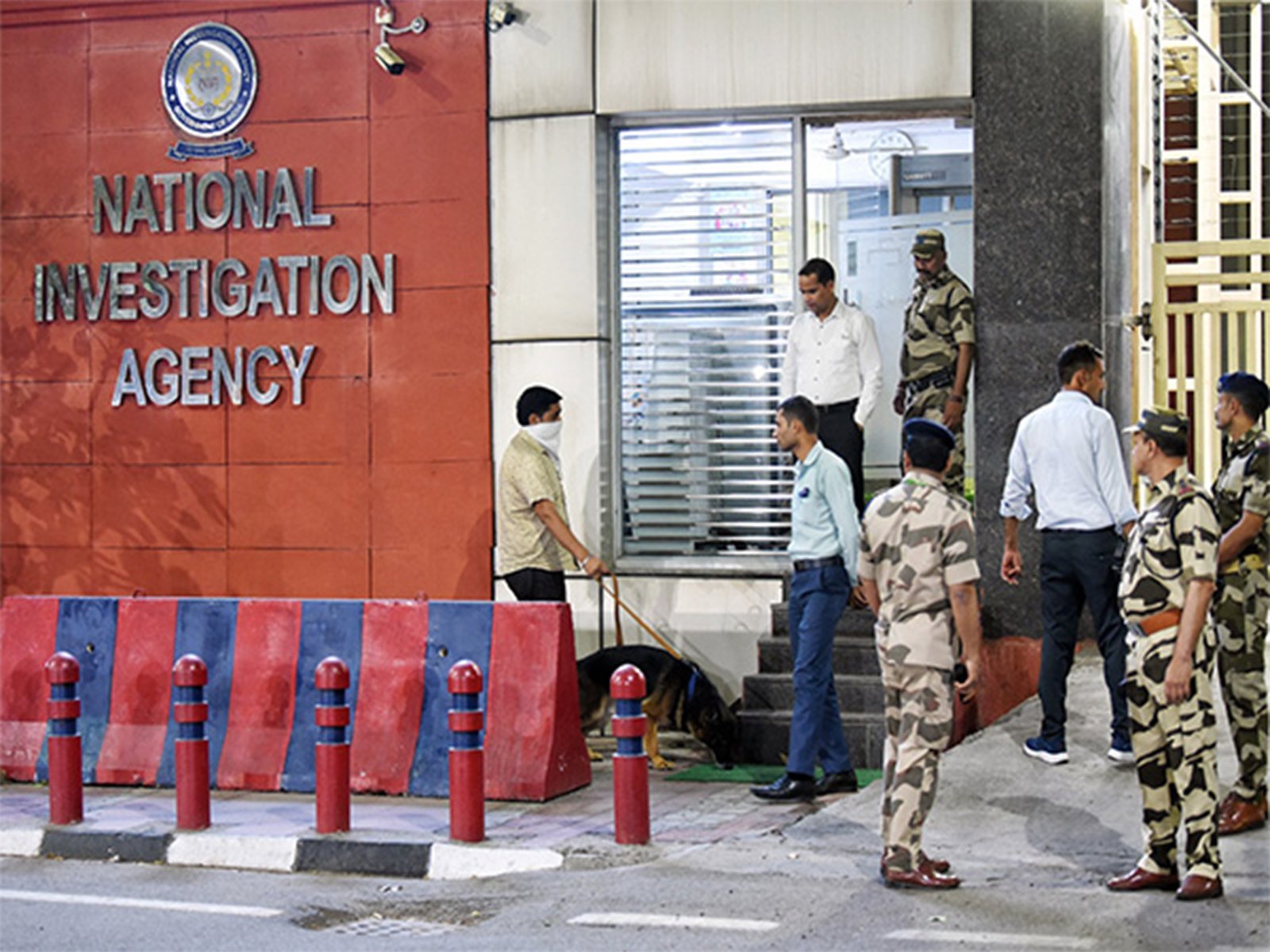
The Special National Investigation Agency (NIA) Court in New Delhi has granted the National Investigation Agency (NIA) an additional 45 days to complete its probe under the Unlawful Activities (Prevention) Act (UAPA) against three Bangladeshi nationals accused of illegally entering India through the Meghalaya border. The extension increases the investigation period from the statutory 90 days to 135 days, allowing investigators more time to examine fresh evidence and complete pending forensic and legal procedures.
The NIA UAPA investigation against Bangladeshi nationals has attracted significant attention because it is linked to the murder of Bangladeshi political activist Sharif Osman Bin Hadi, who was killed in Dhaka in December 2025. Indian investigators believe that the accused fled Bangladesh after the murder and illegally crossed into India through the Meghalaya border before they were eventually arrested in West Bengal.
The court’s decision provides the investigating agency additional time to analyze newly received records and verify crucial evidence that could play an important role in establishing the sequence of events and identifying the involvement of the accused.
Court Extends Investigation Period
The Special NIA Court accepted the agency’s request for more time after hearing submissions made by the prosecution. The court observed that the investigation was still in progress and that fresh material had recently become available.
The NIA UAPA investigation against Bangladeshi nationals was originally required to be completed within 90 days. However, after considering the agency’s application, the court allowed investigators to continue the probe for another 45 days, extending the total investigation period to 135 days.
The extension was granted after the prosecution informed the court that important records received from the Special Task Force (STF) of the West Bengal Police were still under examination. Investigators argued that additional time was necessary to analyze the documents thoroughly before filing the final report.
Three Accused Sent to Judicial Custody
During the proceedings, Vacation Judge Meenu Kaushik remanded three accused—Rahul alias Faisal Karim Masud, Alamgir Hossain, and Philip Sangma—to judicial custody for three days after their police custody ended.
The accused had earlier been taken into custody by the NIA from jail for further questioning.
According to officials, the NIA UAPA investigation against Bangladeshi nationals involves extensive interrogation regarding their alleged movements between Bangladesh and India, their communication records, and their possible involvement in the murder conspiracy.
Investigators are also examining digital evidence, travel routes, and financial transactions to establish whether the accused received logistical or financial assistance while entering India illegally.
Fresh Evidence Strengthens Investigation
The NIA informed the court that new evidence became available on June 8 following directions issued by the Supreme Court. Investigators submitted that this fresh material required detailed verification through custodial interrogation of the accused.
The agency argued that certain facts emerging from the newly received documents needed to be cross-checked with statements made by the accused. Therefore, investigators requested additional custody to confront them with the new evidence.
The NIA UAPA investigation against Bangladeshi nationals now includes the examination of documents obtained from multiple law enforcement agencies, making the probe more comprehensive than initially anticipated.
Legal experts believe that such extensions are permitted under the UAPA when investigators demonstrate that the case involves complex evidence requiring additional scrutiny.
Defence Opposes Custodial Remand
Counsel representing the accused opposed the NIA’s request for extended police custody.
The defence argued before the court that sufficient interrogation had already been conducted and questioned the necessity of further custodial investigation.
However, after hearing both sides, the court permitted the agency to continue the investigation while balancing the legal rights of the accused and the requirements of the ongoing probe.
The NIA UAPA investigation against Bangladeshi nationals continues under judicial supervision, with courts periodically reviewing the progress made by investigators.
Murder Case Linked to Political Activist
According to the investigation, Bangladeshi political activist Sharif Osman Bin Hadi was shot dead in Dhaka on December 12, 2025, while travelling in an autorickshaw.
Hadi reportedly emerged as a prominent political activist during Bangladesh’s political developments in 2024 and was considered an influential public figure.
Following his killing, widespread unrest reportedly broke out in different parts of Bangladesh. Authorities there later filed a charge sheet naming 17 individuals in connection with the murder.
The NIA UAPA investigation against Bangladeshi nationals seeks to determine whether the accused arrested in India directly participated in the crime and whether additional individuals were involved in facilitating their escape.
Illegal Entry Through Meghalaya Border
Investigators allege that after the murder, the accused fled Bangladesh and illegally crossed into India through the Meghalaya border.
Security agencies believe the accused remained inside India for several weeks before attempting to return to Bangladesh.
They were eventually apprehended in Bongaon, West Bengal, by the Special Task Force (STF) while allegedly attempting to cross the international border once again.
The NIA UAPA investigation against Bangladeshi nationals is examining the complete route used by the accused and whether organized cross-border networks assisted their movement.
Officials are also investigating whether forged identity documents or illegal immigration channels were used during their stay in India.
Coordination Between Multiple Agencies
The investigation has involved close coordination between several law enforcement agencies, including the National Investigation Agency and the Special Task Force of West Bengal Police.
Investigators have collected digital records, witness statements, surveillance material, and intelligence inputs from various agencies.
The NIA UAPA investigation against Bangladeshi nationals also includes the examination of communication records and electronic devices recovered during the arrests.
Officials believe that inter-agency cooperation is essential because the case has cross-border implications involving multiple jurisdictions.
Importance of the UAPA Investigation
The Unlawful Activities (Prevention) Act provides investigating agencies with special provisions to deal with cases involving national security and terrorism-related offences.
The court’s approval of additional investigation time reflects the complexity of cases involving international borders, digital evidence, and multiple accused persons.
The NIA UAPA investigation against Bangladeshi nationals is expected to conclude after investigators complete forensic analysis, verify fresh evidence, examine witness statements, and finalize legal documentation.
Once the investigation is complete, the agency is expected to file its final report before the Special NIA Court.
What Happens Next?
The additional 45-day period will allow investigators to analyze the recently received records, verify the authenticity of new evidence, and complete the remaining interrogation process.
The court will continue to monitor the progress of the investigation before deciding on the next stage of judicial proceedings.
The NIA UAPA investigation against Bangladeshi nationals remains one of the significant cross-border criminal investigations currently being handled by the agency due to its alleged links with an international murder case and illegal border infiltration.
Authorities have maintained that the investigation is still ongoing, and all allegations against the accused will ultimately be determined through the judicial process after the completion of the probe.
As investigators work through the expanded timeline, the outcome of the NIA UAPA investigation against Bangladeshi nationals is expected to provide greater clarity regarding the alleged conspiracy, the role of the accused, and any possible cross-border networks that may have facilitated the crime and the subsequent illegal movement into India.
Leave a Reply