

MSMEs Are India’s Entrepreneurship Nursery, RBI Will Continue Strong Support: Governor Sanjay Malhotra
 admin
admin 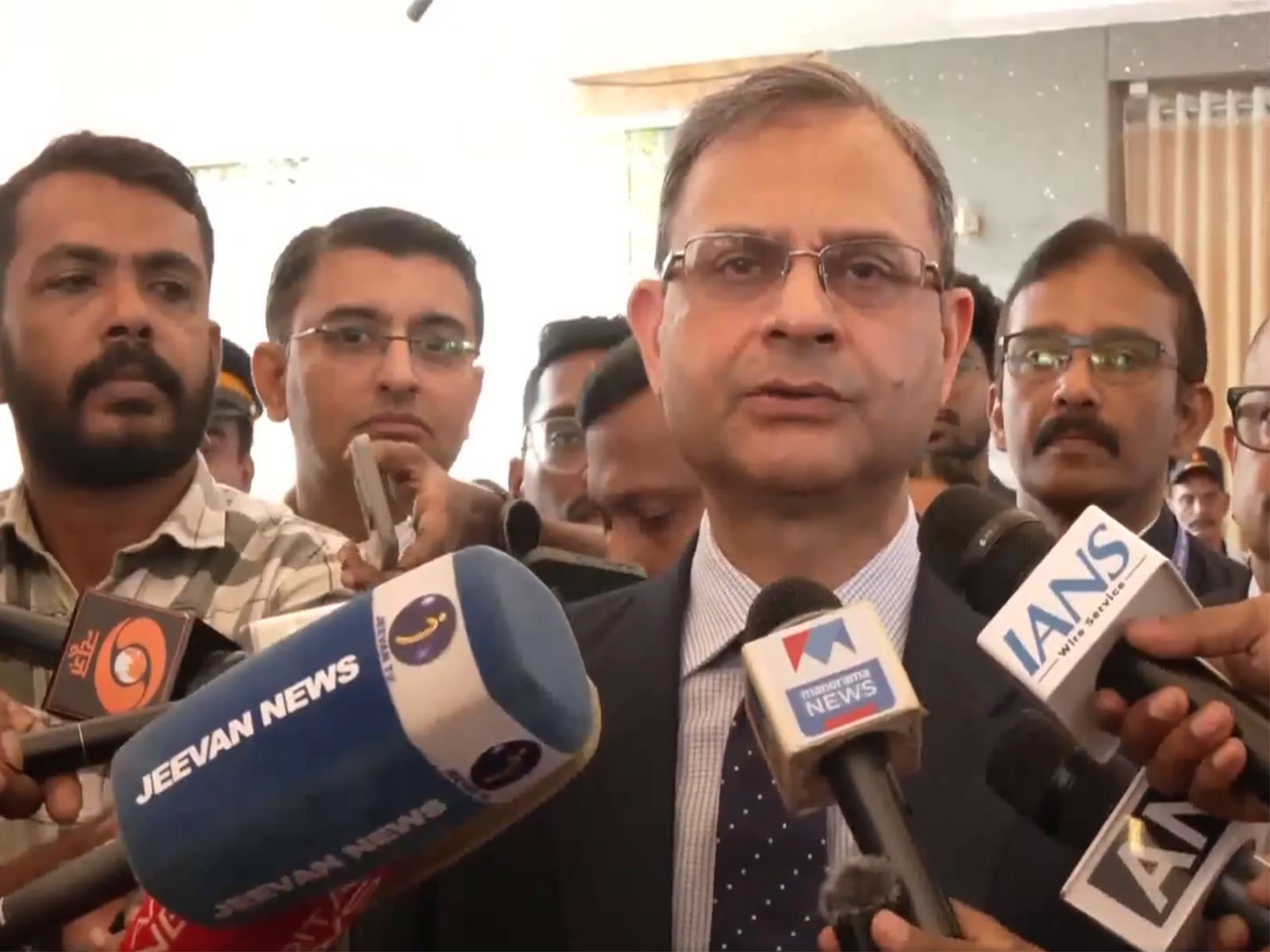
RBI Governor Sanjay Malhotra says MSMEs remain India's entrepreneurship nursery and assures continued policy and credit support for the sector.
Reserve Bank of India (RBI) Governor Sanjay Malhotra has reaffirmed the central bank’s commitment to strengthening MSMEs, describing them as India’s “entrepreneurship nursery” and one of the strongest pillars of the country’s economic growth. Addressing the media in Kochi on Sunday, Malhotra said MSMEs generate employment, promote innovation, and create new business opportunities, making them essential for India’s long-term economic development.
The RBI Governor highlighted that the central bank has consistently supported through policy initiatives, improved credit availability, and awareness programmes. He added that RBI will continue introducing measures to help the sector expand and contribute even more significantly to the Indian economy.
MSMEs Are the Backbone of India’s Economy
Governor Sanjay Malhotra said are not only business enterprises but also the foundation of entrepreneurship in India. According to him, small businesses create opportunities for first-generation entrepreneurs and encourage innovation across manufacturing, services, and trade sectors.
He noted that MSMEs generate millions of employment opportunities, particularly in rural and semi-urban regions, while contributing substantially to household incomes and industrial production.
Describing the sector as India’s “entrepreneurship nursery,” Malhotra said the growth of MSMEs directly strengthens the country’s economic resilience and inclusive development.
RBI Celebrates MSME Awareness Week
The RBI is currently observing a dedicated awareness week to educate entrepreneurs about various MSME schemes and regulatory reforms introduced by the central bank.
According to Malhotra, the awareness campaign aims to ensure that business owners understand the financial support, credit facilities, and digital initiatives available for MSMEs.
The campaign also seeks to improve financial literacy among entrepreneurs and encourage greater participation in government-backed development programmes.
RBI to Continue Supporting MSMEs
The RBI Governor emphasised that the central bank has supported MSMEs for several decades through multiple policy measures.
He said RBI has consistently worked to improve credit flow to small businesses by simplifying lending norms, encouraging banks to increase lending, and introducing regulations that improve financial access.
Malhotra assured entrepreneurs that RBI’s commitment towards will continue in the coming years, as the sector remains one of India’s highest priorities for economic development.
MSMEs Make Significant Contribution to GDP
Government data highlights the growing importance of MSMEs in India’s economy.
Currently, MSMEs contribute approximately 31.1% of India’s Gross Domestic Product (GDP) and account for nearly 48.58% of the country’s total exports.
The sector includes more than 7.47 crore enterprises operating across manufacturing, trade, and service industries.
These businesses contribute around 35.4% of India’s manufacturing output, demonstrating their critical role in industrial production and economic expansion.
Experts believe the continued growth will remain essential for achieving India’s long-term economic goals.
Employment Generation Through MSMEs
One of the biggest strengths of MSMEs is their ability to generate employment on a massive scale.
According to government estimates, MSMEs provide livelihoods to nearly 32.8 crore people, making them India’s second-largest source of employment after agriculture.
The sector supports skilled workers, artisans, startups, family-owned businesses, and first-time entrepreneurs across urban and rural India.
By creating local employment opportunities also help reduce migration pressures and promote balanced regional development.
Formalisation of MSMEs Gains Momentum
The Government of India has intensified efforts to bring informal businesses into the formal economy.
As of March 2026, more than 7.9 crore MSMEs and informal micro-enterprises have been registered through the Udyam Registration and Udyam Assist platforms.
Formal registration allows MSMEs to access institutional finance, government subsidies, credit guarantee schemes, tax benefits, and public procurement opportunities.
The formalisation drive has significantly improved transparency and strengthened the financial ecosystem for small businesses.
Digital Platforms Empower MSMEs
Several digital initiatives have transformed the operating environment for MSMEs.
Platforms such as the Government e-Marketplace (GeM) provide small businesses with direct access to government procurement opportunities.
Similarly, the Trade Receivables Discounting System (TReDS) enables MSMEs to receive faster payments by discounting invoices through financial institutions.
The MSME SAMADHAAN portal also helps businesses resolve delayed payment disputes more efficiently, improving liquidity for small enterprises.
These digital platforms have made it easier for expand operations, improve cash flow, and compete in larger markets.
Easy Credit Remains RBI’s Priority
Access to affordable finance continues to be one of the biggest challenges for MSMEs.
Governor Malhotra said RBI has introduced multiple measures over the years to improve the availability of credit for small businesses.
Banks have been encouraged to increase lending under priority sector norms while adopting technology-based credit assessment systems.
The central bank believes easier credit access will help invest in expansion, adopt new technologies, generate employment, and improve productivity.
MSMEs Key to India’s Growth Vision
Economists widely agree that MSMEs will play a central role in achieving India’s ambition of becoming a developed economy.
The sector supports exports, encourages domestic manufacturing, strengthens supply chains, and promotes innovation among startups and small enterprises.
Government initiatives such as Make in India, Digital India, Startup India, Skill India, and Atmanirbhar Bharat all depend heavily on the continued growth of MSMEs.
With policy support from the RBI and the Government of India, the sector is expected to become even more competitive globally.
The Reserve Bank of India’s renewed commitment to MSMEs reflects the sector’s growing importance in India’s economic transformation. RBI Governor Sanjay Malhotra’s remarks underline that MSMEs are not only the country’s entrepreneurship nursery but also one of its strongest engines of employment, exports, manufacturing, and inclusive growth. As the RBI continues to improve credit availability, promote financial awareness, and support digital transformation, are expected to contribute even more significantly to India’s GDP and long-term development. With over 7.9 crore registered enterprises and millions of livelihoods dependent on the sector, MSMEs will remain central to India’s journey towards becoming a globally competitive economy.
MSMEs Drive Inclusive Economic Growth Across India
The MSME sector has emerged as one of the most important contributors to India’s inclusive economic development by creating opportunities for entrepreneurs, promoting regional industrialisation, and generating employment across urban and rural areas. Unlike large industries, MSMEs require comparatively lower capital investment, making it easier for first-time entrepreneurs to establish businesses and contribute to local economic growth.
Small and medium enterprises also play a crucial role in strengthening India’s manufacturing ecosystem by producing components, raw materials, and finished products for larger industries. Their contribution extends across sectors such as textiles, food processing, engineering, handicrafts, pharmaceuticals, information technology, logistics, and retail.
Government Schemes Strengthening MSMEs
The Government of India has introduced several flagship initiatives to strengthen the ecosystem and improve ease of doing business. Schemes such as the Credit Guarantee Fund Trust for Micro and Small Enterprises (CGTMSE), Prime Minister’s Employment Generation Programme (PMEGP), Emergency Credit Line Guarantee Scheme (ECLGS), and the Raising and Accelerating MSME Performance (RAMP) programme have provided financial support and capacity-building opportunities for small businesses.
Additionally, the Udyam Registration Portal has simplified the registration process, enabling entrepreneurs to access government subsidies, tax benefits, collateral-free loans, and public procurement opportunities. These initiatives have encouraged thousands of informal businesses to enter the formal economy.
Digital Transformation Boosting MSMEs
Digital technology has become a game-changer for MSMEs in recent years. Increasing adoption of digital payments, e-commerce platforms, cloud computing, artificial intelligence, and digital accounting software has enabled small businesses to improve operational efficiency and expand their customer base.
Government-supported digital platforms such as the Government e-Marketplace (GeM) have opened new opportunities to participate in public procurement. Likewise, the Trade Receivables Discounting System (TReDS) has helped businesses receive quicker payments by allowing invoices to be financed through banks and financial institutions.
Experts believe digital adoption will significantly improve the global competitiveness of Indian over the coming years.
MSMEs Support India’s Export Growth
The MSME sector continues to play a major role in India’s export performance by supplying a wide range of products to international markets. Engineering goods, garments, leather products, handicrafts, pharmaceuticals, processed food, chemicals, and automotive components manufactured by contribute substantially to India’s export earnings.
With global demand increasing for high-quality and cost-effective products, policymakers are encouraging to improve quality standards, adopt advanced manufacturing technologies, and explore new export destinations.
Government initiatives aimed at improving logistics infrastructure and reducing compliance costs are expected to further strengthen the export potential of MSMEs.
Challenges Faced by MSMEs
Despite their remarkable contribution to the economy, MSMEs continue to face several operational challenges. Limited access to affordable finance, rising input costs, delayed payments from buyers, infrastructure gaps, shortage of skilled manpower, and increasing competition remain major concerns for entrepreneurs.
Industry associations have consistently requested faster loan approvals, simplified regulatory procedures, improved infrastructure, and timely settlement of dues to help remain competitive.
The Reserve Bank of India and the Government have been introducing reforms to address these challenges through easier credit availability, digital lending frameworks, and policy support.
RBI Focuses on Financial Inclusion
The Reserve Bank of India has taken several measures to ensure that MSMEs receive adequate institutional credit. Banks have been encouraged to increase lending under priority sector guidelines while using technology-driven credit assessment models to speed up loan approvals.
Financial inclusion initiatives, digital banking services, and simplified documentation have also improved access to formal finance for small businesses, especially in rural and semi-urban areas.
The RBI believes that strengthening financial access will enable to invest in expansion, modernisation, and employment generation.
MSMEs Central to India’s Vision of a Developed Economy
As India moves towards becoming a developed economy, MSMEs are expected to play an even greater role in driving manufacturing, exports, innovation, and employment. Programmes such as Make in India, Startup India, Digital India, Skill India, and Atmanirbhar Bharat all rely heavily on a vibrant sector.
Experts believe continued investment in technology, infrastructure, digitalisation, skill development, and access to finance will help become globally competitive while supporting sustainable economic growth. With strong policy backing from the RBI and the Government, the sector is well-positioned to remain one of the biggest drivers of India’s economic transformation in the coming years.
About The Author