
CBSE Issues Three-Language Policy Guidelines Under NEP 2020: Major Changes for Students from Class VI Onwards
 admin
admin 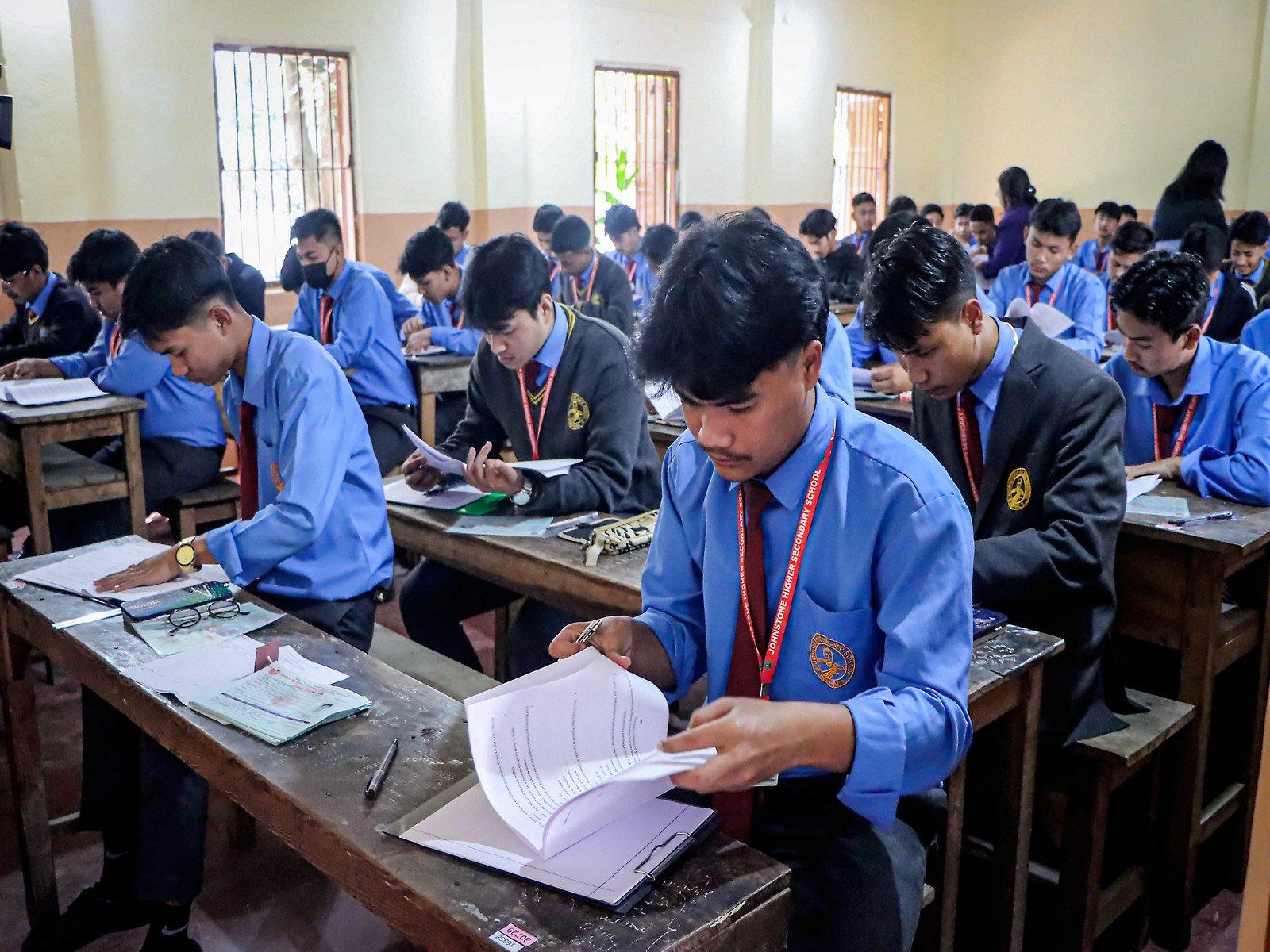
Central Board of Secondary Education (CBSE), New Delhi [India], June 29 (ANI): The Central Board of Secondary Education has issued detailed guidelines for implementing the three-language policy under the National Education Policy (NEP) 2020 from the academic session 2026–27, marking a significant shift in school education structure across India.
The new framework makes it mandatory for students entering Class IX and above to study three languages, with at least two being Bhartiya Bhashas (Indian languages). The move aims to promote linguistic diversity, strengthen cultural integration, and improve students’ proficiency in Indian languages.
Major Announcement on Three-Language Policy
Under the revised guidelines, CBSE has clarified that the three-language policy will be implemented in phases depending on the class level of students.
According to CBSE, students currently in Classes VII, VIII, and IX will not be required to take a board examination in the third language when they reach Class X. This decision provides relief to existing batches transitioning into higher secondary education.
Students currently in Class X will continue under the existing system, studying only two languages with no requirement for a third language.
However, the policy will become fully mandatory for students entering Class IX from the academic session 2026–27 onward.
NEP 2020 and Language Learning Framework
The National Education Policy 2020 (NEP 2020) emphasizes multilingual education and recommends that students learn three languages, with at least two being native Indian languages.
CBSE stated that:
- At least two languages must be Bhartiya Bhashas
- A non-native language may be chosen as the third language
- The third language (R3) will be assessed internally by schools
This approach is aimed at balancing national integration with regional language development.
The three-language policy has been designed to ensure that students develop strong communication skills while preserving India’s linguistic heritage.
Implementation Timeline for Different Classes
CBSE has provided a structured rollout plan for the three-language policy:
Current Students
- Class VII, VIII, IX: Continue studying three languages but will not have a board exam for the third language in Class X
- Relaxation provided for students currently studying two non-native languages
Class X Students
- No change; continue with two-language system
Class IX (2026–27 Batch)
- Mandatory three-language study begins
- At least two Bhartiya Bhashas required
- Third language assessed internally, not in board exams
Class VI and Below
- Two out of three languages must be Bhartiya Bhashas
- Third language becomes a board-exam subject in Class X
Internal Assessment for Third Language
A key feature of the revised three-language policy is the internal evaluation of the third language (R3) for certain batches.
CBSE has clarified that the third language will not always be part of board examinations. Instead:
- Schools will assess the third language internally
- Evaluation methods will include assignments, oral tests, and classroom performance
- No external CBSE board exam will be conducted for R3 in specific batches
This approach aims to reduce academic pressure while ensuring continuous learning.
Flexibility and Special Provisions
CBSE has also introduced several flexible provisions under the three-language policy:
Children with Special Needs (CwSN)
- Exemptions provided under the Rights of Persons with Disabilities (RPwD) Act, 2016
Foreign Students and Schools Abroad
- Exempted from mandatory Indian language requirement as third language
Migrating Students
- Students shifting states may continue their existing language combination
These measures ensure inclusivity and smooth transition across diverse student groups.
Teacher and School Support System
To support implementation of the three-language policy, CBSE has encouraged schools to adopt flexible staffing and teaching arrangements, including:
- Use of existing teachers with language proficiency
- Engagement of retired teachers
- Collaboration through Sahodaya school clusters
- Hybrid and digital learning models
Additionally, CBSE and NCERT will provide structured learning materials for all grade levels.
Textbooks for Class VI third language learning are already available in all 22 scheduled Bhartiya Bhashas on the NCERT website.
Role of Bhartiya Bhashas in Education
A central pillar of the three-language policy is the promotion of Bhartiya Bhashas (Indian languages). CBSE emphasized that at least two languages must be Indian languages to strengthen cultural roots and linguistic diversity.
The policy encourages students to:
- Develop multilingual communication skills
- Understand regional culture and literature
- Improve cognitive and learning abilities through language diversity
Education experts believe this will enhance both national integration and academic flexibility.
Academic and Social Impact
The introduction of the three-language policy is expected to have wide-ranging effects on India’s education system.
Academic Benefits:
- Improved language fluency and comprehension
- Stronger cognitive development
- Better adaptability in higher education and competitive exams
Social Benefits:
- Promotion of unity in diversity
- Preservation of regional languages
- Enhanced cultural awareness among students
However, educators also note challenges such as teacher availability, resource distribution, and curriculum adjustments.
The implementation of the three-language policy by CBSE under NEP 2020 marks a major reform in India’s school education system. With structured guidelines for different classes, internal assessments for third languages, and strong emphasis on Bhartiya Bhashas, the policy aims to create a balanced multilingual learning environment.
As the rollout begins from the 2026–27 academic session, schools across India will gradually adapt to the new framework, reshaping how languages are taught and assessed in CBSE institutions.
About The Author