

 admin
admin 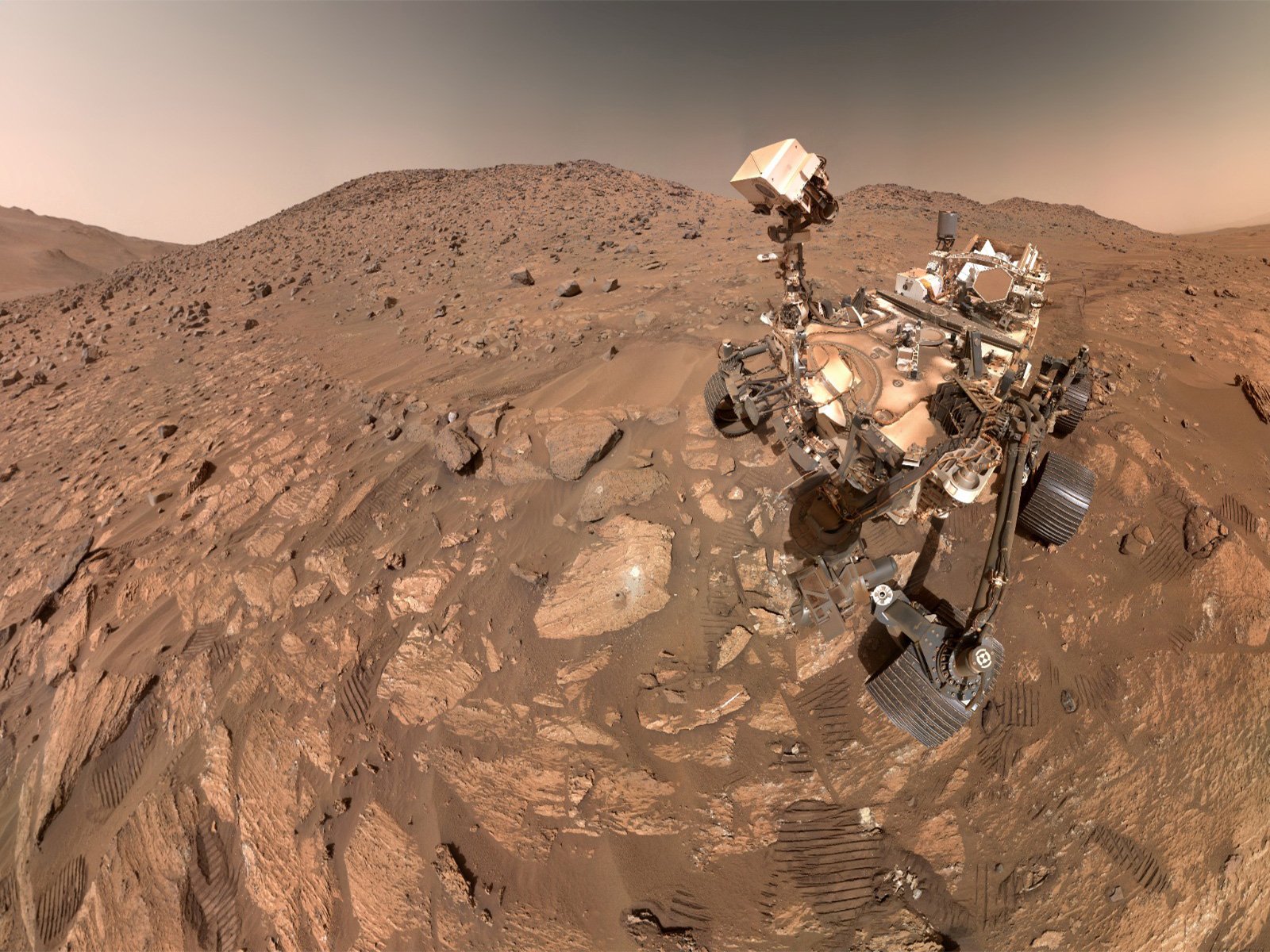
The possibility of life beyond Earth has fascinated scientists and the public alike for decades. A groundbreaking new study led by NASA has now revealed some of the strongest evidence yet suggesting that ancient microbial life may have once existed on Mars. While this does not confirm life outright, the findings significantly strengthen the case that Mars was once a habitable planet.
A Major Breakthrough in Mars Exploration
At the center of this discovery is the Mars 2020 Mission, which deployed the highly advanced Perseverance Rover to explore the Martian surface. Since landing in 2021, Perseverance has been studying the Jezero Crater—a region believed to have once contained a large lake and river delta.
This area was specifically chosen because scientists consider ancient water-rich environments to be the most promising places to search for signs of past life. Water is a key ingredient for life as we know it, and Jezero Crater offers compelling geological evidence of a wet and potentially habitable past.
The Discovery at Bright Angel Formation
The recent study, published in the prestigious journal Nature, focuses on a unique geological formation within Jezero Crater known as the Bright Angel Formation. This light-toned outcrop lies within an ancient river valley called Neretva Vallis.
What makes this discovery so exciting is the presence of organic carbon and specific minerals such as silica and clay within Martian rocks. These materials are often associated with biological processes on Earth. Scientists refer to such evidence as a “biosignature”—an indicator that life may have existed in the past.
Professor Sanjeev Gupta from Imperial College London described the findings as “very exciting,” while also emphasizing that further testing is needed to confirm whether these signatures are truly biological in origin.
Evidence of an Ancient Lake Environment
One of the most surprising aspects of the study is the discovery of lake deposits within a river valley. Typically, fast-moving river water carries away fine particles, making it unlikely for such sediments to accumulate. However, the presence of fine-grained mudstones and clay-rich materials suggests a calm, low-energy lake environment.
This finding indicates that the valley may have once been flooded, forming a stable body of water. Such environments are considered ideal for microbial life because they provide:
- Stable conditions
- Access to water
- Availability of essential minerals
The instruments onboard Perseverance, including PIXL and SHERLOC, played a crucial role in analyzing the chemical composition of these rocks. Their data allowed scientists to reconstruct the environmental conditions that existed billions of years ago.
Why This Discovery Matters
The discovery of potential biosignatures on Mars is a significant milestone in space exploration. It strengthens the theory that Mars was once capable of supporting life, at least in microbial form.
Here’s why this finding is so important:
1. Proof of Habitability
The presence of water, organic molecules, and suitable environmental conditions suggests that Mars was once habitable. This shifts our understanding of the planet from a barren world to one that may have supported life.
2. Clues About Life Beyond Earth
If life did exist on Mars, it raises important questions about how common life might be in the universe. Could life exist on other planets as well?
3. Future Space Missions
The findings will influence future missions, including plans to bring Martian rock samples back to Earth. These samples could provide definitive proof of past life.
The Role of Sample Return Missions
While the current evidence is compelling, scientists caution that it is not yet conclusive. To confirm whether the detected biosignatures are truly biological, the rock samples collected by Perseverance must be analyzed in laboratories on Earth.
NASA and its international partners are working on a Mars Sample Return mission, which aims to transport these samples back to Earth within the next decade. Advanced laboratory techniques will allow scientists to examine the samples in far greater detail than is possible on Mars.
Challenges in Confirming Life
Detecting life on another planet is incredibly complex. Organic molecules can form through both biological and non-biological processes. Therefore, scientists must carefully rule out all possible non-living explanations before confirming life.
Some of the key challenges include:
- Contamination from Earth-based materials
- Distinguishing between biological and chemical processes
- Limited data from remote instruments
Despite these challenges, each new discovery brings us closer to answering one of humanity’s biggest questions: Are we alone in the universe?
What This Means for Humanity
The implications of finding life on Mars are profound. It would not only change our understanding of biology but also reshape our place in the universe.
Such a discovery could:
- Prove that life can arise independently on different planets
- Inspire new scientific and technological advancements
- Spark global interest in space exploration
It may also encourage further exploration of other celestial bodies, such as Jupiter’s moon Europa or Saturn’s moon Enceladus, which are also believed to have subsurface oceans.
The Road Ahead
The journey to confirm life on Mars is far from over. Scientists will continue to analyze data from Perseverance while preparing for future missions that will bring samples back to Earth.
Each step forward is a testament to human curiosity and our desire to explore the unknown. While we may not yet have definitive proof of life on Mars, this discovery marks a major leap in our quest to understand the universe.
About The Author