
 admin
admin 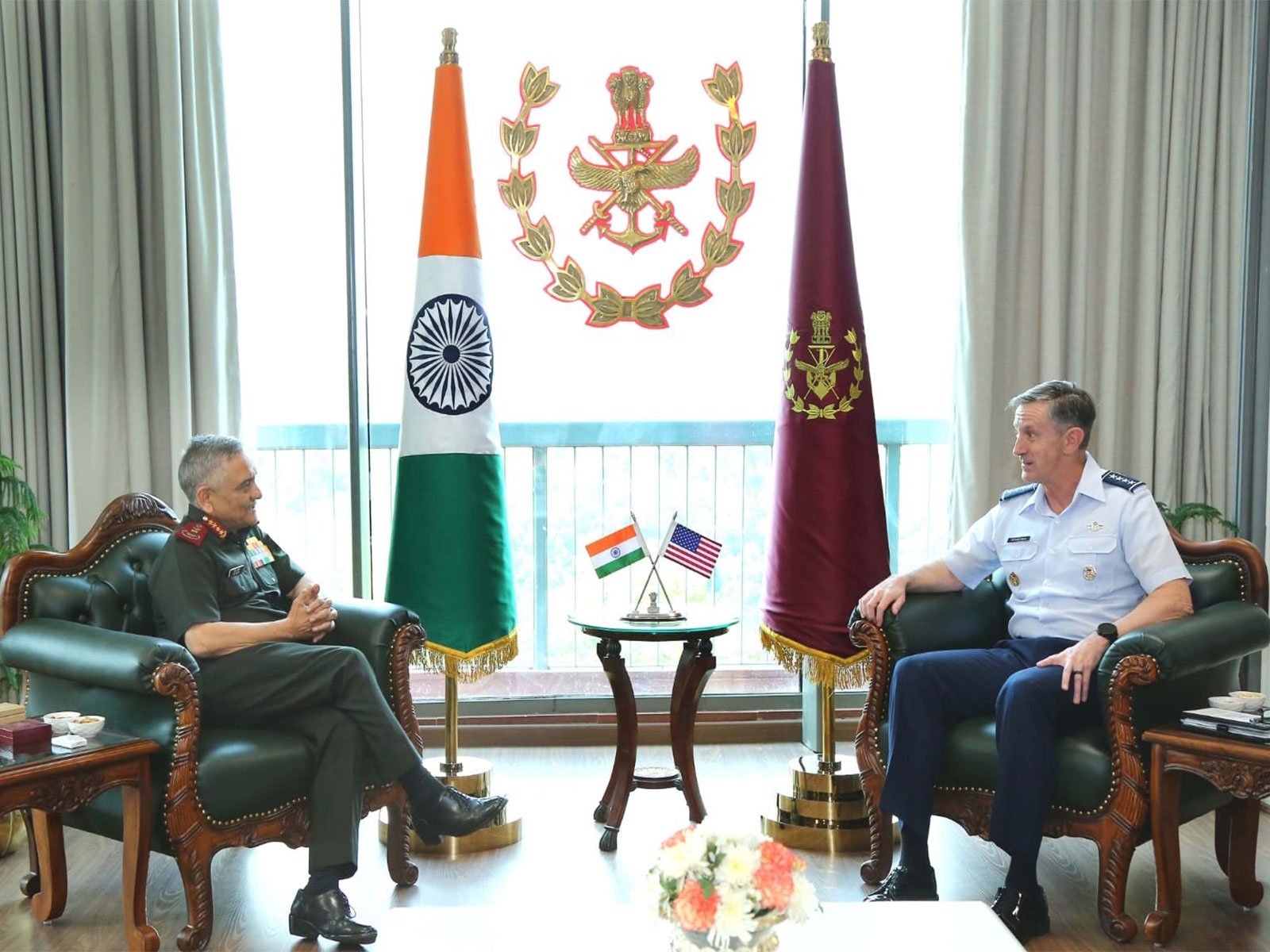
New Delhi, India | April 25, 2026
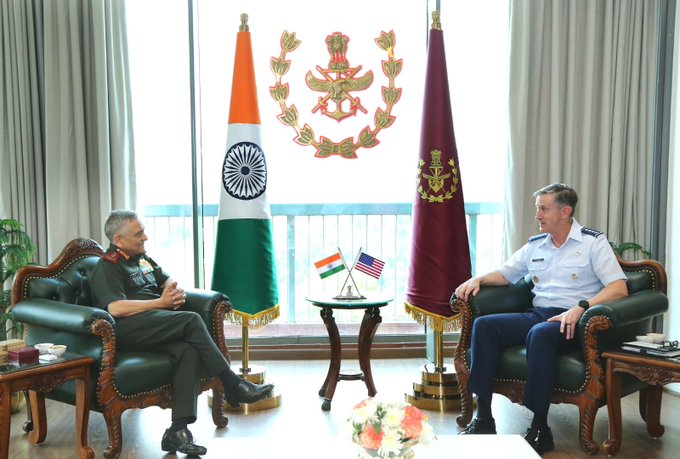
India and the United States have once again reinforced their growing strategic defence partnership as Chief of Defence Staff (CDS) General Anil Chauhan held high-level discussions with US Air Force senior leadership, focusing on expanding bilateral military cooperation, strengthening interoperability, and ensuring regional stability in the Indo-Pacific region.
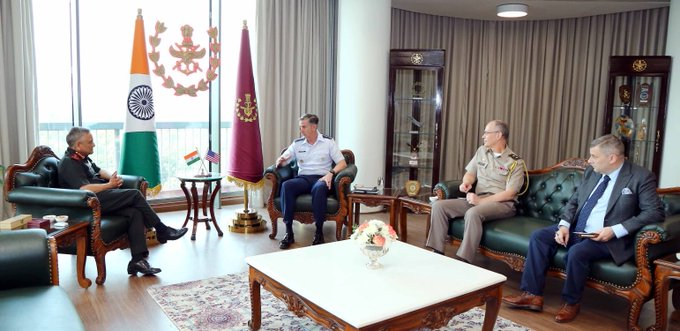
The meeting, held in New Delhi, featured detailed deliberations between CDS General Chauhan and General Kevin B Schneider, Commander of Pacific Air Forces and Air Component Commander of US Indo-Pacific Command. The engagement reflects the continuing momentum in India–US defence relations, which have expanded significantly over the past decade across strategic, operational, and technological domains.
According to a statement shared by the HQ IDS on social media, both sides reaffirmed their shared commitment to regional peace, security, and stability, particularly across the Indo-Pacific cds theatre—an increasingly sensitive geopolitical region.
Strategic Convergence Between India and the United States
The discussions between the two top military leaders underlined what officials described as a “deepening strategic convergence” between India and the United States.
The Indo-Pacific has emerged as a critical region for global trade routes, maritime security, and geopolitical competition. In this context, India cds and the US have consistently aligned their strategic priorities to ensure a free, open, and rules-based regional order.
During the meeting, both sides emphasized:
- Expanding joint military exercises
- Enhancing operational interoperability between armed forces
- Increasing frequency of strategic exchanges
- Strengthening coordination in air, land, and maritime domains
- Improving technology integration in defence operations
Officials noted that both nations share a long-term vision for maintaining peace and stability across the Indo-Pacific, particularly in the face of emerging security challenges.
The CDS level engagement is not an isolated diplomatic interaction but part of a larger, continuously expanding India–US defence framework.
Over the past decade, both nations have significantly upgraded their defence relationship, transitioning from basic military cooperation to advanced strategic alignment covering:
- Joint defence planning
- Multi-domain warfare capabilities
- Intelligence sharing frameworks
- High-end defence technology cooperation
- Interoperable military systems
The latest discussions further reinforce the long-term strategic alignment between India and the United States in addressing emerging global threats.
Focus on Expanding Bilateral and Tri-Service Engagements
A major highlight of the discussions was the intent to expand and operationalise bilateral defence engagements in a more structured and frequent manner.
According to the statement issued by HQ IDS, both sides agreed to enhance:
- Scope of joint training exercises
- Complexity of military operations conducted together
- Frequency of defence exchanges at institutional levels
- Integration of tri-service cooperation frameworks
This includes collaboration between the Indian Army, Navy, and Air Force with their US counterparts, enabling deeper coordination in real-time operational scenarios.
Defence experts believe that such cooperation is essential for building joint response capabilities, particularly in maritime security, humanitarian assistance, disaster relief (HADR) operations, and air defence preparedness.
Technology as a Key Pillar of Modern Defence Cooperation
One of the most significant aspects of the discussions was the emphasis on technology as a defining factor in modern warfare and defence preparedness.
Both India and the United States acknowledged that future military strength will depend heavily on:
- Artificial intelligence (AI) in defence systems
- Surveillance and reconnaissance technologies
- Drone and counter-drone capabilities
- Cybersecurity and information warfare readiness
- Space-based defence assets
- Advanced aircraft and missile systems
The statement highlighted that the India–US partnership is evolving with enhanced synergy in defence technology sharing and joint capability development.
This marks a shift from traditional military cooperation towards a more integrated and technology-driven defence ecosystem.
Strengthening Interoperability Between Armed Forces
A key objective of India–US defence relations has been improving interoperability—the ability of both countries’ armed forces to operate seamlessly together during joint missions or exercises said CDS.
During the meeting, both sides discussed expanding interoperability across:
- Air combat operations
- Maritime surveillance and naval coordination
- Ground-based tactical exercises
- Joint humanitarian missions
- Strategic airlift and logistics support
Interoperability is considered crucial in modern coalition warfare scenarios, where multiple nations often collaborate during crisis response or regional security operations.
Over the years, India and the US have already achieved significant progress in this area through exercises like Yudh Abhyas, Malabar, and Cope India, which involve complex multi-domain operational training cds.
Defence Secretary-Level Engagements Reinforce Momentum
The CDS-level meeting followed another high-level engagement held a day earlier between US Air Force Commander General Kevin B Schneider and India’s Defence Secretary Rajesh Kumar Singh at the Ministry of Defence.
According to the Ministry of Defence India, the discussions focused on:
- Advancing bilateral defence initiatives
- Enhancing military-to-military cooperation
- Expanding joint exercises and training programs
- Strengthening strategic exchanges between defence institutions
This back-to-back engagement at senior levels reflects a coordinated push by both nations to accelerate defence collaboration.
Officials noted that such continuous dialogue ensures policy alignment and smooth execution of joint initiatives.
Indo-Pacific Security: A Shared Priority
The Indo-Pacific region continues to remain central to CDS India–US defence cooperation.
The area spans critical maritime routes, including the Indian Ocean and Western Pacific, which collectively handle a significant portion of global trade and energy supply chains.
Both India and the United States have consistently emphasized:
- Freedom of navigation in international waters
- Respect for international maritime laws
- Stability in contested regions
- Prevention of conflict escalation
- Cooperative security frameworks among partner nations
The CDS-level discussions reinforced these shared priorities, with both sides committing to deeper coordination in maritime domain awareness and regional surveillance.
This region has become increasingly important due to:
- Rising geopolitical tensions in maritime zones
- Increased naval activity in international waters
- Disruptions in global supply chain routes
- Security challenges in the South China Sea and Indian Ocean
- Expansion of strategic military bases by global powers
Both India and the United States share a common vision of ensuring that the Indo-Pacific remains:
- Free from coercion
- Open to international trade
- Governed by international law
- Stable and peaceful for economic growth
During the meeting, both sides reaffirmed their commitment to maintaining regional stability through coordinated defence preparedness and strategic cooperation.
Growing India–US Defence Partnership Over the Last Decade
CDS India and the United States have transformed their defence relationship from limited cooperation in the early 2000s to a comprehensive strategic partnership today.
Key milestones include:
- Signing of foundational defence agreements (LEMOA, COMCASA, BECA)
- Expansion of joint military exercises across all three services
- Increased defence trade and procurement
- Technology transfer agreements in strategic systems
- Institutionalized defence dialogue mechanisms
These developments have significantly improved operational trust and strategic alignment between the two nations.
Today, India is one of the US’s key defence partners in the Indo-Pacific region, while the US is one of India’s largest defence suppliers and technology collaborators.
Role of Tri-Service Cooperation in Future Defence Strategy
A major takeaway from the CDS engagement was the increasing importance of tri-service integration.
India is actively working to unify the operational capabilities of its Army, Navy, and Air Force under a more coordinated command structure.
Similarly, US Indo-Pacific Command (INDOPACOM) operates as a unified command structure overseeing multi-domain military operations across the region.
Both sides agreed that future cooperation will increasingly involve:
- Joint command-level planning
- Integrated operational exercises
- Combined crisis response strategies
- Shared intelligence frameworks
This tri-service cooperation is expected to significantly enhance response time and operational efficiency during regional contingencies.
Strategic Outlook: What This Means for the Region
The latest CDS level meeting signals a continued strengthening of India–US defence relations at a time when global security dynamics are evolving rapidly.
Analysts suggest that this engagement reflects:
- A shared commitment to regional stability
- A shift towards more technology-driven defence cooperation
- Increased focus on Indo-Pacific security architecture
- Strengthening of institutional military ties
While the meeting did not announce new agreements, it reinforced ongoing initiatives and set the stage for deeper collaboration in the coming years.
The engagement between CDS General Anil Chauhan and US Pacific Air Forces Commander General Kevin B Schneider marks another important step in the evolving India–US defence partnership said CDS.
With a shared focus on regional stability, technological advancement, and multi-domain operational readiness, both nations are steadily moving toward a more integrated defence cooperation framework.
As the Indo-Pacific continues to emerge as a key geopolitical hotspot, the India–US strategic partnership is expected to play an increasingly decisive role in shaping the region’s security architecture.
Technology: The New Pillar of Defence Cooperation
One of the most significant outcomes of the discussions was the emphasis on advanced defence technology as a core pillar of India–US cooperation CDS.
Both countries acknowledged that modern warfare is increasingly driven by technological superiority.
Key focus areas include:
Artificial Intelligence in Defence
AI-based systems for surveillance, intelligence analysis, and autonomous decision-making are expected to play a key role in future military strategies.
Drone Warfare and Counter-Drone Systems
With the rise of unmanned systems in modern conflicts, both nations are exploring joint capabilities in drone deployment and neutralization technologies.
Cybersecurity and Information Warfare
Cyber defence has become a critical area of cooperation, focusing on protecting military networks and critical infrastructure.
Space-Based Surveillance
The use of satellite systems for navigation, intelligence gathering, and communication is becoming increasingly important in joint defence planning.
Advanced Aircraft and Missile Systems
The partnership also includes cooperation in developing and operating next-generation defence platforms.
Strengthening Interoperability: A Long-Term Goal
Interoperability between the armed forces of India and the United States remains a long-term strategic objective.
This refers to the ability of both militaries to operate seamlessly together in joint operations.
Key areas include:
- Shared communication systems
- Standardized operational protocols
- Integrated command structures during exercises
- Compatible weapons and logistics systems
Over the years, exercises such as Malabar, Yudh Abhyas, and Cope India have significantly improved operational coordination between the two forces.
The latest meeting further reinforces efforts to deepen this integration.
Future Outlook: What Lies Ahead for India–US Defence Cooperation
The latest meeting indicates several key future trends in India–US defence relations:
1. Increased Joint Military Operations
More frequent and complex joint exercises are expected across all domains.
2. Defence Technology Partnerships
Stronger collaboration in AI, aerospace, cyber defence, and space technologies.
3. Expanded Strategic Dialogue
Regular high-level military talks will continue to shape long-term defence policy alignment.
4. Enhanced Indo-Pacific Coordination
Both nations are likely to deepen cooperation with other regional partners as well.
The meeting between CDS General Anil Chauhan and US Air Force Commander General Kevin B Schneider represents another milestone in the steadily strengthening India–US defence partnership.
With a shared vision of maintaining peace, stability, and security in the Indo-Pacific, both nations are moving toward a more integrated and technologically advanced defence cooperation framework.
As global security challenges continue to evolve, the India–US strategic partnership is expected to play a crucial role in shaping the future of regional and global stability.
India and the United States have taken another significant step toward deepening their strategic defence partnership as Chief of Defence Staff (CDS) General Anil Chauhan held high-level discussions with senior US military leadership aimed at expanding bilateral cooperation, strengthening joint operational readiness, and reinforcing Indo-Pacific regional security.
The meeting, held in New Delhi, brought together CDS General Anil Chauhan and General Kevin B Schneider, Commander of the Pacific Air Forces and Air Component Commander of US Indo-Pacific Command. The engagement highlights the growing convergence between the two democracies on defence strategy, regional security priorities, and military interoperability.
According to a statement shared by the HQ IDS, both sides reiterated their shared resolve to maintain peace, stability, and a free and open Indo-Pacific region amid evolving global security challenges.
The CDS-level engagement is not an isolated diplomatic interaction but part of a larger, continuously expanding India–US defence framework.
Over the past decade, both nations have significantly upgraded their defence relationship, transitioning from basic military cooperation to advanced strategic alignment covering:
- Joint defence planning
- Multi-domain warfare capabilities
- Intelligence sharing frameworks
- High-end defence technology cooperation
- Interoperable military systems
The latest discussions further reinforce the long-term strategic alignment between India and the United States in addressing emerging global threats CDS.
The focus areas include:
1. Joint Military Exercises
Both nations plan to expand the complexity and scale of joint exercises, focusing on real-time combat simulations, air combat coordination, and naval warfare strategies.
2. Training and Personnel Exchange
Increased training visits, officer exchange programs, and joint operational learning initiatives will strengthen understanding between the two militaries.
3. Operational Coordination
The aim is to improve coordination during humanitarian missions, disaster response operations, and potential regional crises.
About The Author