
Rahul Gandhi Backs Sonia Gandhi on Gaza, Calls for Independent Foreign Policy Amid Israel Debate
 admin
admin 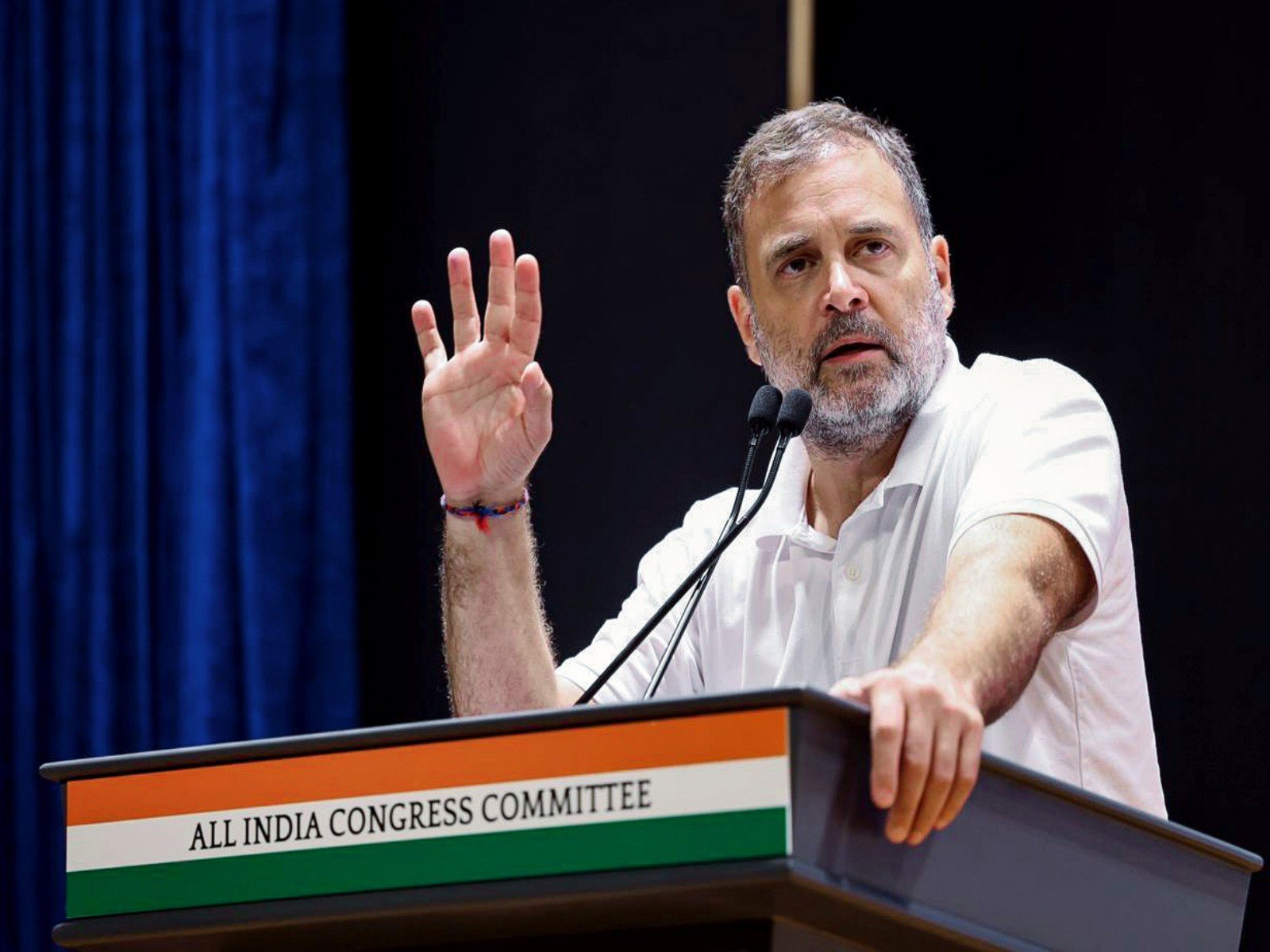
New Delhi, June 27: Congress leader Rahul Gandhi on Saturday strongly backed Congress Parliamentary Party Chairperson Sonia Gandhi’s appeal for an Independent Foreign Policy, accusing the Narendra Modi-led government of moving India closer to Israel at a time when much of the international community is raising concerns over the humanitarian crisis in Gaza.
Rahul Gandhi’s remarks came after Sonia Gandhi published an editorial urging India to reclaim its long-standing tradition of maintaining an Independent Foreign Policy rooted in humanitarian values, strategic autonomy, and moral leadership. The Congress leader said India should continue its historic commitment to justice, peace, and support for international humanitarian principles instead of appearing aligned with any one geopolitical bloc.
In a post shared on social media platform X, Rahul Gandhi praised Sonia Gandhi’s editorial and said her views reflected India’s traditional diplomatic philosophy. According to him, an Independent Foreign Policy has always been one of India’s greatest strengths, allowing the country to engage with multiple nations while protecting its own national interests.
Rahul Gandhi wrote that Sonia Gandhi’s article calls upon India to reclaim its Independent Foreign Policy, uphold humanitarian values, and speak with moral clarity on the ongoing humanitarian crisis in Gaza. He argued that India’s foreign relations should be guided by constitutional values, global peace, and human rights rather than strategic alignments that could compromise its historical diplomatic position.
Rahul Gandhi Questions India’s Diplomatic Direction
The Leader of Opposition further claimed that India is gradually moving into Israel’s strategic orbit. According to Rahul Gandhi, the changing diplomatic approach could weaken India’s traditional position as a nation capable of maintaining balanced relationships across West Asia.
He stated that while several countries are reassessing their positions regarding the conflict, India appears to be strengthening ties with Israel without adequately addressing humanitarian concerns arising from the conflict in Gaza.
Rahul Gandhi also referred to Prime Minister Narendra Modi’s diplomatic engagement with Israel, claiming that the visit would eventually be viewed as a significant strategic decision with long-term consequences. He argued that an Independent Foreign Policy would better protect India’s global reputation and preserve its credibility as a voice for peace.
Congress Calls for Humanitarian Approach
The Congress leader emphasized that India’s national identity has historically been built on supporting peace, justice, and humanitarian values. Referring to the ongoing humanitarian crisis, Rahul Gandhi said India should speak for Palestinian civilians, particularly children and families affected by the conflict.
He stated that India’s moral responsibility extends beyond political alliances and includes advocating for innocent civilians caught in conflict zones. According to him, an Independent Foreign Policy should balance national interests with humanitarian responsibilities.
Rahul Gandhi stressed that India’s diplomatic legacy has traditionally been respected because it maintained strategic independence while supporting peaceful resolutions to international conflicts.
Mallikarjun Kharge Supports Sonia Gandhi’s Stand
Congress President Mallikarjun Kharge also supported Sonia Gandhi’s position and criticized the government’s current foreign policy approach.
In his statement on X, Kharge said Sonia Gandhi’s editorial highlights how India’s present diplomatic stance has distanced the country from many of its historical partners in Palestine, Iran, and the broader Middle East.
Kharge argued that India’s image as a neutral and respected global voice has weakened in recent years. According to him, maintaining an Independent Foreign Policy would allow India to rebuild trust with long-standing partners while continuing constructive engagement with all nations.
He further claimed that India has also become increasingly disconnected from broader global public opinion regarding the humanitarian situation in Gaza.
Sonia Gandhi Raises Questions Over Government’s Position
In her editorial, Sonia Gandhi questioned the Modi government’s response to the ongoing humanitarian crisis in Gaza and the occupied West Bank.
She argued that India’s silence on civilian suffering does not reflect the country’s long-standing diplomatic traditions. According to Sonia Gandhi, an Independent Foreign Policy should enable India to express concern over humanitarian issues regardless of geopolitical considerations.
Her article emphasized that India’s foreign policy has historically balanced national interests with ethical principles and international law. She urged the government to restore India’s independent diplomatic identity and take a clearer position on humanitarian concerns.
Priyanka Gandhi Shares Editorial
Congress General Secretary Priyanka Gandhi Vadra also shared Sonia Gandhi’s remarks on social media to amplify the message.
The post highlighted concerns over the humanitarian impact of the conflict and argued that India’s national interest requires responding to growing international concern regarding civilian casualties and displacement.
The Congress leadership collectively maintained that an Independent Foreign Policy would allow India to uphold its historical commitment to peace while protecting its strategic interests across the Middle East.
Humanitarian Crisis in Gaza Continues
The debate comes amid continuing international concern over the humanitarian situation in Gaza.
Reports from Palestinian health authorities have claimed that healthcare facilities are facing unprecedented financial and operational challenges. According to Palestinian officials, hospitals are struggling due to shortages of medicines, equipment, and financial resources, affecting thousands of patients requiring medical treatment.
Palestinian authorities have also stated that economic hardship, rising unemployment, and increasing poverty have placed enormous pressure on public healthcare services.
International humanitarian organizations have repeatedly called for greater assistance to civilians affected by the conflict, while urging all parties to ensure humanitarian access and protect civilian lives.
Earlier this month, reports indicated that Israeli military strikes in Gaza resulted in civilian casualties, including children and media personnel, further intensifying global concerns over the humanitarian situation.
India’s Traditional Foreign Policy
India has historically pursued an Independent Foreign Policy based on strategic autonomy and balanced diplomatic engagement. Since independence, successive governments have sought to maintain relationships with countries across competing geopolitical blocs while safeguarding India’s national interests.
This approach has enabled India to engage with Israel, Palestine, Arab nations, the United States, Russia, and other global powers simultaneously.
Over the years, India has strengthened bilateral relations with Israel in areas including defence, agriculture, technology, and innovation while continuing to support the Palestinian cause through humanitarian assistance and diplomatic engagement.
The current political debate reflects differing opinions on whether India’s recent diplomatic approach maintains this balance or represents a shift toward closer strategic alignment.
Political Debate Intensifies
The Congress party has made the issue of Independent Foreign Policy a central point of its criticism against the Modi government. Party leaders argue that India’s diplomatic credibility depends on maintaining strategic autonomy and speaking consistently on humanitarian issues.
The BJP-led government, however, has consistently maintained that its foreign policy decisions are guided by India’s national interests while balancing relationships with multiple global partners.
As discussions over the Gaza conflict continue internationally, foreign policy is expected to remain a major subject of political debate in India.
Rahul Gandhi’s endorsement of Sonia Gandhi’s appeal has brought renewed attention to India’s diplomatic priorities amid the ongoing Gaza conflict. While Congress leaders argue that India should restore an Independent Foreign Policy rooted in humanitarian values and strategic autonomy, the government maintains that its decisions reflect India’s long-term national interests.
With geopolitical tensions continuing across West Asia, India’s foreign policy choices are likely to remain under close political and international scrutiny in the coming months.
About The Author