
India-Kenya Relations Gain Fresh Momentum Through High-Level Diplomatic and Parliamentary Engagement
 admin
admin 
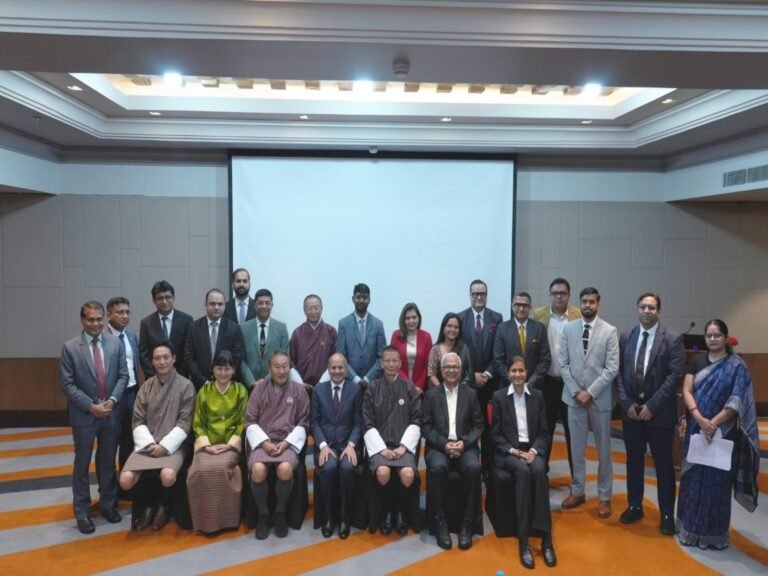
India-Kenya relations are witnessing renewed momentum as senior officials from both countries continue high-level discussions aimed at expanding bilateral cooperation. India’s High Commissioner to Kenya, Adarsh Swaika, met Kenya’s Prime Cabinet Secretary and Cabinet Secretary for Foreign and Diaspora Affairs, Musalia W Mudavadi, to discuss recent bilateral developments and explore proposals for further strengthening the partnership.
The meeting reflects the continued efforts by New Delhi and Nairobi to deepen their longstanding relationship through diplomatic dialogue, parliamentary exchanges and cooperation across emerging sectors.
According to the High Commission of India in Nairobi, Swaika briefed Mudavadi on recent developments in the bilateral relationship and discussed proposals and ideas for taking the partnership forward. The engagement comes at a time when both countries are placing greater emphasis on institutional cooperation and people-to-people connections.
Parliamentary Engagement Gives Fresh Push to India-Kenya Relations
The latest diplomatic meeting follows the recent visit of Kenya’s National Assembly Speaker Moses Wetang’ula to India, which focused on strengthening parliamentary exchanges between the two countries.
During his visit, Wetang’ula held discussions with Lok Sabha Speaker Om Birla. The meeting highlighted the enduring friendship between India and Kenya and the importance of legislative cooperation in strengthening bilateral ties.
Birla said that the two countries share a longstanding friendship rooted in democratic values and a common historical background. He also highlighted the importance of the newly constituted Parliamentary Friendship Groups in both countries.
These groups are expected to provide an institutional platform for parliamentarians to interact regularly, exchange experiences and develop a better understanding of legislative practices in both nations.
The initiative is expected to give additional momentum to India-Kenya relations, particularly by creating opportunities for lawmakers to discuss issues of mutual interest and strengthen parliamentary diplomacy.
India and Kenya Explore Technology and AI Cooperation
Technology and artificial intelligence were among the key areas discussed during the Kenyan parliamentary delegation’s visit to India.
India has developed considerable expertise in digital public infrastructure, technology-driven governance and digital services, while Kenya has established itself as an important technology and innovation centre in East Africa.
Greater cooperation between the two countries in technology and artificial intelligence could facilitate knowledge sharing, capacity building and the development of innovative solutions for public institutions.
The discussions also covered parliamentary capacity building through India’s Parliamentary Research and Training Institute for Democracies, known as PRIDE.
Such initiatives could help lawmakers and parliamentary officials exchange legislative experiences and best practices while strengthening democratic institutions.
Digital Transformation and Paperless Parliament
Another important area of discussion was digital transformation. Vice President and Rajya Sabha Chairman C P Radhakrishnan met the Kenyan parliamentary delegation and highlighted India’s willingness to share expertise in technology solutions and digital systems.
Radhakrishnan particularly referred to India’s experience in moving towards a paperless Parliament. Digital parliamentary systems can improve administrative efficiency, reduce paperwork and make legislative processes more streamlined.
For Kenya, India’s experience could offer useful insights into implementing digital solutions within parliamentary institutions.
The discussions demonstrate that India-Kenya relations are increasingly moving beyond traditional diplomatic cooperation towards practical collaboration in technology and institutional modernisation.
Cooperation Across Education, Healthcare and Infrastructure
The two sides also discussed cooperation across several important sectors, including education, healthcare and infrastructure.
India has long been involved in capacity-building initiatives in developing countries, particularly through education and professional training. Expanded cooperation with Kenya could create additional opportunities for knowledge exchange, skills development and institutional partnerships.
Healthcare is another area with significant potential. Cooperation in medical education, healthcare technology and capacity building could contribute to stronger institutional ties and benefit communities in both countries.
Infrastructure and connectivity were also highlighted during the discussions. Kenya’s strategic location on the Indian Ocean makes maritime connectivity an important area for potential cooperation between the two countries.
Maritime Connectivity and the Blue Economy
Maritime connectivity and the Blue Economy are emerging as important components of India’s engagement with African countries.
Kenya’s location along the Indian Ocean gives it strategic importance for regional trade, shipping and maritime cooperation. Greater collaboration with India could create opportunities in areas such as maritime technology, sustainable ocean development and coastal infrastructure.
The Blue Economy also offers opportunities for sustainable economic development through the responsible use of marine resources.
By expanding cooperation in these areas, India-Kenya relations could contribute to broader economic and strategic engagement across the Indian Ocean region.
Mahatma Gandhi’s Legacy Strengthens Historical Links
Historical and cultural connections remain an important foundation of India-Kenya relations.
During the Kenyan parliamentary delegation’s visit, the proposal to install a bust of Mahatma Gandhi on the grounds of Kenya’s National Assembly was recalled.
Gandhi’s legacy has a deep connection with Africa, and his principles of non-violence, equality and peaceful democratic engagement continue to influence India’s relationship with African nations.
The proposed installation of his bust would serve as a symbolic representation of the historical and cultural links between India and Kenya.
Such initiatives can strengthen people-to-people connections while complementing political and diplomatic engagement.
Parliamentary Friendship Groups to Deepen Cooperation
The newly established Parliamentary Friendship Groups are expected to become an important mechanism for future engagement.
Om Birla said that the groups could help deepen parliamentary engagement, foster greater understanding between the two legislatures and strengthen people-to-people connections.
The exchange of legislative experiences and best practices could also contribute to institutional cooperation.
Regular parliamentary interaction can help both countries identify areas of common interest and create new avenues for collaboration.
For India-Kenya relations, such institutional mechanisms could provide continuity and help sustain bilateral engagement beyond individual high-level visits.
Indian-Origin Community and People-to-People Ties
The presence of an Indian-origin Member of Parliament in Kenya’s Parliamentary Friendship Group was also noted during the discussions.
The Indian-origin community in Kenya has historically contributed to commercial, cultural and social links between the two countries. These people-to-people connections form an important part of the broader relationship.
Cultural exchanges, education, business partnerships and community links can further strengthen mutual understanding between Indian and Kenyan citizens.
A Broader Partnership Taking Shape
The latest meetings involving Adarsh Swaika, Musalia Mudavadi, Moses Wetang’ula, Om Birla and C P Radhakrishnan demonstrate the growing breadth of engagement between New Delhi and Nairobi.
While diplomatic cooperation remains central, India-Kenya relations are increasingly covering technology, artificial intelligence, digital development, education, healthcare, infrastructure, maritime connectivity and the Blue Economy.
The recent parliamentary exchanges provide another institutional channel for strengthening bilateral ties. Parliamentary diplomacy can complement government-to-government discussions and encourage greater cooperation between democratic institutions.
The emphasis on technology and digital transformation also points towards new areas of practical partnership. As both countries seek to modernise public institutions and expand digital capabilities, sharing experiences could create valuable opportunities for cooperation.
Future Outlook for India-Kenya Relations
The latest diplomatic and parliamentary engagements indicate a shared interest in taking India-Kenya relations to a broader level.
The combination of political dialogue, parliamentary cooperation, technological exchange, economic opportunities and cultural connections provides a strong foundation for future collaboration.
With Kenya playing an important role in East Africa and India maintaining strong engagement with the African continent, closer cooperation between the two nations could have wider regional significance.
The continued exchange of parliamentary delegations and high-level diplomatic meetings is likely to help identify new areas of mutual interest and strengthen existing partnerships.
The recent meeting between India’s High Commissioner and Kenya’s Prime Cabinet Secretary further demonstrates the commitment of both sides to maintaining regular dialogue and exploring new ideas.
As cooperation expands across traditional and emerging sectors, India-Kenya relations are positioned for continued growth, with technology, digital transformation, parliamentary engagement and people-to-people connections likely to remain key pillars of the partnership.
Key Highlights
- India’s High Commissioner Adarsh Swaika met Musalia W Mudavadi.
- Recent bilateral developments were discussed.
- Kenya’s Speaker Moses Wetang’ula recently visited India.
- Parliamentary Friendship Groups were highlighted.
- India offered expertise in digital systems and paperless Parliament initiatives.
- Technology and artificial intelligence emerged as important areas of cooperation.
- Education, healthcare and infrastructure were also discussed.
- Maritime connectivity and the Blue Economy remain potential areas of collaboration.
- The proposal for a Mahatma Gandhi bust in Kenya was recalled.
- Both sides continue to focus on stronger people-to-people connections.
About The Author