
 admin
admin 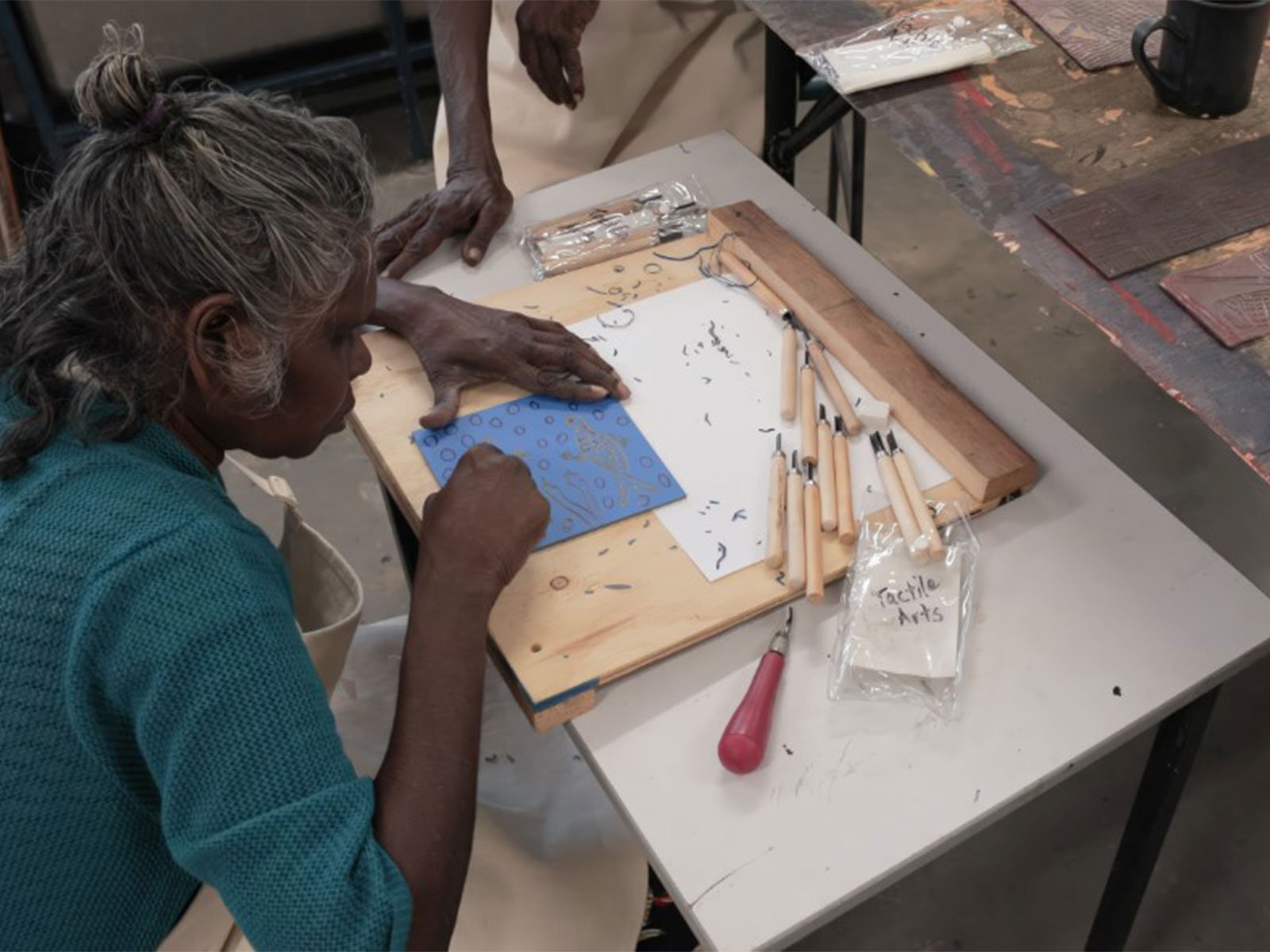
An inspiring Indigenous art collaboration between Australia and India is helping preserve more than 70 traditional textile designs that carry stories, heritage and cultural memories passed down through generations.
The project brought together the Babbarra Women’s Centre in Maningrida, Northern Territory, Australia, and Tharangini Studio in Bengaluru, India. The two women-led organisations worked together to transform traditional lino designs into hand-carved wooden blocks, creating a new way to protect valuable cultural artwork.
Supported by the Centre for Australia-India Relations (CAIR) through its Maitri programme, the initiative highlights the power of art, craftsmanship and cultural partnerships in preserving indigenous heritage.
Traditional Designs Preserved Through Woodblock Printing
The Indigenous art collaboration began with the aim of protecting ancestral textile designs created by artists at the Babbarra Women’s Centre.
For decades, Babbarra artists have used lino printing techniques to represent ancestral stories and cultural knowledge on textiles. However, the hot and humid conditions of Arnhem Land caused some lino prints to deteriorate over time.
To protect these designs for future generations, more than 70 artworks from the Babbarra archives were carefully traced onto paper and reviewed by artists and cultural custodians.
After approval, the designs were carved into seasoned teak wood by artisans at Tharangini Studio, a Bengaluru-based organisation known for traditional woodblock printing techniques.
India’s Traditional Craft Supports Cultural Preservation
Tharangini Studio director Padmini Govind explained that the project used India’s centuries-old woodblock printing traditions to preserve cultural expressions from Australia.
She highlighted that traditional woodblocks have remained valuable preservation tools for generations, with some blocks in Tharangini’s archives being more than 100 years old and still used today.
The collaboration demonstrates how traditional Indian craftsmanship can support the protection of indigenous artwork while creating opportunities for cultural exchange.
Karri-djarrk-durrkmirri: A Symbol of Unity
The project was named Karri-djarrk-durrkmirri, which means “we work together” in the Kuninjku language.
The initiative created a strong connection between artists and artisans from both countries. Despite differences in language and geography, participants were able to communicate through creativity and craftsmanship.
According to Padmini Govind, the artists did not require extensive verbal communication because their shared understanding of art allowed them to collaborate effectively.
The project showed how creative partnerships can overcome barriers and bring communities closer.
Artists From Australia and India Build Cultural Connections
The Indigenous art collaboration included exchanges between artists from both nations.
In 2023, senior Babbarra artists Deborah Wurrkidj and Janet Marawarr travelled to India for the first time. A larger delegation from Babbarra later visited India in 2024, including artists, cultural representatives and project members.
Padmini Govind also travelled to Maningrida as part of the CAIR-supported exchange programme, strengthening the relationship between the two creative communities.
These exchanges allowed artists to share techniques, knowledge and cultural stories through textile art.
Exhibition Showcases Collaborative Artwork
The collaboration resulted in a joint exhibition at the Bangalore International Centre in 2024.
The exhibition displayed 21 hand-printed woodblock textiles created using natural dyes and sustainably sourced fabrics. It also showcased photographs documenting the creative process behind the project.
Later, the exhibition travelled to Australia’s Northern Territory in 2025, allowing the artwork to return to the community where the original designs were created.
The exhibition helped audiences understand the importance of preserving indigenous knowledge and traditional artistic practices.
Protecting Heritage for Future Generations
Babbarra manager Jessica Stalenberg said some of the newly created woodblocks and original lino prints will be preserved in Maningrida’s community-led museum.
These collections will allow future generations to learn about the artistic traditions, stories and cultural identity connected to the designs.
The preservation effort ensures that these important artworks remain accessible for communities, researchers and future artists.
Recognition for Cultural Innovation
The Indigenous art collaboration has also received international recognition for promoting creative connections between communities.
The project won an Asia Pacific Arts Innovation Award for its contribution to cultural exchange, preservation and artistic collaboration across the region.
The initiative represents how traditional knowledge and modern preservation methods can work together to protect cultural heritage.
About The Author