
Delhi Pushes Ghazipur Landfill Cleanup: Ashish Sood Orders Faster Legacy Waste Remediation with Strict Timelines
 admin
admin 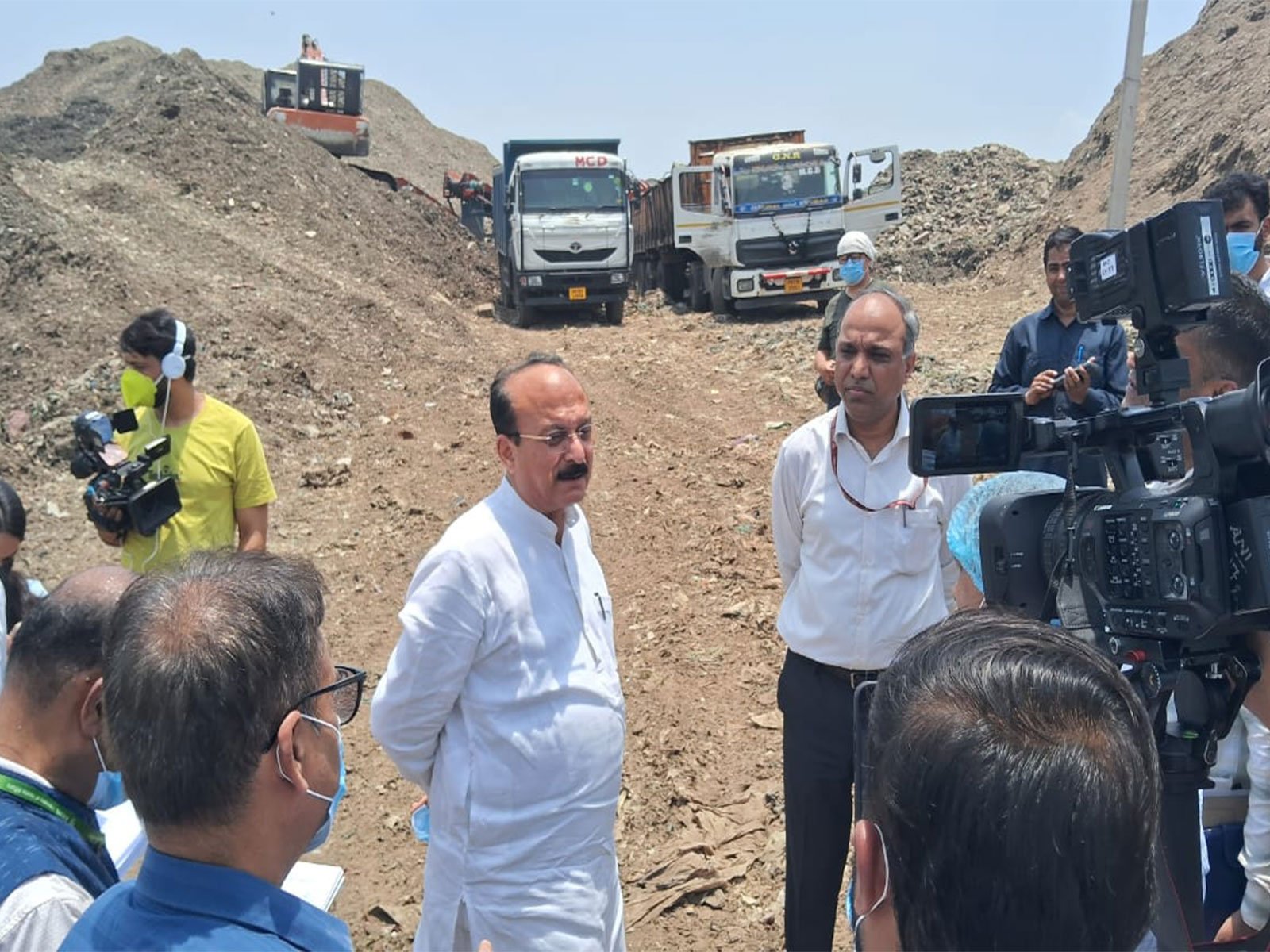
New Delhi, June 26 (ANI): Delhi Urban Development Minister Ashish Sood on Friday carried out an extensive inspection of the Ghazipur Landfill and reviewed the ongoing progress of legacy waste remediation work. The visit focused on accelerating biomining operations, improving waste handling systems, and ensuring strict compliance with time-bound targets set by the Delhi Government.
The Minister directed senior officials of the Municipal Corporation of Delhi (MCD) and the executing agency to adopt a mission-mode approach to resolve long-standing waste accumulation issues at one of the capital’s largest landfill sites.
Ghazipur Landfill: One of India’s Largest Waste Mountains
The Ghazipur Landfill, spread across nearly 70 acres, has been operational since 1984. Over the decades, it has become one of the most critical environmental challenges in Delhi. Despite repeated directions from the National Green Tribunal (NGT) in 2019, the landfill continued to grow, reaching an estimated height of around 65 metres.
The site has long been considered a major example of unchecked urban waste accumulation, making legacy waste remediation a top priority for the city administration.
Officials informed that the landfill contains a massive volume of both legacy and fresh waste, requiring continuous scientific biomining and segregation efforts to stabilize the site and reclaim usable land.
Inspection Focus: Accelerating Legacy Waste Remediation
During the inspection, Delhi Urban Development Minister Ashish Sood reviewed Phase-I and Phase-II of the ongoing legacy waste remediation project at the Ghazipur Landfill.
Phase-I of biomining, carried out between November 2022 and November 2024, was designed to process 30 lakh metric tonnes of legacy waste. However, only 13.90 lakh metric tonnes could be processed within the contract period due to operational limitations.
Following the formation of the current Delhi Government in February 2025, the legacy waste remediation process was significantly accelerated. Phase-II was awarded in March 2025, targeting 30 lakh metric tonnes of waste with a completion deadline of September 2026.
Officials reported that nearly 24 lakh metric tonnes have already been processed under Phase-II, marking a notable increase in pace at the Ghazipur Landfill.
Drone Survey Reveals Massive Waste Load
According to a recent drone survey conducted in April 2026, the total waste present at the Ghazipur Landfill stands at approximately 67.81 lakh metric tonnes.
Between April 30 and June 25, 2026, around 3.39 lakh metric tonnes of waste were processed through biomining, bringing the total remaining waste to 66.68 lakh metric tonnes.
The Minister emphasized that the ultimate goal of legacy waste remediation is not just partial cleanup, but the complete scientific elimination of accumulated waste through sustained action.
The target set by authorities is to fully clear the landfill by December 2027.
Key Bottlenecks Identified in Waste Management
During his inspection of the Ghazipur Landfill, Delhi Urban Development Minister Ashish Sood identified two major operational challenges slowing down legacy waste remediation.
1. Continuous Inflow of Fresh Waste
The first issue is the continuous arrival of fresh municipal waste. Around 2,400 to 2,500 metric tonnes of waste reach the landfill daily from Shahdara North and Shahdara South zones.
While a portion of this waste is diverted to waste-to-energy facilities, nearly 800 metric tonnes still gets added to the landfill every day, complicating ongoing legacy waste remediation efforts at the Ghazipur Landfill.
The Minister instructed officials to develop a separate processing system for fresh waste so that it does not interfere with legacy biomining operations. He also directed submission of a detailed two-month Fresh Waste Processing Action Plan.
2. Disposal of Inert Material
The second challenge involves the disposal of inert material generated during biomining operations. Officials informed that arrangements have been made to transport inert waste to NTPC Eco Park, located about 23 km from the site.
However, delays in transportation capacity have slowed down progress at the Ghazipur Landfill.
To resolve this, the Minister ordered an immediate increase in transport vehicles for inert waste removal and sought a compliance report within one week. Strengthening this system is expected to significantly boost legacy waste remediation output.
Push to Increase Biomining Capacity
Currently, around 7,000 metric tonnes of waste are being processed daily at the Ghazipur Landfill through biomining operations.
Delhi Urban Development Minister Ashish Sood directed officials to scale up operations to 12,000 metric tonnes per day by July 31, 2026.
He emphasized accountability at every level of execution and stated that performance reviews will now be conducted weekly to ensure the pace of legacy waste remediation does not slow down.
The Minister also confirmed that he will personally revisit the site next month to assess progress and compliance with directives issued during the inspection.
Government’s Mission Mode Approach
Speaking after the inspection, Delhi Urban Development Minister Ashish Sood reiterated that the government is committed to solving Delhi’s waste crisis through scientific and structured methods.
He stated that the objective is not just to reduce the visible height of the Ghazipur Landfill, but to permanently eliminate legacy waste through sustained legacy waste remediation efforts.
According to him, the present administration has adopted a “mission-mode approach” that focuses on accountability, monitoring, and time-bound execution.
Long-Term Waste Management Vision
The Delhi Government aims to fully reclaim land from the Ghazipur Landfill and convert it into usable urban space once legacy waste remediation is completed.
Along with Ghazipur, similar remediation projects are underway at Bhalswa and Okhla landfills, which are also part of the broader strategy to modernize Delhi’s waste management infrastructure.
Authorities believe that improved biomining technology, strict monitoring, and better segregation of fresh waste will significantly speed up progress in the coming month .
The inspection led by Delhi Urban Development Minister Ashish Sood marks a renewed push toward resolving one of Delhi’s most persistent environmental challenges. The legacy waste remediation project at the Ghazipur Landfill is now being accelerated with stricter deadlines, higher daily processing targets, and continuous monitoring.
With the government targeting complete clearance by December 2027, officials are under pressure to scale up operations and eliminate bottlenecks. If successfully implemented, the initiative could transform the landfill into reclaimed urban land and significantly improve environmental conditions in the capital.
About The Author