
 admin
admin 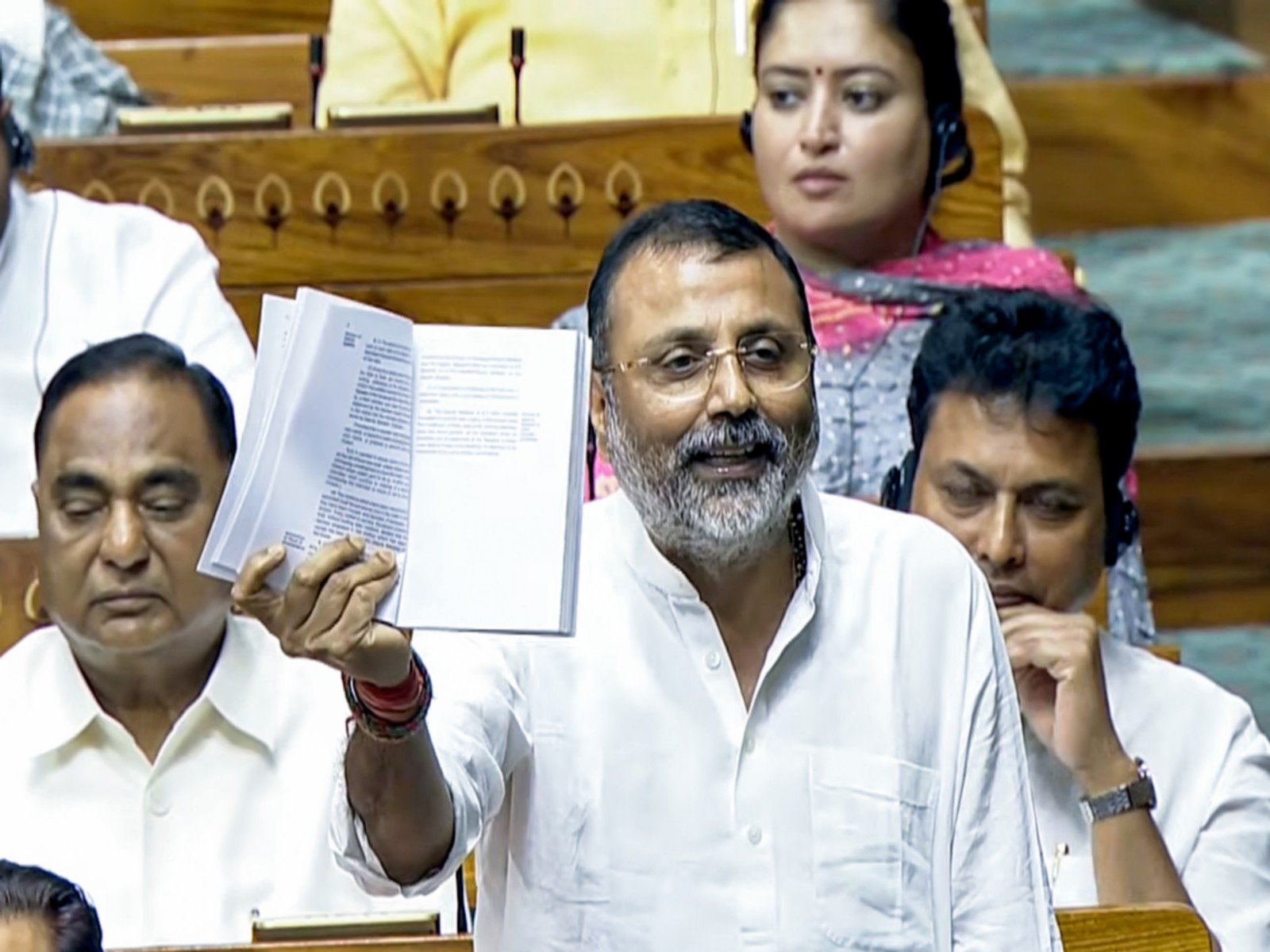
New Delhi, April 22, 2026: Nishikant Dubey, a senior leader of the Bharatiya Janata Party, launched a sharp political attack on the Indian National Congress, alleging that India’s first Prime Minister, Jawaharlal Nehru, attempted to prevent the inauguration of the Somnath Temple after independence.
Dubey made these remarks in a post on the social media platform X, where he referred to historical developments from 1951. He described the episode as part of what he called a “dark chapter” in Congress’s history. According to him, the Nehru-Gandhi family opposed efforts to rebuild and inaugurate the Somnath Temple, which holds deep religious significance for millions of Hindus.
Allegations of Political Pressure and Opposition
In his statement, Dubey claimed that Jawaharlal Nehru tried to stop then-President Rajendra Prasad from attending the temple’s inauguration ceremony. He alleged that Nehru sent letters expressing strong objections and attempted to influence decisions related to the event.
Furthermore, Dubey claimed that Nehru also exerted pressure on leaders involved in the reconstruction project. He named Sardar Vallabhbhai Patel as one of the key figures who supported rebuilding the temple with public backing. According to Dubey, despite resistance from Nehru, efforts by Patel and others ensured that the temple was reconstructed and inaugurated successfully.
Political Reactions and Escalating Debate
Dubey’s remarks have intensified the ongoing political debate between the BJP and Congress. The BJP leader accused Congress of historically opposing cultural and religious initiatives. He argued that such actions reflect a broader ideological difference between the two parties.
At the same time, his comments also targeted senior Congress leaders, including those from the Nehru-Gandhi family. He suggested that the party’s stance on religious and cultural matters has remained consistent over time. These remarks have sparked fresh political discussions and are likely to trigger responses from Congress leaders.
Historical Context of Somnath Temple Reconstruction
The Somnath Temple, located in Gujarat, is one of the twelve Jyotirlingas and holds immense importance in Hindu tradition. The temple faced multiple invasions and destruction in history. After India gained Independence in 1947, leaders like Sardar Vallabhbhai Patel initiated efforts to rebuild the temple as a symbol of cultural revival.
The reconstruction of the temple became a significant national project. It represented the restoration of heritage and faith after years of foreign rule. The inauguration ceremony in 1951 was attended by then-President Rajendra Prasad, which itself became a topic of debate in political circles at the time.
Congress Yet to Issue Detailed Response
As of now, the Indian National Congress has not issued a detailed response to Dubey’s latest remarks. However, such statements often lead to counter-arguments from opposition leaders. Political observers believe that the issue could escalate further, especially as historical narratives continue to play a role in modern political discourse.
Broader Political Implications
The controversy highlights how historical events remain relevant in contemporary politics. Leaders often revisit past decisions to support present-day arguments. Dubey’s statements underline the continuing ideological divide between the BJP and Congress, particularly on issues related to culture, religion, and national identity.
Moreover, such debates also influence public perception. Voters often view these discussions as part of a larger narrative about governance and values. As a result, statements related to historical events can shape political messaging and campaign strategies.
The remarks by Nishikant Dubey have once again brought historical issues into the spotlight. By accusing Jawaharlal Nehru of opposing the inauguration of the Somnath Temple, Dubey has added fuel to the ongoing political confrontation between the BJP and Congress.
As the debate unfolds, responses from Congress and further political reactions are expected. Meanwhile, the issue continues to highlight the intersection of history, politics, and ideology in India’s democratic landscape.
About The Author