
Mallikarjun Kharge Backs Sonia Gandhi on Palestinian Crisis, Questions Modi Government’s Silence
 admin
admin 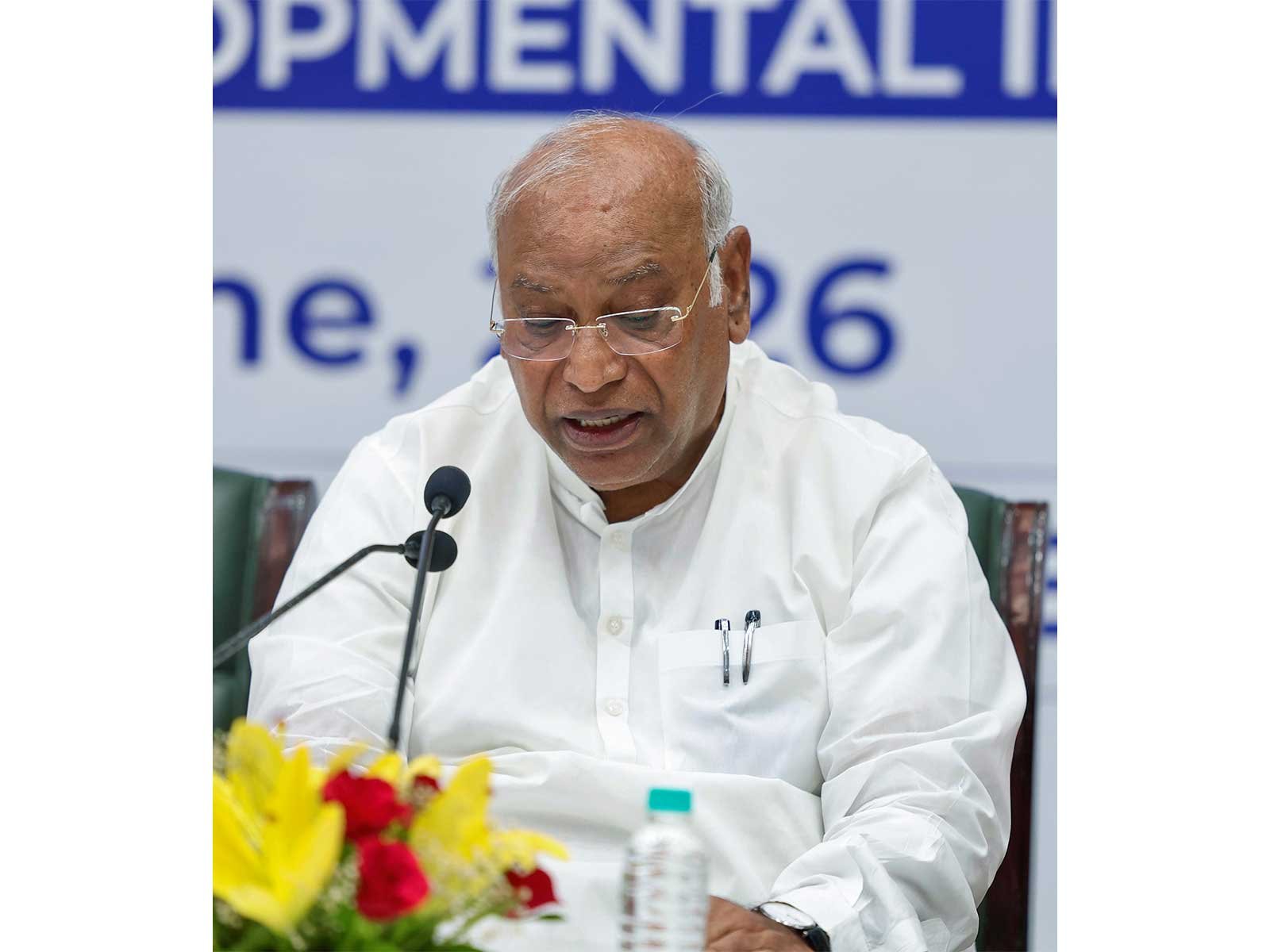
Mallikarjun Kharge Backs Sonia Gandhi on Palestinian Crisis, Criticises Modi Government’s Silence
New Delhi, June 27: Congress President Mallikarjun Kharge on Palestinian Crisis has strongly endorsed Congress Parliamentary Party Chairperson Sonia Gandhi’s views on the ongoing Palestinian crisis, intensifying the opposition’s criticism of the Central Government’s foreign policy. In a strongly worded statement shared on social media, Kharge backed Sonia Gandhi’s recent article and questioned what he described as the Modi government’s continued silence on the humanitarian crisis unfolding in Gaza and the occupied West Bank.
The issue has once again placed India’s foreign policy toward the Israel-Palestine conflict at the center of political debate, with the Congress accusing the Centre of abandoning India’s long-standing diplomatic principles.
Mallikarjun Kharge on Palestinian Crisis: Congress Questions India’s Foreign Policy
The Mallikarjun Kharge on Palestinian Crisis debate gained momentum after Kharge publicly praised Sonia Gandhi’s article, calling it an “evocative” reminder of India’s historical commitment to justice, peace, and humanitarian values.
In his post on X (formerly Twitter), Kharge argued that the current government’s approach has weakened India’s traditional relationships with Palestine, Iran, and several Middle Eastern nations.
According to Kharge, India’s foreign policy has gradually shifted away from its historic diplomatic balance.
He wrote that Sonia Gandhi’s article highlights how India’s silence has distanced the country from global public opinion and from allies that have shared decades of diplomatic relations with New Delhi.
Kharge stated that India’s moral responsibility extends beyond strategic interests and should include speaking out against humanitarian suffering.
Sonia Gandhi Raises Concerns Over Humanitarian Crisis
Sonia Gandhi, in her published article, questioned why the Indian government has not taken a stronger public position regarding the humanitarian situation in Gaza and the occupied West Bank.
Her remarks focused on the plight of Palestinian civilians, particularly women and children, who continue to face the consequences of the prolonged conflict.
The Mallikarjun Kharge on Palestinian Crisis article argued that India’s traditional foreign policy has always balanced strategic interests with humanitarian principles and international law.
Sonia Gandhi suggested that remaining silent during a humanitarian emergency contradicts India’s historical diplomatic identity.
Her article was later shared by Congress leader Priyanka Gandhi Vadra on social media to amplify the message.
Mallikarjun Kharge on Palestinian Crisis Calls for Moral Responsibility
The Mallikarjun Kharge on Palestinian Crisis discussion centered on the Congress leader’s assertion that India should publicly express concern for Palestinian civilians.
Kharge emphasized that both national interest and humanitarian values require India to respond to the ongoing conflict.
He argued that India’s voice has historically carried significant influence in international forums, especially concerning peace and human rights.
According to Kharge, remaining silent weakens India’s moral leadership on global issues.
He further alleged that the government’s position cannot be justified either diplomatically or ethically in light of the continuing humanitarian concerns.
Congress Accuses Centre of Diplomatic Shift
The Congress party believes India’s traditional foreign policy has been significantly altered in recent years.
Party leaders claim that India previously maintained balanced diplomatic relations with both Israel and Palestine while consistently supporting a peaceful two-state solution.
Kharge argued that the current government’s approach has reduced India’s credibility among several countries in the Middle East.
Congress leaders maintain that India’s historical relationships with Palestine and Arab nations have contributed significantly to regional cooperation, energy security, and diplomatic engagement.
According to the opposition, preserving these relationships remains strategically important.
Humanitarian Crisis in Gaza Continues
The Mallikarjun Kharge on Palestinian Crisis ongoing conflict in Gaza has drawn widespread international attention due to the growing humanitarian situation.
According to reports cited by international media, Israeli military operations have resulted in civilian casualties, including children and journalists.
Palestinian authorities continue to report shortages of food, medical supplies, fuel, and essential healthcare services.
Hospitals across Gaza are reportedly operating under severe pressure, with medical staff facing shortages of medicines, equipment, and electricity.
International humanitarian organizations have repeatedly appealed for increased aid and protection of civilians.
The humanitarian situation has prompted renewed calls from several global leaders for diplomatic efforts aimed at reducing civilian suffering.
Palestinian Health Sector Faces Financial Emergency
Earlier this month Mallikarjun Kharge on Palestinian Crisis, the Palestinian Ministry of Health stated that the healthcare system is experiencing one of the most severe financial crises in its history.
According to Palestinian officials, hospitals are struggling to maintain basic medical services due to funding shortages and ongoing restrictions.
Authorities warned that thousands of patients requiring urgent treatment may be affected if additional international assistance is not provided.
The ministry also highlighted rising poverty, unemployment, and increasing dependence on public healthcare facilities.
Health officials urged international organizations and donor countries to provide immediate financial and humanitarian support to prevent further deterioration.
Political Debate Intensifies in India
The Mallikarjun Kharge on Palestinian Crisis issue has become part of the broader political debate over India’s international diplomacy.
While the Congress has criticized the government’s approach, the Centre has consistently maintained that India’s foreign policy is guided by national interests, regional stability, and diplomatic engagement with all stakeholders.
India has traditionally supported a negotiated two-state solution while maintaining strong strategic relations with Israel in areas such as defense, agriculture, innovation, and technology.
At the same time, India has continued humanitarian assistance to Palestinian civilians through various international mechanisms.
The differing political perspectives reflect contrasting views on how India should balance strategic partnerships with humanitarian concerns.
India’s Historical Position on Palestine : Mallikarjun Kharge on Palestinian Crisis
India has historically supported the Palestinian cause while maintaining diplomatic relations with Israel.
Over the decades, successive governments have attempted to balance both relationships by supporting peace negotiations and a two-state solution through dialogue.
Foreign policy experts note that India’s position has gradually evolved alongside changing geopolitical realities, regional security concerns, and expanding economic partnerships.
Despite political differences within India, most parties continue to advocate peaceful negotiations and long-term regional stability.
What Lies Ahead?
The Mallikarjun Kharge on Palestinian Crisis remarks are likely to fuel further political discussions in Parliament and public discourse over India’s foreign policy priorities.
As the humanitarian situation in Gaza continues to attract international attention, opposition leaders are expected to continue pressing the government for greater diplomatic clarity.
Whether the Centre chooses to respond publicly to these criticisms remains to be seen.
Meanwhile, humanitarian organizations continue urging all parties involved in the conflict to prioritize civilian protection, expand humanitarian access, and work toward a peaceful resolution.
The latest statements by Congress President Mallikarjun Kharge have once again brought India’s position on the Israel-Palestine conflict into national focus. By backing Sonia Gandhi’s article, Kharge has questioned the Modi government’s approach while emphasizing humanitarian responsibility and India’s historical diplomatic values.
As international concern over the humanitarian situation in Gaza grows, the debate surrounding Mallikarjun Kharge on Palestinian Crisis is expected to remain a significant political and diplomatic issue. The coming weeks may determine whether this discussion influences India’s public diplomatic messaging or remains confined to domestic political discourse.
About The Author