

 admin
admin 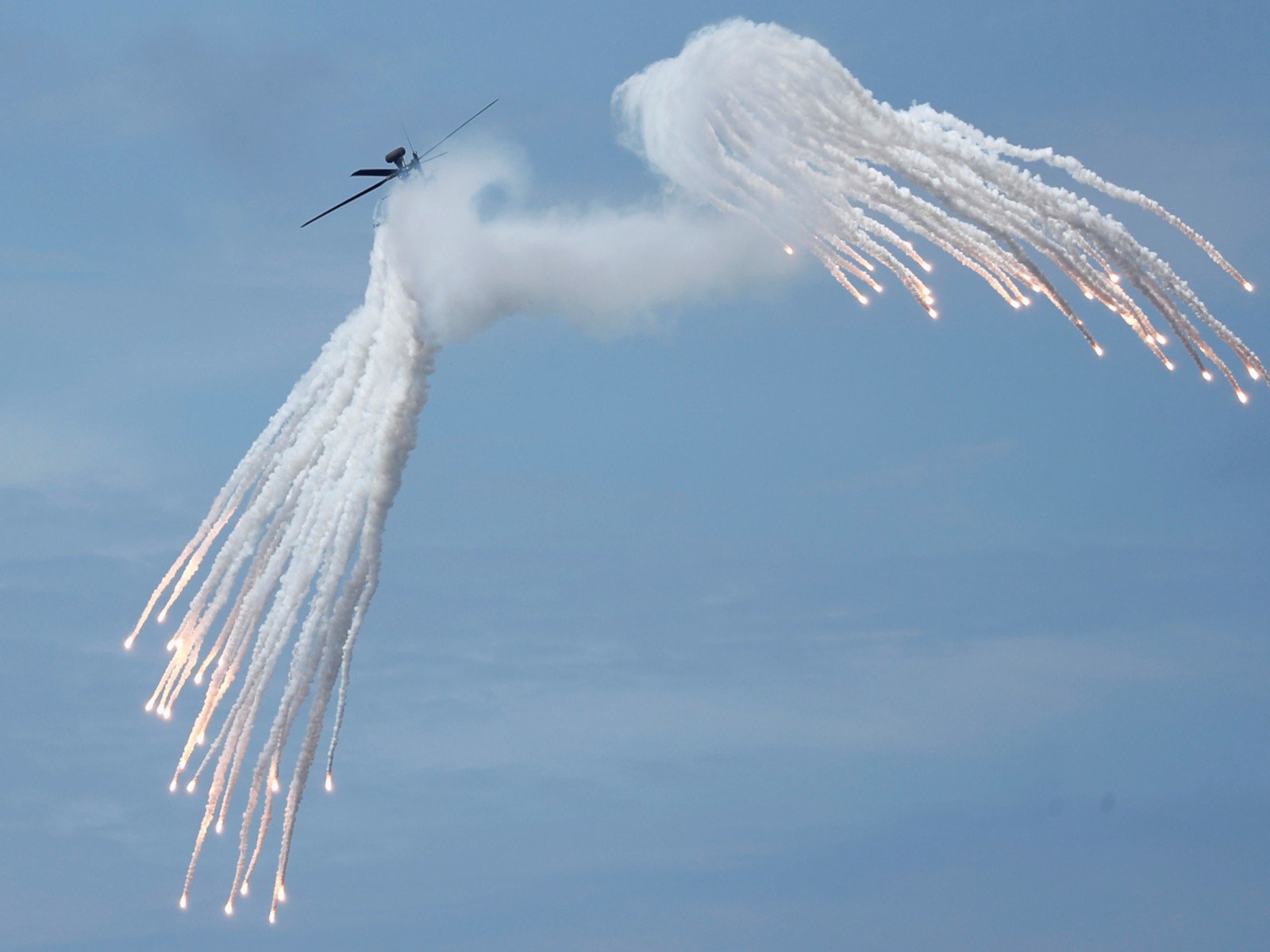
An AH-1W attack helicopter releases flares during the live fire Han Kuang military exercise, which simulates China's People's Liberation Army (PLA) invading the island, in Pingtung, Taiwan May 30, 2019. REUTERS/Tyrone Siu
Taipei, Taiwan, June 27: Taiwan’s Ministry of National Defence (MND) reported the detection of Chinese military aircraft around Taiwan along with seven Chinese naval vessels operating near the island as of 6 a.m. local time on Saturday. The latest activity highlights the continued military presence of China in the waters and airspace surrounding Taiwan, a development that remains closely monitored by regional and international observers.
According to Taiwan’s MND, Chinese military aircraft around Taiwan were detected alongside seven People’s Liberation Army Navy (PLAN) vessels. Taiwan’s armed forces immediately tracked the movements and maintained surveillance throughout the operation.
The ministry stated through a social media update that one sortie of People’s Liberation Army (PLA) aircraft and seven naval vessels were operating around Taiwan during the reporting period. Taiwan’s military emphasized that it had closely monitored the situation and taken appropriate defensive and surveillance measures.
The latest report regarding Chinese military aircraft around Taiwan comes just one day after Taiwan detected increased military activity from China. On Friday, the MND reported two sorties of PLA aircraft and six PLAN vessels operating near Taiwan.
During Friday’s operations, both aircraft entered Taiwan’s southwestern Air Defense Identification Zone (ADIZ), an area where Taiwan monitors and identifies approaching aircraft for security purposes. The presence of Chinese military aircraft around Taiwan within the ADIZ has become a recurring concern for Taiwanese authorities.
Taiwan’s military noted that all detected movements were carefully tracked. Officials stated that the Republic of China (ROC) Armed Forces remained prepared and responsive to any developments resulting from the activities of Chinese military aircraft around Taiwan and nearby naval deployments.
Rising Military Presence Around Taiwan
The continued appearance of Chinese military aircraft around Taiwan reflects an ongoing pattern of military activity by Beijing in the Taiwan Strait and surrounding waters. Over recent years, China has significantly increased the frequency of military patrols, aircraft sorties, and naval deployments near Taiwan.
Security analysts note that these operations serve multiple purposes, including demonstrating military capability, testing Taiwan’s defense readiness, and reinforcing Beijing’s claim over the self-governed island.
The detection of Chinese military aircraft around Taiwan is frequently accompanied by naval movements, creating a coordinated display of military presence. Such activities have become a key feature of cross-strait relations and are closely watched by neighboring countries and global powers.
Taiwan Advances Indigenous Submarine Program
The reports of Chinese military aircraft around Taiwan also coincide with developments in Taiwan’s own defense modernization efforts. Earlier this month, Taiwan’s first domestically built submarine departed from the Port of Kaohsiung for a new round of sea trials.
According to reports from Taiwan’s Military News Agency, the submarine completed its 15th sea trial and ninth submerged navigation test. The indigenous submarine program represents a major milestone in Taiwan’s efforts to strengthen its maritime defense capabilities.
Defense experts believe that Taiwan’s submarine initiative is aimed at enhancing deterrence capabilities amid increasing military pressure, including the repeated appearance of Chinese military aircraft around Taiwan and surrounding waters.
The sea trials are considered a crucial step toward operational deployment of the submarine, which is expected to play an important role in Taiwan’s future defense strategy.
China-Taiwan Dispute Remains Unresolved
The issue of Chinese military aircraft around Taiwan is closely linked to the broader political dispute between Beijing and Taipei. China considers Taiwan an inseparable part of its territory and has consistently maintained that reunification remains a national objective.
Beijing’s position is based on historical, political, and legal arguments that date back centuries. Chinese authorities argue that Taiwan has been part of China since the Qing Dynasty annexed the island in 1683 after defeating Ming loyalist forces.
Taiwan, however, operates as a self-governing democracy with its own government, military, constitution, and economic system. The island maintains that its future should be determined by its people.
As a result, incidents involving Chinese military aircraft around Taiwan often attract significant international attention, as they are viewed within the context of broader regional security concerns and geopolitical competition.
International Concerns Over Regional Stability
The continued presence of Chinese military aircraft around Taiwan has raised concerns among international observers about stability in the Indo-Pacific region. Several countries have emphasized the importance of maintaining peace and stability across the Taiwan Strait.
Analysts argue that frequent military encounters increase the risk of miscalculations or unintended escalation. Consequently, every report involving Chinese military aircraft around Taiwan is closely examined by defense experts and policymakers worldwide.
The Taiwan Strait remains one of the most strategically significant waterways in the world, supporting major international shipping routes and global trade flows. Any deterioration in security conditions could have implications extending far beyond the region.
Taiwan Maintains Vigilance
Despite recurring military activities, Taiwan’s defense authorities continue to emphasize readiness and surveillance. The island’s armed forces regularly monitor all movements involving Chinese military aircraft around Taiwan and nearby naval vessels.
Officials have reiterated their commitment to safeguarding national security while maintaining stability in the region. Taiwan’s military remains on alert and continues to strengthen its defensive capabilities through modernization programs and enhanced operational preparedness.
The latest detection of Chinese military aircraft around Taiwan and seven naval vessels serves as another reminder of the ongoing tensions across the Taiwan Strait. As military activity continues, regional governments and international stakeholders are expected to closely monitor developments in one of Asia’s most sensitive geopolitical flashpoints.
About The Author