
Rohit Pawar Slams BJP’s ‘Operation Tiger’, Calls It ‘Operation Bazaar’ Over Defection Politics
 admin
admin 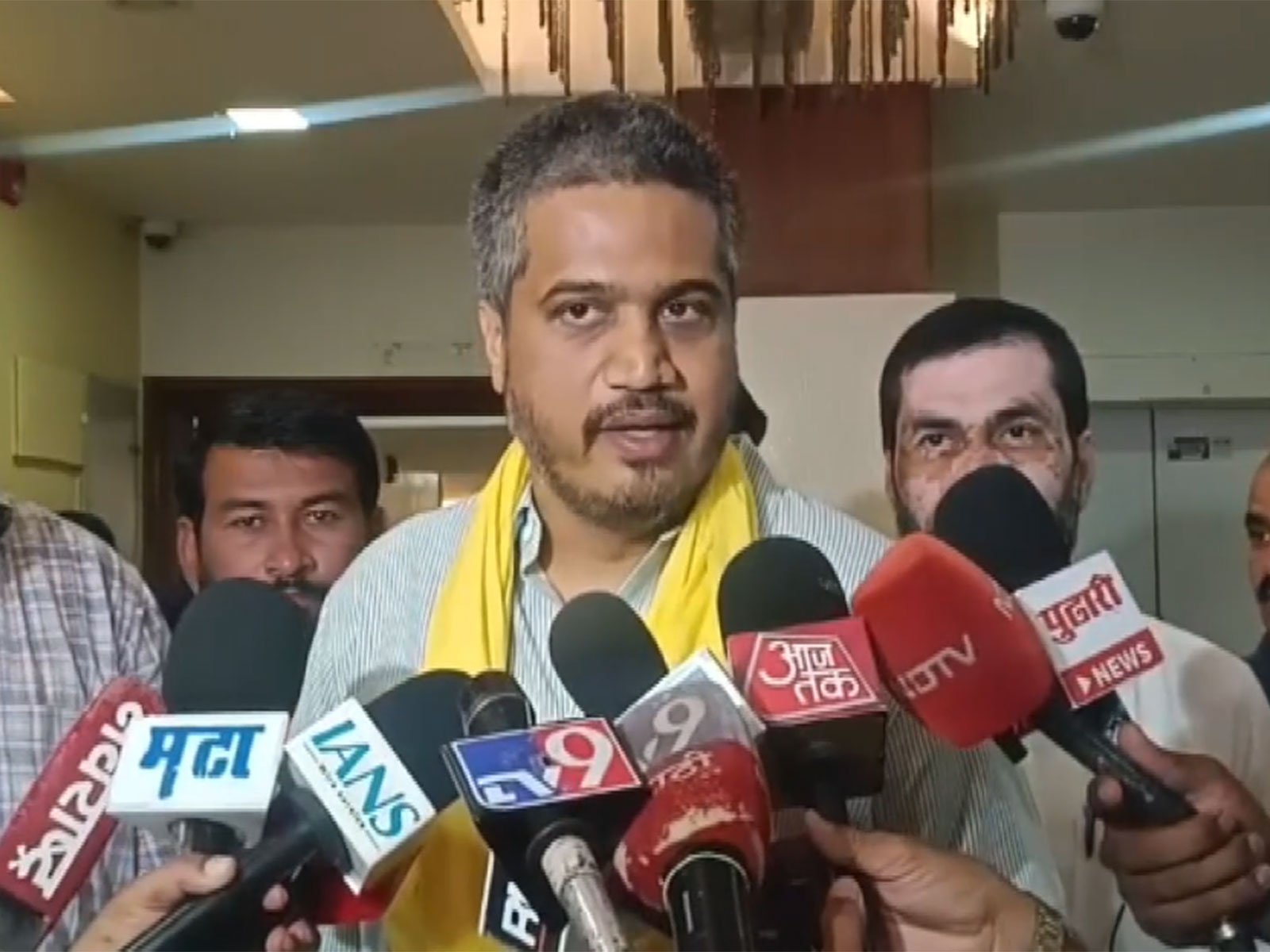
Mumbai: Rohit Pawar Targets BJP Over ‘Operation Tiger’
Nationalist Congress Party (Sharadchandra Pawar) MLA Rohit Pawar on Saturday launched a sharp political attack on the Bharatiya Janata Party (BJP), claiming that the alleged Operation Tiger should instead be renamed Operation Bazaar. Speaking to the media in Chhatrapati Sambhajinagar, Pawar alleged that the BJP is relying on political defections rather than public support to strengthen its position ahead of future elections.
According to Rohit Pawar, the term Operation Bazaar better reflects what he described as attempts to bring leaders from opposition parties into the BJP. He argued that a tiger symbolizes courage and respect, whereas the alleged political strategy resembles a marketplace where elected representatives are persuaded to switch political loyalties.
The remarks have once again intensified the political debate in Maharashtra, where allegations of political poaching have frequently dominated headlines over the past few years.
Why Rohit Pawar Called It ‘Operation Bazaar’
Explaining his statement, Rohit Pawar said the BJP’s primary objective behind Operation Bazaar is to increase its numbers in Parliament. According to him, the ruling party requires additional Members of Parliament (MPs) to comfortably pass important legislation, including the proposed delimitation law linked with women’s reservation.
Pawar claimed that the BJP currently lacks the required parliamentary strength and is therefore attempting to attract MPs from opposition parties.
He emphasized that Operation Bazaar is not merely about state politics but forms part of a larger national political strategy aimed at strengthening the BJP before the 2029 General Elections.
Delimitation Bill and Women’s Reservation
Rohit Pawar alleged that the BJP fell short of the numbers required to pass legislation connected to delimitation and women’s reservation.
According to him, despite having a majority, the BJP still requires support from additional MPs to ensure smooth passage of future constitutional amendments and major legislative reforms.
He argued that this shortage of MPs has led to what he described as Operation Bazaar, where political leaders from opposition parties are allegedly encouraged to join the ruling party.
However, the BJP has consistently denied allegations of engineering defections and maintains that leaders voluntarily join the party because of its governance model and leadership.
Claims About BJP’s 2029 Election Strategy
Rohit Pawar further claimed that the BJP has already started preparing for the 2029 Lok Sabha elections.
According to him, the party’s strategy extends beyond Maharashtra and includes strengthening its presence across several states.
Pawar alleged that Operation Bazaar is designed to build an overwhelming parliamentary majority before the next general elections.
He suggested that increasing the party’s strength now would reduce dependence on alliance partners in the future.
West Bengal Example Cited by Pawar
While criticizing the BJP, Rohit Pawar cited West Bengal as an example.
He claimed that Union Home Minister Amit Shah spent nearly eighteen days campaigning in West Bengal during elections, compared to his usual campaign schedule of only two days in most states.
Despite the extensive campaign, Pawar alleged that the BJP secured only a narrow electoral gain, which he claimed forced the party to seek political expansion through defections instead of electoral victories.
These remarks reflect the opposition’s broader criticism of the BJP’s political strategy, although the ruling party has repeatedly rejected such allegations.
Allegations of MP Poaching
Rohit Pawar alleged that the BJP managed to bring several MPs from opposition parties into its fold.
According to him, MPs from the Trinamool Congress and Shiv Sena (UBT) joined the BJP, helping the party strengthen its parliamentary numbers.
He claimed that despite these additions, the BJP still requires more MPs and has therefore initiated what he repeatedly described as Operation Bazaar.
No official confirmation supporting these specific claims has been presented, and the BJP has consistently maintained that leaders join the party voluntarily.
Remarks on Eknath Shinde
Rohit Pawar also commented on Maharashtra Deputy Chief Minister Eknath Shinde.
He claimed that Shinde’s political influence comes largely from the BJP’s central leadership in New Delhi.
Pawar further alleged that the BJP leadership is strategically empowering Shinde to balance senior BJP leaders within Maharashtra.
He dismissed speculation suggesting close coordination between Shinde’s faction and the Maharashtra BJP in connection with the alleged political strategy.
These comments are likely to add another layer to the ongoing political rivalry within the state’s ruling alliance.
Predictions for Maharashtra Politics
Looking ahead, Rohit Pawar predicted significant political changes before the next Maharashtra Assembly elections.
He claimed that BJP currently has little interest in attracting MLAs because its immediate priority is increasing its parliamentary strength.
However, he suggested that closer to the 2029 elections, Operation Bazaar could shift its focus toward state legislators.
Pawar also predicted that MLAs from both the Eknath Shinde-led Shiv Sena faction and the Ajit Pawar-led NCP faction could eventually contest against the BJP in future elections.
According to him, Maharashtra politics may eventually witness a direct contest between the BJP and the Maha Vikas Aghadi (MVA).
BJP’s Stand
While Rohit Pawar has made serious allegations regarding Operation Bazaar, the BJP has repeatedly denied accusations of political poaching.
The party maintains that leaders from other political parties voluntarily join the BJP because of Prime Minister Narendra Modi’s leadership, development agenda, and governance record.
BJP leaders have consistently argued that opposition parties are attempting to portray voluntary political decisions as orchestrated defections.
The party has also maintained that democratic politics allows elected representatives to choose political platforms aligned with their ideology.
Political Significance
The debate surrounding Operation Bazaar comes at a time when Maharashtra continues to witness intense political competition among the BJP, Shiv Sena factions, NCP factions, and the Maha Vikas Aghadi alliance.
Political analysts believe that allegations of defections, alliance shifts, and electoral strategies will remain central themes as preparations gradually begin for both Assembly and Lok Sabha elections.
Whether Operation Bazaar becomes a lasting political narrative or remains an opposition slogan will largely depend on future political developments.
Rohit Pawar’s remarks have added fresh momentum to Maharashtra’s political discourse. By renaming the alleged Operation Tiger as Operation Bazaar, he attempted to portray the BJP’s political strategy as one focused on attracting opposition leaders rather than winning solely through elections.
While the BJP has denied all allegations of political poaching, the opposition continues to question the ruling party’s methods of expanding its political influence.
As the road to the 2029 elections gradually unfolds, political rhetoric surrounding Operation Bazaar, defections, and alliance politics is expected to remain a major topic in both Maharashtra and national politics.
About The Author