
Priyank Kharge on Ethanol Blending: Karnataka Minister Accuses Centre of Turning 3.6 Crore Indians Into ‘Experiment’
 admin
admin 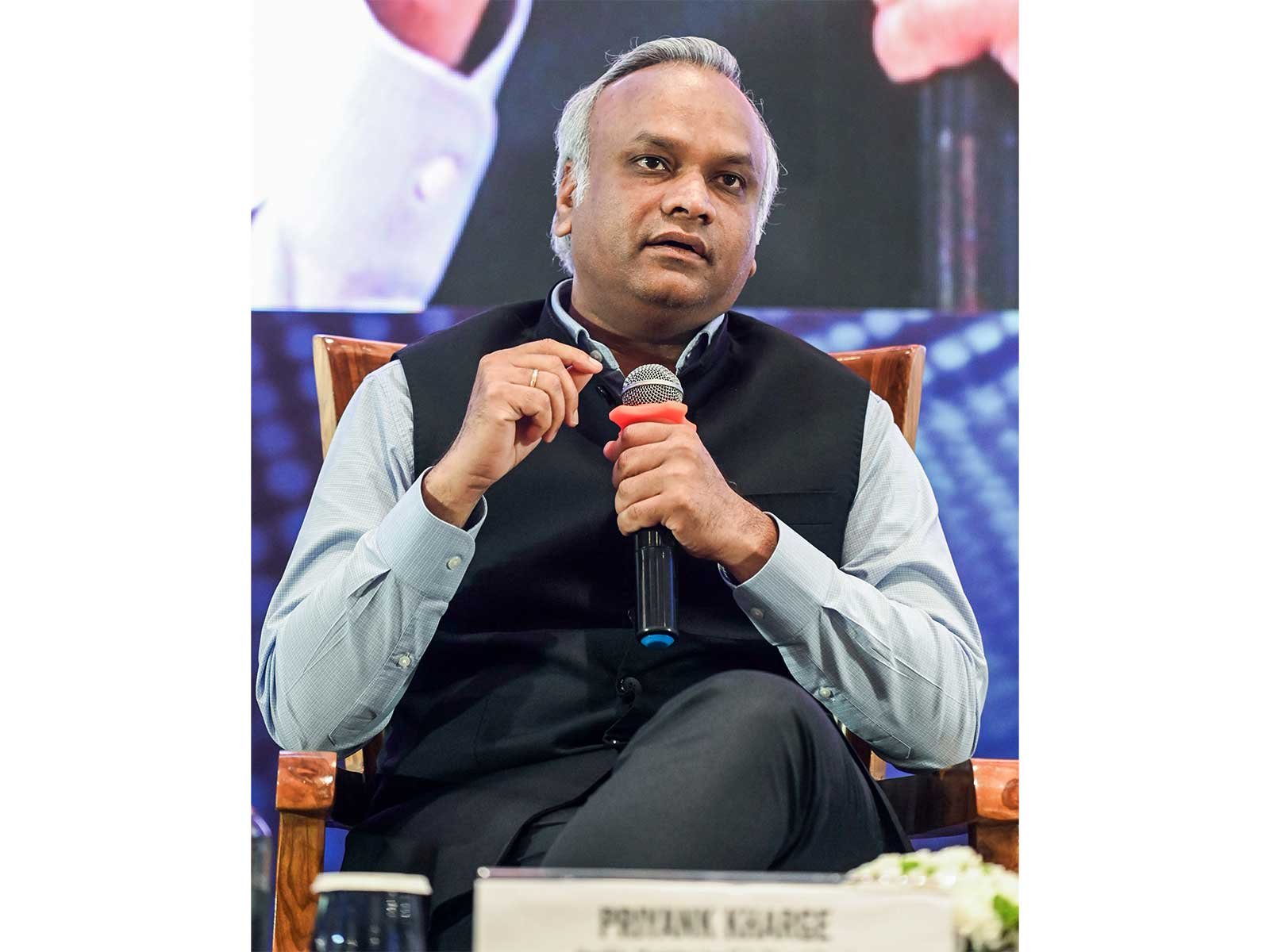
Bengaluru: Karnataka Home Minister Priyank Kharge on ethanol blending launched a sharp attack on the Central Government on Wednesday, alleging that the rollout of Ethanol Blended Petrol (E20) has effectively turned 3.6 crore Indians into participants in a national experiment. The Congress leader claimed that the Union Government introduced the fuel policy without sufficient scientific evidence, public consultation, or consensus, raising serious concerns over its impact on millions of vehicle owners across the country.
The remarks by Priyank Kharge on ethanol blending have intensified the political debate surrounding the Centre’s ambitious Ethanol Blending Programme, which aims to reduce India’s dependence on imported crude oil while promoting cleaner and more sustainable fuel alternatives.
Priyank Kharge Questions Centre’s E20 Fuel Policy
Speaking through a detailed post on X (formerly Twitter), Priyank Kharge on ethanol blending referred to recent proceedings before the Supreme Court, claiming that the Central Government acknowledged that the full effects of ethanol blending are still being evaluated.
According to Kharge, this admission contradicts earlier public statements by Union Road Transport and Highways Minister Nitin Gadkari, who had challenged critics to identify vehicles anywhere in the world experiencing problems due to E20 petrol.
Kharge argued that while ministers confidently defend the policy in public, the government’s legal submissions suggest that long-term results are yet to be fully established.
Claims About Vehicle Compatibility
A major concern raised by Priyank Kharge on ethanol blending relates to vehicle compatibility with E20 fuel. He alleged that nearly nine out of ten vehicles currently operating in India are not fully compatible with 20 percent ethanol-blended petrol.
According to his statement, this affects approximately 3.6 crore vehicles, leading to several issues reportedly experienced by motorists, including:
- Reduced fuel efficiency
- Increased fuel consumption
- Engine performance concerns
- Higher maintenance costs
- Expensive repair bills for vehicle owners
Kharge claimed that ordinary citizens are bearing the financial burden of the policy while scientific assessments are still underway.
“Common People Are Not Guinea Pigs”
In one of the strongest portions of his statement, Priyank Kharge on ethanol blending criticised what he described as the government’s approach to implementing the E20 programme.
He argued that introducing a nationwide fuel transition before establishing complete scientific certainty places unnecessary risks on millions of Indian motorists.
Kharge stated that public policy should be based on transparent research and extensive consultation rather than experimentation involving everyday citizens. He asserted that India’s roads should not become testing grounds for policies whose long-term consequences remain under evaluation.
The Karnataka minister demanded that the Centre roll back the E20 implementation until comprehensive scientific evidence confirms its safety and effectiveness across the country’s vehicle fleet.
Centre Defends Ethanol Blending Programme
While Priyank Kharge on ethanol blending questioned the government’s approach, the Ministry of Petroleum and Natural Gas has strongly defended the programme.
Last week, the Ministry clarified that the Ethanol Blending Programme is scientifically validated and continuously monitored through extensive technical assessments.
The Ministry also warned that several misleading social media posts have been circulating old videos and unrelated images to create unnecessary confusion among the public regarding ethanol-blended petrol.
Officials maintained that all policy decisions have been based on scientific evaluation and technical readiness rather than political considerations.
Objectives of India’s Ethanol Blending Programme
The Priyank Kharge on ethanol blending Programme was first introduced in 2003 as part of India’s long-term energy security strategy.
The initiative has several major objectives, including:
- Reducing dependence on imported crude oil
- Lowering India’s fuel import bill
- Improving energy security
- Supporting domestic sugarcane farmers
- Reducing greenhouse gas emissions
- Promoting cleaner transportation fuels
- Advancing environmental sustainability
Over the years, ethanol blending has been increased gradually through phased implementation after technical evaluations and consultations with industry stakeholders.
The Centre officially expanded the rollout of E20 petrol from 2023 onward as part of its broader clean energy roadmap.
Political Debate Intensifies
The comments made by Priyank Kharge on ethanol blending have added a fresh political dimension to the ongoing discussion over India’s fuel policies.
Opposition leaders argue that the government should provide greater transparency regarding vehicle compatibility, consumer costs, and long-term technical assessments before expanding ethanol blending nationwide.
On the other hand, the Central Government continues to maintain that ethanol blending offers multiple long-term economic and environmental advantages.
Supporters of the programme point to reduced carbon emissions, lower crude oil imports, and increased opportunities for India’s agricultural sector as major benefits of the policy.
Supreme Court Proceedings Draw Attention
One reason Priyank Kharge on ethanol blending has attracted significant public attention is his reference to submissions reportedly made before the Supreme Court.
According to Kharge, the government’s acknowledgement that ongoing assessments are expected to continue until next year raises important questions about whether nationwide implementation was premature.
However, government officials maintain that continuous monitoring is a normal feature of large public infrastructure and energy programmes and does not imply uncertainty regarding the overall policy.
Legal proceedings related to ethanol blending continue to be closely watched by policymakers, automobile manufacturers, environmental experts, and millions of vehicle owners.
What This Means for Vehicle Owners
The debate surrounding Priyank Kharge on ethanol blending reflects growing public interest in how E20 fuel affects everyday motorists.
Vehicle manufacturers have gradually introduced E20-compatible models in recent years, while the government has encouraged consumers to check compatibility information provided by manufacturers.
Experts generally advise vehicle owners to follow manufacturer recommendations regarding approved fuel types to ensure optimal engine performance and warranty compliance.
As India continues expanding cleaner fuel initiatives, discussions involving policymakers, automobile companies, environmental specialists, and consumers are expected to shape future implementation strategies.
The controversy surrounding Priyank Kharge on ethanol blending highlights the broader debate between environmental goals and consumer concerns. While the Karnataka Home Minister has accused the Centre of treating millions of Indians as participants in an unproven fuel experiment, the Union Government maintains that the Ethanol Blending Programme is backed by scientific studies, technical evaluations, and years of phased implementation.
As legal scrutiny and political discussions continue, the issue remains significant for India’s automotive sector, fuel policy, and energy security agenda. The coming months—and the outcome of ongoing scientific assessments—could play an important role in determining the future course of India’s ethanol blending programme.
About The Author