
 admin
admin 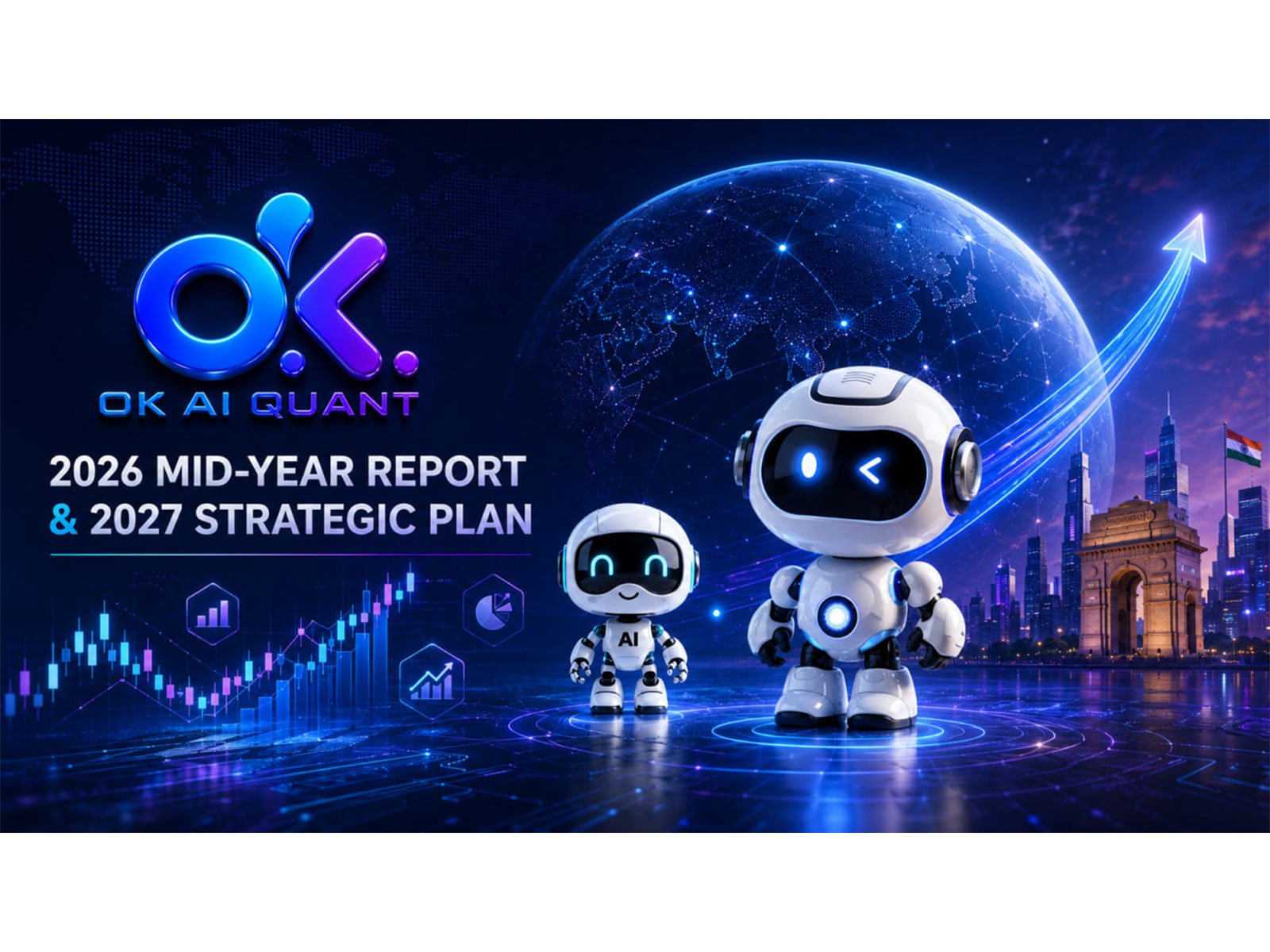
The global AI quantitative trading industry is entering an important phase of development in 2026 as artificial intelligence, machine learning and automated trading technologies become increasingly integrated into financial markets.
Market research cited in the supplied report indicates that the global AI-driven trading market is expected to increase from US$24.53 billion in 2025 to US$27.85 billion in 2026, representing a compound annual growth rate of 13.6 per cent. Meanwhile, the AI-driven investment analysis market is projected to grow at an even faster rate, with a CAGR of 26.6 per cent and an expected value of US$2.48 trillion by 2034.
Against this backdrop, OK AI QUANT says it has continued to expand its global operations, technology research, talent base and market presence during the first half of 2026.
1. Global Interest in AI Quantitative Trading Continues to Rise
The growth of AI quantitative trading is being supported by the increasing use of artificial intelligence in financial decision-making and automated transactions.
According to industry data cited in the report, AI agents initiated approximately 25 per cent of cryptocurrency transactions in 2026, three times the level recorded two years earlier. These systems were also reported to be processing more than US$100 million in on-chain transactions every week.
This development reflects a broader transition in financial markets, where automated systems are increasingly being used for research, market analysis, portfolio management and execution.
OK AI QUANT says its proprietary Graph Neural Network (GNN) time-series forecasting model and quantitative capabilities cover approximately 50,000 financial products. The company currently reports operations across 29 countries.
The expansion illustrates how AI quantitative trading is moving beyond traditional algorithmic strategies toward systems capable of processing large volumes of market information.
2. OK AI QUANT Reports Membership Growth
OK AI QUANT reported significant growth in its global membership during the first half of 2026.
According to the company, new membership increased substantially compared with the same period in the previous year, while assets under management and trading activity also increased.
The company says its global membership base has now surpassed one million members.
These figures are company-reported claims and should be considered in that context. They nevertheless illustrate the growing commercial interest surrounding AI quantitative trading, particularly in digital-asset markets.
The company also says it has continued strengthening its compliance and risk-management framework as it expands its services internationally.
3. India Becomes an Important Market
India has become an important part of OK AI QUANT’s expansion strategy.
Following the implementation of its India market strategy, the company says it has established a local team covering compliance, technical support, business development and market operations.
The development is intended to create a stronger local service structure while supporting the company’s broader expansion across India and South Asia.
India’s large technology workforce and expanding financial technology ecosystem provide an important environment for the development of AI quantitative trading.
The company says it plans to further expand its Indian team and strengthen its local capabilities as part of its 2027 strategy.
4. AI Algorithms Are Transforming Quantitative Trading
Technology is at the centre of the evolution of AI quantitative trading.
During the first half of 2026, OK AI QUANT said it completed a core algorithm architecture upgrade of its Graph Neural Network time-series forecasting model to V3.0.
Graph Neural Networks can be used to identify relationships and patterns within complex datasets. In quantitative finance, advanced machine-learning techniques can potentially assist with market forecasting, signal generation and portfolio analysis.
The wider industry is also moving toward greater use of deep learning, reinforcement learning and automated feature engineering.
These technologies can help quantitative systems process increasingly complex datasets and adapt to changing market conditions.
However, sophisticated technology does not eliminate investment risk. Financial markets remain uncertain, and algorithmic systems can experience losses when market conditions change unexpectedly.
5. AI Agents Are Becoming More Important
Another major development in AI quantitative trading is the increasing use of AI agents.
Unlike traditional automated systems that operate according to predefined rules, AI-agent-based systems are being developed to perform more complex sequences of tasks, including data analysis, strategy selection and trading-related decision-making.
Industry trends suggest that AI agents could gradually expand from cryptocurrency markets into traditional financial markets.
OK AI QUANT says it plans to increase the contribution of AI-agent-driven trading within its systems, targeting a 20 per cent contribution as part of its 2027 objectives.
The development could become an important area of competition among financial technology companies.
6. Cross-Asset Trading Could Shape the Next Stage
The next phase of AI quantitative trading could involve greater integration across different asset classes.
OK AI QUANT says it plans to expand its quantitative strategies to cover more than five categories of traditional financial products, including Indian equities, bonds and foreign exchange.
The company’s stated long-term objective is to develop a full-asset quantitative platform covering both digital assets and traditional financial markets.
Cross-asset systems could allow traders and portfolio managers to analyse relationships between different markets and develop strategies across multiple instruments.
The move also reflects a wider industry trend toward cloud-based execution platforms and flexible infrastructure capable of handling different trading requirements.
7. Talent and Technology Investment Remain Key Priorities
The development of AI quantitative trading requires specialised talent across several fields.
OK AI QUANT says its founding team includes quantitative engineers, AI algorithm specialists and experienced traders, while its global recruitment strategy has expanded into technology research, compliance, risk management and business development.
During 2026 and 2027, the company plans to continue expanding its professional teams and talent acquisition programmes.
Specialised expertise will remain important as quantitative platforms become more sophisticated. Engineers, data scientists, financial researchers, cybersecurity professionals and compliance specialists all have roles to play in building and operating financial technology systems.
For the wider AI quantitative trading sector, competition for skilled professionals could therefore increase as companies invest more heavily in artificial intelligence and financial automation.
2027 Outlook for AI Quantitative Trading
The outlook for AI quantitative trading remains closely linked to the broader growth of artificial intelligence and digital financial infrastructure.
OK AI QUANT says it is targeting 30 per cent year-over-year growth in global assets under management in 2027, with cumulative growth of 50 per cent compared with 2025. These are company targets rather than independently verified forecasts.
In India, the company says it aims to strengthen its local team and work toward a top-five market-share position in the region.
The company also plans to expand its quantitative strategies across traditional financial products while continuing to develop digital-asset capabilities.
India’s Role in the Emerging Market
India could become an increasingly important market for AI quantitative trading as financial technology, artificial intelligence and digital investment infrastructure continue to develop.
The country’s large pool of technology professionals provides potential advantages for companies developing AI-based financial systems.
At the same time, regulatory compliance, investor protection, cybersecurity and responsible deployment of automated trading technologies will remain important considerations.
As the sector develops, market participants will need to balance technological innovation with appropriate risk-management and regulatory frameworks.
Challenges Facing AI Quantitative Trading
Despite strong growth expectations, AI quantitative trading faces several challenges.
Financial markets are highly unpredictable, and historical data cannot guarantee future performance. AI models can also produce inaccurate signals, particularly during unusual market conditions or periods of extreme volatility.
Data quality, model risk, cybersecurity and regulatory compliance are additional considerations.
The use of AI in financial decision-making also raises questions about transparency and accountability. As systems become increasingly autonomous, companies will need robust controls to ensure that automated decisions remain within appropriate risk parameters.
For investors, technology should therefore not be viewed as a guarantee of returns.
About The Author