
Hamirpur Schools Social Audit Report Exposes Major Gaps in RTE Implementation and Infrastructure
 admin
admin 
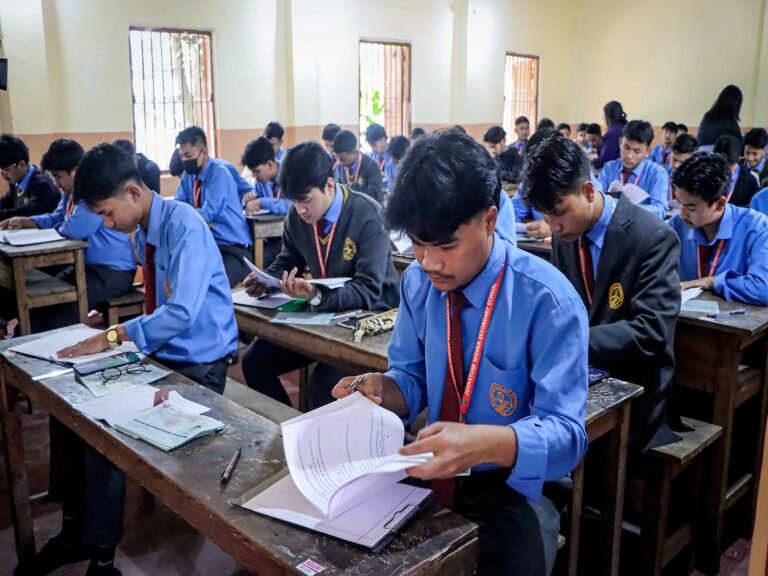
Government school students in Hamirpur attending class amid infrastructure and safety concerns highlighted in the social audit report on RTE implementation in Himachal Pradesh.
In a significant development highlighting systemic challenges in the education sector, a detailed Hamirpur schools social audit report has revealed widespread deficiencies in government schools across the district of Hamirpur in Himachal Pradesh. The findings raise serious questions about the effective implementation of the Right to Education (RTE) framework and overall school governance standards.
The Hamirpur schools social audit report was presented during a large public hearing attended by more than 500 stakeholders, including parents, teachers, School Management Committee members, local representatives, and education officials. The audit has sparked renewed debate over infrastructure quality, student safety, and inclusivity in government-run schools.
Large-Scale Audit Reveals Systemic Weaknesses
According to the findings, the Hamirpur schools social audit report covered 146 government schools, representing nearly 20% of the total 704 schools in the district. The audit was conducted by a team from Himachal Pradesh University under academic supervision, with the aim of assessing both achievements and shortcomings in the education system.
Experts involved in the Hamirpur schools social audit report emphasized that the objective was not to blame institutions but to identify gaps that hinder effective learning outcomes and equitable access to education under the Right to Education Act.
The report revealed that nearly 8% of schools lack adequate classroom space, while a much larger proportion suffer from overcrowding and insufficient teaching infrastructure. further highlighted that 56% of schools do not have adequate furniture, forcing students to sit in uncomfortable and non-conducive learning environments.
Drinking Water and Hygiene Concerns
One of the most alarming findings in the Hamirpur schools social audit report is related to drinking water quality. While 92% of schools reportedly have access to drinking water, 97% of these sources are not certified as safe or hygienic. This raises significant public health concerns, especially for young children.
The Hamirpur schools social audit report also pointed out gaps in sanitation and hygiene infrastructure, which directly affect student health and attendance, particularly among girls.
Student Safety Under Scrutiny
Student safety emerged as one of the most critical issues in the Hamirpur schools social audit report. More than 32% of schools have not formed mandatory School Safety Committees, which are essential for disaster preparedness, child protection, and grievance monitoring.
Additionally, 27% of schools lack boundary walls or fencing, exposing children to external risks. The Hamirpur schools social audit report warns that such gaps disproportionately affect girl students and increase vulnerability to safety threats.
Accessibility and Inclusive Education Gaps
A key concern highlighted in the Hamirpur schools social audit report is the lack of inclusive infrastructure for children with disabilities. Nearly 84% of schools do not have barrier-free access such as ramps or accessible pathways. Furthermore, 63% lack toilets designed for differently-abled students.
The Hamirpur schools social audit report also found that none of the surveyed schools had access to professional counselling services, indicating a significant gap in emotional and psychological support systems for students.
Menstrual Hygiene and Gender Issues
The audit further highlighted gender-specific concerns. According to members of the audit team, more than 19% of schools do not provide sanitary pads to adolescent girls, a basic requirement for ensuring hygiene and regular school attendance.
The Hamirpur schools social audit report emphasizes that such gaps contribute to absenteeism among girl students and highlight the need for stronger gender-sensitive policies in school administration.
Governance and Grievance Redressal Failures
Another major concern raised in the Hamirpur schools social audit report is the weak grievance redressal system. Nearly one-third of schools do not have complaint or suggestion boxes, despite this being a mandatory requirement under education guidelines.
The report also highlights poor monitoring mechanisms, noting that education officials are not conducting regular school inspections as required. The Hamirpur schools social audit report suggests that this lack of oversight contributes to the persistence of infrastructural and administrative shortcomings.
Mid-Day Meal and Nutrition Scheme Performance
On a relatively positive note, the Hamirpur schools social audit report found that implementation of the Mid-Day Meal programme is largely satisfactory, with only 1% of schools lacking kitchen facilities. This indicates better compliance with nutrition-related mandates compared to other infrastructure areas.
However, experts caution that food quality, monitoring, and hygiene still require consistent oversight to ensure long-term effectiveness.
Library Facilities Show Relative Strength
The Hamirpur schools social audit report also identified some positive developments. More than 70% of schools meet prescribed standards for library infrastructure, suggesting progress in reading resources and academic support systems.
Despite this, the report stresses that library access alone cannot compensate for broader infrastructural deficiencies affecting classroom learning environments.
Community Reactions and Demands for Reform
The public hearing where the Hamirpur schools social audit report was presented saw active participation from parents and community members. Many demanded urgent improvements in infrastructure, transport connectivity, teacher accountability, and student safety mechanisms.
Stakeholders stressed that unless corrective measures are taken, the objectives of the Right to Education Act will remain only partially fulfilled in rural and semi-urban regions.
Government Response and Future Action Plan
Officials acknowledged the findings of the Hamirpur schools social audit report and assured that corrective measures would be implemented. Education authorities stated that while the district has shown reasonable performance in certain areas, urgent intervention is required to address critical gaps.
Deputy Director of Education Quality emphasized that the government is committed to improving school standards and will review all recommendations from the Hamirpur schools social audit report.
The findings of the Hamirpur schools social audit report present a mixed picture of government education in Hamirpur. While certain aspects such as library infrastructure and mid-day meal implementation show progress, serious challenges remain in safety, accessibility, hygiene, and governance.
The report serves as a crucial reminder that effective implementation of the Right to Education requires not just policy frameworks but strong ground-level execution and continuous monitoring. If addressed systematically, the recommendations of the Hamirpur schools social audit report could significantly improve learning conditions and ensure equitable education for all students in the district.
About The Author