

Honey Bee Navigation Study Reveals Bees Follow Personal Flight Paths With Remarkable Precision
 admin
admin 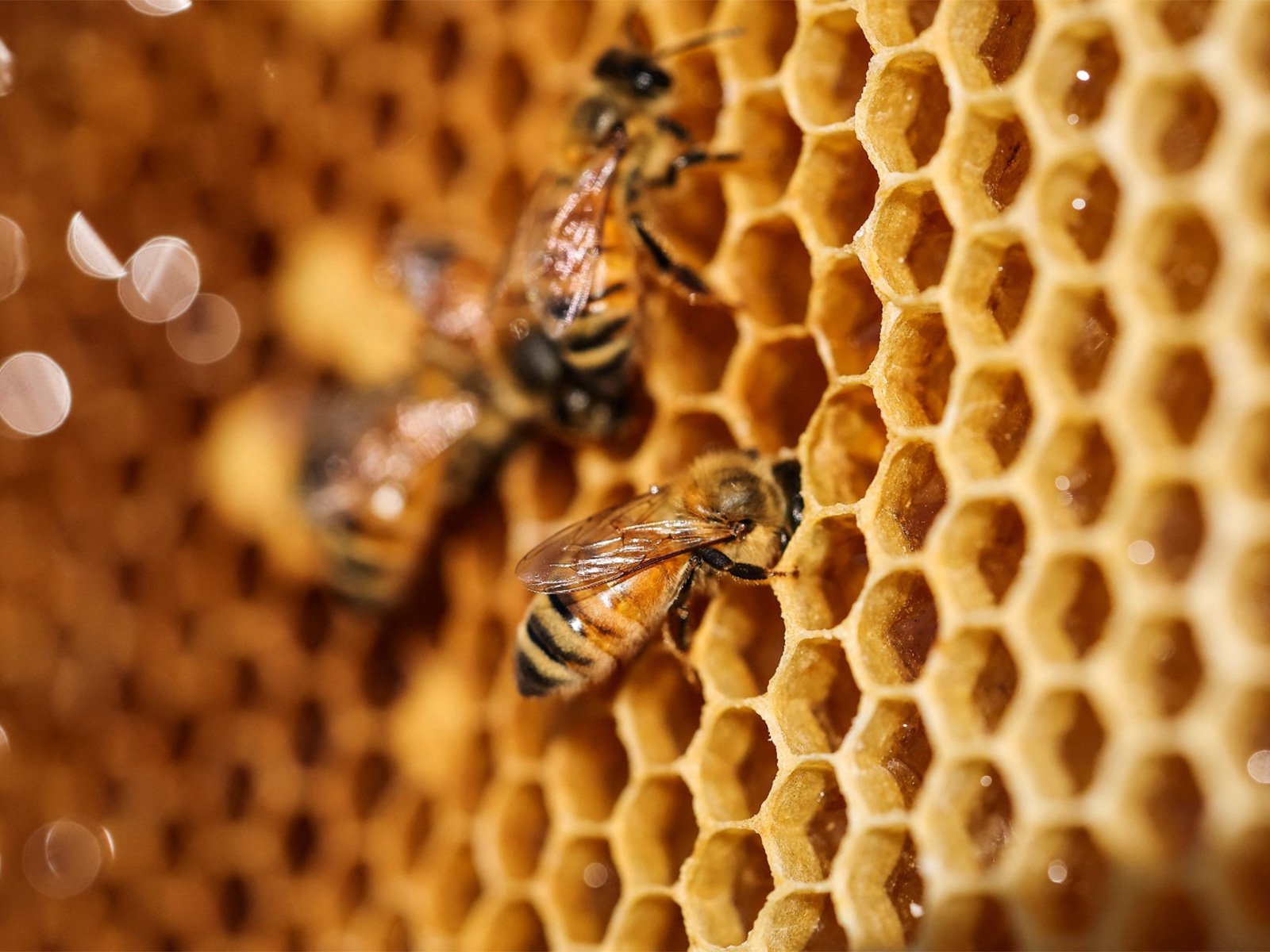
A honey bee flies along a precise route near landscape landmarks, highlighting the remarkable accuracy of honey bee navigation revealed in a new University of Freiburg study.
Washington DC [US], June 15: A groundbreaking study has uncovered fascinating new insights into Honey Bee Navigation, revealing that individual honey bees follow highly consistent and personalized flight routes while traveling between their hive and food sources. The research, conducted by scientists at the University of Freiburg, demonstrates that bees are far more accurate navigators than previously believed.
The study highlights the incredible capabilities of Honey Bee Navigation, showing that bees can repeatedly fly along nearly identical routes, often staying just a few centimeters away from paths they had taken during earlier trips. Researchers say these findings could transform scientific understanding of insect navigation and spatial memory.
Advanced Technology Unlocks Secrets of Honey Bee Navigation
The research team, led by neurobiologist and behavioral biologist Professor Dr. Andrew Straw, used an innovative drone-based tracking system to monitor honey bees in a natural agricultural landscape. To better understand Honey Bee Navigation, scientists attached tiny reflective markers to individual bees and followed their movements using a cutting-edge method known as Fast Lock-On (FLO) Tracking.
This advanced system enabled researchers to capture detailed three-dimensional flight paths with unprecedented accuracy. The technology allowed scientists to study Honey Bee Navigation in real-world conditions rather than in controlled laboratory environments.
“Our tracking system makes it possible for the first time to record high-resolution 3D flight paths of honey bees in natural landscapes,” explained Straw. “Our recordings show that each bee has its own preferred route and flies it very precisely.”
Individual Flight Paths Showcase Extraordinary Precision
One of the most remarkable discoveries from the study was the consistency of individual flight routes. Researchers found that Honey Bee Navigation is highly personalized, with each bee developing its own preferred path between the hive and a food source located approximately 120 meters away.
The team analyzed 255 flight paths recorded near Kaiserstuhl, Germany. Results showed that bees repeatedly followed the same routes over multiple journeys. This level of Honey Bee Navigation precision surprised researchers, as many insects were previously thought to rely on more generalized navigation strategies.
According to the study, bees often traveled only a few centimeters away from their previous flight paths. Such accuracy demonstrates an exceptional ability to remember and repeat complex routes across the landscape.
Scientists noted that the findings suggest each bee develops a unique navigational strategy, almost resembling individual personalities. This discovery provides new evidence that Honey Bee Navigation is far more sophisticated than traditionally assumed.
Landmarks Play a Critical Role in Honey Bee Navigation
The study also revealed the importance of visual landmarks in guiding bee movements. Researchers observed that Honey Bee Navigation was most accurate when bees flew near distinctive landscape features such as trees and hedges.
A large tree located between the hive and the food source emerged as a particularly significant navigational aid. Bees consistently used this landmark to maintain precise flight paths. The findings indicate that visual cues help strengthen Honey Bee Navigation by providing reliable reference points during travel.
In contrast, bees displayed greater variation in their flight routes when flying over a cornfield. The uniform appearance of the crop offered fewer recognizable visual markers, making Honey Bee Navigation slightly less precise in that area.
“Our results suggest that visual landmarks aid the bees’ navigation and increase the precision of their flight paths,” Straw said.
These observations support the theory that bees create detailed mental maps of their environment and use prominent landmarks to improve navigational accuracy.
New Insights Into Spatial Memory and Orientation
The latest findings contribute significantly to scientific understanding of spatial memory in insects. Researchers believe Honey Bee Navigation relies on a combination of visual recognition, memory, and environmental awareness.
The ability to consistently repeat specific routes suggests that bees can store and recall detailed information about their surroundings. This level of Honey Bee Navigation indicates advanced cognitive capabilities that were once considered unlikely in insects with relatively small brains.
Scientists argue that understanding how bees process spatial information may inspire future technological developments in robotics and autonomous navigation systems. By studying Honey Bee Navigation, researchers may uncover efficient methods for route planning and environmental mapping.
The discovery also highlights the importance of preserving diverse landscapes that provide essential visual cues for pollinators. Changes in land use and habitat loss could potentially affect Honey Bee Navigation and foraging efficiency.
Study Challenges Assumptions About the Waggle Dance
The research offers fresh insights into one of the most famous aspects of bee behavior—the waggle dance. Honey bees perform this dance to communicate the direction and distance of food sources to other members of the colony.
Previous studies suggested that directional information conveyed during the waggle dance can vary by approximately 30 degrees when describing food sources located around 100 meters away. Some scientists believed this reflected limitations in Honey Bee Navigation abilities.
However, the new findings challenge that assumption.
Researchers discovered that bees travel with far greater precision when navigating to familiar locations than the accuracy displayed in their dance communication would suggest. The study found that even in areas where route variation was greatest, Honey Bee Navigation deviated by only a few degrees from the preferred path.
“Our research has shown that individual bees navigate much more accurately to destinations they are familiar with,” Straw explained.
This suggests that inaccuracies in the waggle dance are not caused by weak navigational skills. Instead, the dance may serve as a general directional guide rather than a precise set of coordinates.
What the Findings Mean for Future Research
The study opens new opportunities for exploring how insects interact with their environment. Researchers believe that further investigations into Honey Bee Navigation could reveal additional details about memory formation, decision-making, and sensory processing in bees.
The success of drone-based tracking technology also creates possibilities for studying other insects in natural habitats. Scientists hope to apply similar methods to examine migration patterns, foraging behavior, and ecological interactions.
As researchers continue to investigate Honey Bee Navigation, they expect to gain a deeper understanding of how pollinators successfully locate food and return home with remarkable consistency.
The findings ultimately demonstrate that honey bees possess extraordinary navigational abilities, relying on personal flight routes, visual landmarks, and spatial memory to travel through complex environments. This research not only reshapes scientific perspectives on bee behavior but also highlights the remarkable intelligence hidden within one of nature’s most important pollinators.
About The Author