
 admin
admin 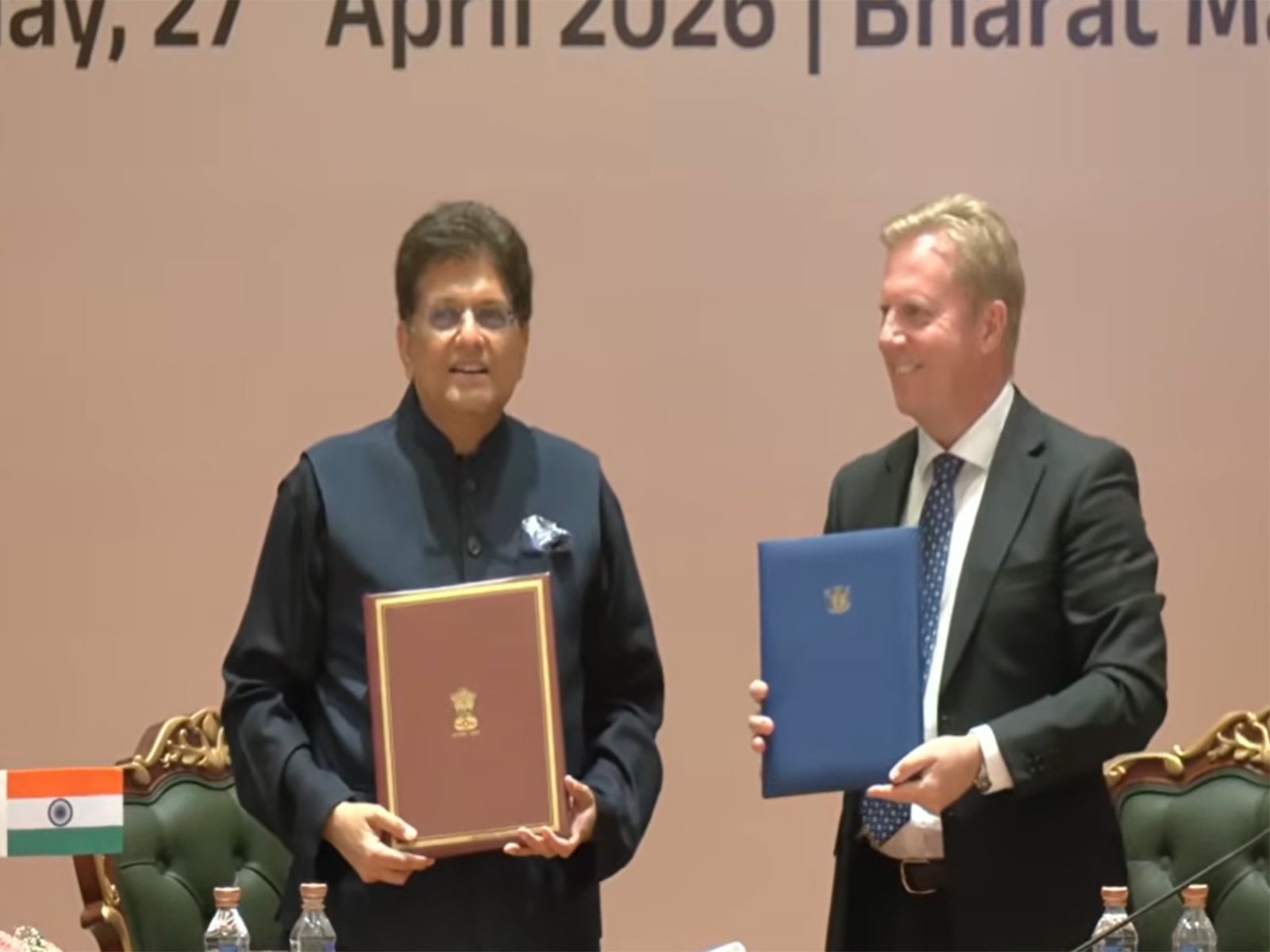
New Delhi | April 27
India New Zealand: In a landmark development for global trade and diplomacy, Piyush Goyal and Todd McClay hailed the India New Zealand Free Trade Agreement (FTA) as a “comprehensive” and forward-looking framework, opening a new era of economic cooperation between the two nations.
The agreement, signed in New Delhi, is being seen as a strategic milestone that goes far beyond conventional trade deals. It is expected to deepen bilateral ties, unlock investment opportunities, and create long-term economic benefits for both countries.

A Comprehensive and Forward-Looking Trade Agreement
Addressing the signing ceremony, Piyush Goyal emphasized that the FTA is not limited to tariffs and trade rules. Instead, it represents a holistic framework covering multiple sectors.
He stated that the agreement spans:
- Market access
- Agricultural productivity
- Investment flows
- Mobility of professionals and students
- Innovation and entrepreneurship
According to Goyal, this multi-sector approach ensures that the agreement benefits a wide spectrum of stakeholders, including farmers, MSMEs, artisans, women entrepreneurs, and skilled professionals.
The agreement reflects a modern approach to trade, where economic partnerships are designed to be inclusive, sustainable, and growth-oriented.
Market Access and Sectoral Opportunities
India New Zealand:One of the most significant highlights of the FTA is the expanded market access offered by New Zealand.
- Access has been granted in 118 sectors
- Most Favoured Nation (MFN) status in 139 sectors
This move is expected to open new avenues for Indian exports, particularly in sectors like manufacturing, pharmaceuticals, and services.
For New Zealand, the agreement provides greater entry into India’s vast and rapidly growing market.
The removal of trade barriers and establishment of predictable rules will make it easier for businesses in both countries to operate and expand.
Agricultural Cooperation and Rural Growth
India New Zealand Agriculture plays a crucial role in the agreement, with both nations aiming to strengthen rural economies.
Goyal highlighted that the FTA includes an agricultural productivity partnership, which will:
- Improve farming techniques
- Increase agricultural output
- Enhance export potential
Additionally, a mutual recognition agreement in organic products will boost India’s organic exports to New Zealand and other markets.
This collaboration is expected to benefit farmers by increasing income levels and creating new opportunities in global markets.
India New Zealand: Investment Opportunities Worth Billions
The FTA is projected to bring up to USD 20 billion in investments into India, according to Goyal.
These investments are expected across key sectors such as:
- Agriculture
- Manufacturing
- Food processing
- Technology and innovation
The inflow of capital will not only boost economic growth but also generate employment opportunities across various industries.
For New Zealand investors, India offers a dynamic market with high growth potential, making it an attractive destination for long-term investments.
Game-Changer for Pharma and Medical Sectors
Another major highlight of the agreement is the acceptance of:
- Good Manufacturing Practices (GMP)
- Good Clinical Practices (GCP)
This recognition is expected to significantly benefit India’s pharmaceutical and medical device industries.
By simplifying regulatory processes, Indian companies will find it easier to access international markets, enhancing their global competitiveness.
Mobility and Opportunities for Youth
The FTA introduces new visa pathways that will facilitate:
- Work opportunities
- Study programs
- Holiday travel
These provisions are designed to strengthen people-to-people connections between the two nations.
Students, young professionals, and entrepreneurs will gain access to new opportunities, fostering cultural exchange and skill development.
“A New Innings”: Goyal’s Vision
India New Zealand: Using a cricket analogy, Piyush Goyal described the FTA as a “shared pitch” where both nations can begin a new innings together.
He said:
“Let us bat well, score higher, and build a partnership to last.”
This statement reflects the optimism surrounding the agreement and the expectation of long-term success.
New Zealand’s Perspective: Strategic Importance of India
Todd McClay described the FTA as a “significant step forward” in bilateral relations.
He emphasized that India is not just an economic partner but also a country with:
- Strong people-to-people ties
- Complementary economies
- Shared global interests
McClay noted that strengthening ties with India remains a key priority for New Zealand.
Historical Ties and Shared Values
Highlighting the historical connection, McClay recalled how Indian and New Zealand soldiers fought together during World War I.
This shared history has laid the foundation for a relationship based on mutual respect and cooperation.
The FTA builds upon these longstanding ties, transforming them into a modern economic partnership.
A Result of Years of Negotiation
The agreement is the outcome of more than two and a half years of negotiations.
Both countries worked closely to ensure that the deal is:
- Practical
- Balanced
- Mutually beneficial
This sustained effort reflects the commitment of both nations to strengthen their partnership.
Role of Businesses in Driving Success
Goyal highlighted that while governments sign agreements, businesses play a crucial role in implementing them.
He stressed that enterprises must actively engage with the opportunities created by the FTA.
The presence of business leaders at the signing ceremony indicates strong industry support for the agreement.
Strengthening Global Trade Position
The India New Zealand FTA comes at a time when global trade dynamics are rapidly evolving.
For India, the agreement strengthens its position as a major economic power and expands its global trade network.
For New Zealand, it provides access to one of the fastest-growing economies in the world.
Together, the two nations aim to create a resilient and future-ready economic partnership.
Implementation: The Real Challenge Ahead
Todd McClay emphasized that signing the agreement is only the beginning.
The real success of the FTA will depend on:
- Effective implementation
- Continuous cooperation
- Active participation from businesses
Both governments have committed to ensuring that the agreement delivers tangible results.
Opportunities for MSMEs and Startups
The FTA is expected to benefit small and medium enterprises (SMEs) as well as startups.
Key advantages include:
- Easier market entry
- Reduced trade barriers
- Access to international networks
This will enable smaller businesses to expand globally and compete more effectively.
Strategic Impact on Indo-Pacific Region
The agreement also has strategic implications for the Indo-Pacific region.
By strengthening economic ties, India New Zealand can contribute to regional stability and growth.
The partnership aligns with broader efforts to promote cooperation in the Indo-Pacific.
The India New Zealand Free Trade Agreement marks a transformative moment in bilateral relations.
With its comprehensive scope, the agreement goes beyond traditional trade deals to create a multi-dimensional partnership.
From agriculture and manufacturing to technology and mobility, the FTA opens new opportunities for both nations.
As implementation begins, the focus will shift to translating this vision into real-world outcomes.
If executed effectively, this agreement has the potential to redefine economic cooperation and set a benchmark for future trade partnerships.
Sustainable Development and Green Growth
The FTA also supports sustainable development.
Both countries aim to promote:
- Green technologies
- Sustainable agriculture
- Environmental protection
This ensures that economic growth is balanced with environmental responsibility.
Long-Term Economic Outlook
Experts believe that the India New Zealand FTA will have a multiplier effect on economic growth.
Over the next decade, the agreement is expected to:
- Increase trade volumes
- Boost GDP growth
- Strengthen global competitiveness
This long-term outlook makes the agreement a strategic investment in the future.
The India New Zealand Free Trade Agreement is more than just a trade deal—it is a comprehensive partnership for the future.
By covering multiple sectors and focusing on innovation, sustainability, and inclusivity, the agreement sets a new benchmark for global trade agreements.
As both nations embark on this new journey, the focus will be on turning opportunities into tangible outcomes.
With strong leadership, active business participation, and effective implementation, the FTA has the potential to transform bilateral relations and create lasting economic impact.
The signing of the India New Zealand Free Trade Agreement (FTA) marks a historic turning point in bilateral relations, redefining economic cooperation between the two countries. With both nations aiming to strengthen trade, investment, and strategic engagement, this agreement is being seen as one of the most comprehensive trade frameworks in recent years.
Commerce and Industry Minister Piyush Goyal and India New Zealand Trade Minister Todd McClay described the pact as a future-ready agreement designed to unlock long-term growth opportunities and deepen mutual trust.
Why This FTA Matters Globally
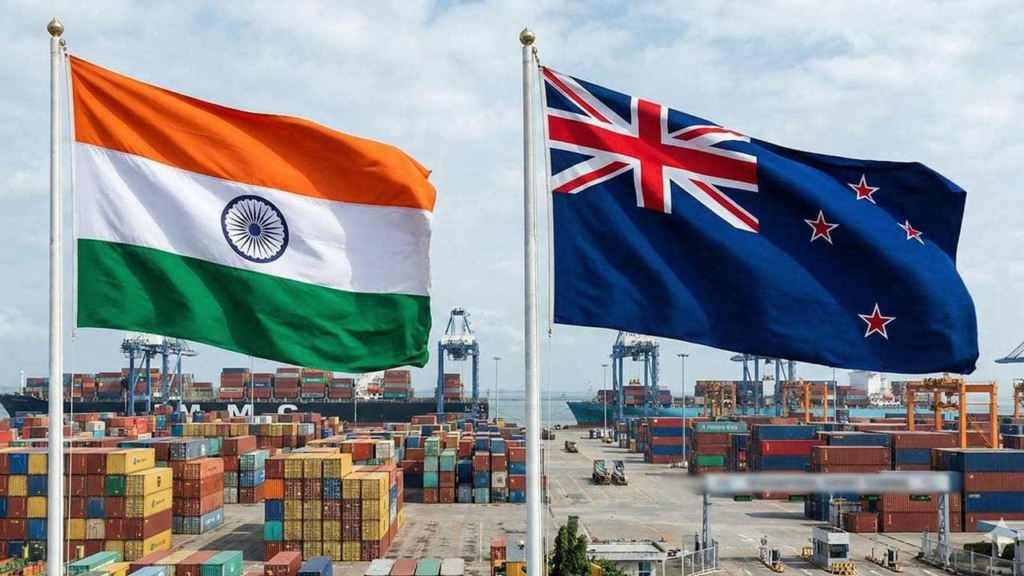
The India New Zealand FTA is not just a bilateral deal—it has global economic significance.
In a time when supply chains are being reshaped and countries are seeking reliable trade partners, this agreement sends a strong signal of economic stability and cooperation.
India, as one of the fastest-growing major economies, offers vast market potential. Meanwhile, India New Zealand brings advanced agricultural practices, technology, and expertise.
This complementary nature makes the partnership highly strategic.
The FTA is expected to boost India’s manufacturing exports significantly. With improved market access, Indian products such as textiles, engineering goods, and electronics will find new opportunities in New Zealand.
Lower tariffs and simplified regulations will encourage manufacturers to scale operations and explore international markets.
Agriculture remains a cornerstone of the agreement.
India’s large agricultural base combined with India New Zealand’s advanced farming technologies creates a powerful synergy.
Key benefits include:
- Improved productivity through knowledge exchange
- Better access to global markets
- Growth in organic farming exports
The agreement also opens doors for food processing industries, enabling value-added products to reach international consumers.
One of the most interesting aspects of the India New Zealand Free Trade Agreement is how it reflects a shift in the way countries are approaching global partnerships today. This is not just about buying and selling goods anymore. It’s about building trust, creating long-term opportunities, and making sure both sides grow together. That’s exactly what makes this agreement stand out.
In India New Zealand: For India, this deal comes at a time when the country is actively expanding its global footprint. From manufacturing to technology and services, India has been trying to position itself as a reliable partner in the international market. Agreements like this help strengthen that image. It sends a message that India is open for business and ready to collaborate on a global scale.
On the other hand, India New Zealand also gains access to one of the world’s fastest-growing economies. For a country with a strong agricultural base and a focus on quality exports, India offers a massive consumer market. This creates a natural balance—India brings scale, while New Zealand brings expertise. When these two combine, the results can be quite powerful.
Another thing that deserves attention is how this agreement could quietly impact everyday lives. It’s easy to think of trade deals as something that only affects big businesses or government policies, but that’s not entirely true. When exports increase and investments flow in, it often leads to more job opportunities, better infrastructure, and improved services. Over time, these changes trickle down and become visible in daily life.
For small business owners and entrepreneurs, this agreement could open doors that were previously difficult to access. Imagine a small handicraft business in India finding customers in New Zealand or a startup getting access to international partnerships. These are the kinds of opportunities that can grow businesses beyond local boundaries.
There’s also a strong human element to this agreement. The focus on mobility—allowing students, professionals, and young travelers to move between countries—adds a personal dimension to what could otherwise be seen as a purely economic deal. When people travel, study, and work across borders, they carry ideas, culture, and experiences with them. This exchange often leads to deeper understanding and stronger relationships between nations.
What makes this agreement even more interesting is the timing. The global economy is still adjusting to disruptions from recent years—whether it’s supply chain issues, geopolitical tensions, or shifts in trade patterns. In such a situation, countries are looking for stable and dependable partnerships. The India New Zealand FTA fits well into this broader picture, offering both stability and opportunity.
Of course, like any major agreement, the real test will be in its implementation. Signing a deal is just the beginning. The actual impact depends on how effectively it is executed on the ground. Businesses need to be aware of the opportunities, governments need to ensure smooth processes, and both sides must stay committed to making the partnership work.
There might also be challenges along the way—differences in regulations, market expectations, or logistical hurdles. But these are not unusual in international agreements. What matters is how both countries address these issues and keep moving forward.
India New Zealand: In the bigger picture, this agreement represents more than just economic cooperation. It reflects a mindset—one that values collaboration over competition and long-term growth over short-term gains. It shows that countries can come together, find common ground, and build something meaningful that benefits both sides.
As this partnership begins to take shape, it will be interesting to see how it evolves over the next few years. If implemented well, it could become a model for future trade agreements, not just for India New Zealand, but for other countries looking to build strong and balanced partnerships.
For India, one of the biggest advantages lies in diversification. Relying too heavily on a few markets can be risky, especially in uncertain global conditions. By strengthening ties with countries like India New Zealand is spreading its economic connections more evenly. This not only reduces risk but also creates more stability for exporters and industries.
India New Zealand, too, stands to benefit in a similar way. While it already has strong trade relationships with several countries, expanding engagement with India opens up fresh possibilities. Given India’s growing middle class and increasing demand for quality products, New Zealand exporters could find a highly receptive market.
Another important angle is innovation. When two countries collaborate closely, especially in sectors like technology, agriculture, and healthcare, it often leads to new ideas and better solutions. For example, India New Zealand, expertise in sustainable farming combined with India’s scale and workforce can create efficient models that benefit both nations. These kinds of collaborations go beyond trade—they contribute to knowledge sharing and progress.
India New Zealand There’s also a growing focus globally on sustainability, and this agreement could play a role in that area as well. Both India and New Zealand have shown interest in environmentally responsible growth. If this partnership encourages eco-friendly practices, sustainable exports, and responsible investments, it could set a positive example for other nations.
At a grassroots level, educational exchanges and mobility programs included in the agreement can shape future generations. When students get opportunities to study abroad or professionals gain international exposure, it enhances skills and broadens perspectives. Over time, these individuals become bridges between the two countries, strengthening ties in ways that policies alone cannot achieve.
Another subtle but important benefit is cultural connection. Trade may be the foundation, but relationships grow stronger through people. As interactions increase—whether through tourism, education, or work—there’s a deeper appreciation of each other’s traditions, values, and lifestyles. This kind of understanding often leads to more meaningful and lasting partnerships.
From a business perspective, predictability is key. One of the biggest challenges companies face in international trade is uncertainty—unclear regulations, sudden changes, or unexpected barriers. Agreements like this aim to reduce those uncertainties by creating clear rules and frameworks. This makes it easier for businesses to plan ahead and invest with confidence.
It’s also worth noting that such agreements send a strong signal to the global community. When two countries commit to a comprehensive partnership, it reflects stability, trust, and openness. This can attract further investments from other regions as well, as global investors often look for markets where strong international relationships already exist.
However, expectations need to be realistic. Not every sector will benefit equally or immediately. Some industries may take longer to adapt, and others may need support to compete effectively. That’s where policy support and awareness play a crucial role. Governments and industry bodies will need to guide businesses, especially smaller ones, so they can make the most of the opportunities available.
In many ways, this agreement is like planting a seed. The groundwork has been laid, but growth will depend on how well it is nurtured. Consistent effort, open communication, and a willingness to adapt will be essential for both countries.
As the world continues to evolve, partnerships like these are becoming increasingly important. They are not just about economic gains but about building resilient connections that can withstand global challenges. The India New Zealand FTA is a step in that direction—a step towards a more connected, cooperative, and forward-looking future.
In the end all about India New Zealand , what matters most is how this agreement translates into real outcomes—better opportunities, stronger businesses, and improved livelihoods. If both nations stay committed to their shared goals, this partnership has the potential to grow into something truly impactful over time.
About The Author