
India South Korea Cooperation Gains Momentum as Jaishankar Highlights Opportunities “From Ships to Chips”
 admin
admin 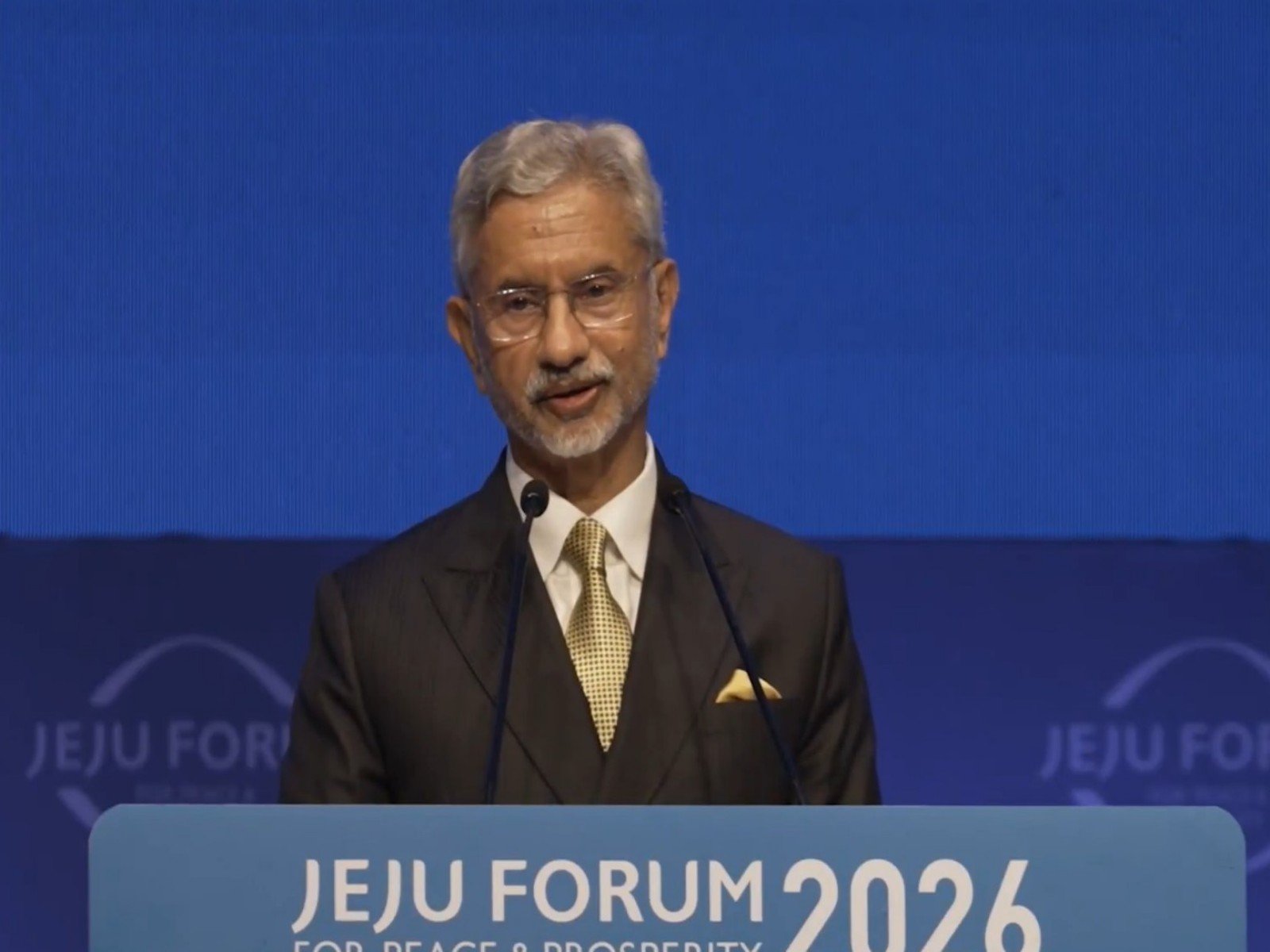
Jeju Island, South Korea, June 25: External Affairs Minister S. Jaishankar has called for deeper India South Korea cooperation, emphasizing that both nations possess strong complementarities across multiple sectors ranging from shipbuilding and semiconductors to healthcare, infrastructure, and defense. Speaking at the Jeju Forum for Peace and Prosperity 2026, Jaishankar underlined the importance of strengthening bilateral ties amid a rapidly changing and increasingly fragmented global landscape.
The remarks come at a time when global supply chains, technological competition, and geopolitical uncertainties are reshaping international relations. According to Jaishankar, enhanced India South Korea cooperation can play a significant role in creating a more resilient, diversified, and cooperative global order.
Jaishankar Calls for New Forms of Global Cooperation
Delivering the keynote address during his two-day visit to South Korea, Jaishankar acknowledged that fragmentation has become a defining feature of the current international environment. While many view fragmentation as a challenge, he argued that it also creates opportunities for greater democratization and reduced dominance by a few powerful players.
He noted that economic integration continues to drive international relations despite geopolitical tensions. The growing interconnectedness of global supply chains has made cooperation between countries more important than ever. In this context, India South Korea cooperation can contribute significantly to strengthening supply chain resilience and reducing overdependence on limited sources.
The minister stressed that today’s world is increasingly shaped by economic interdependence, technological innovation, and cross-border resource networks. These factors make partnerships such as India South Korea cooperation crucial for long-term stability and growth.
Technology and AI Creating New Opportunities
Jaishankar highlighted the transformative impact of technology, particularly artificial intelligence, on global economies and societies. He stated that AI-driven innovation is inherently transnational because data collection, model development, and deployment often involve multiple countries.
This evolving technological landscape presents significant opportunities for India South Korea cooperation. South Korea is a global leader in advanced manufacturing, semiconductors, and electronics, while India offers a vast talent pool, a rapidly growing digital economy, and expanding technological capabilities.
Experts believe that stronger India South Korea cooperation in semiconductor manufacturing, research and development, and digital technologies could benefit both nations while enhancing global supply chain resilience.
Addressing Global Challenges Together
The External Affairs Minister emphasized that many of today’s challenges transcend national boundaries. Pandemics, terrorism, climate change, and natural disasters require coordinated international responses.
Jaishankar said that international cooperation remains essential because these challenges cannot be contained within political jurisdictions. Enhanced India South Korea cooperation in healthcare, disaster management, renewable energy, and climate resilience can help both countries tackle emerging global threats more effectively.
He also referred to India’s ancient philosophy of “Vasudhaiva Kutumbakam,” meaning “the world is one family,” as a guiding principle for international engagement. This philosophy aligns closely with the spirit of India South Korea cooperation, which seeks mutual growth and shared prosperity.
Concerns Over Economic Restrictions
The minister raised concerns about practices that limit industrialization opportunities for developing countries. He argued that manipulation of competitiveness and restrictions on market access often prevent emerging economies from realizing their full potential.
Such challenges underscore the need for stronger partnerships like India South Korea cooperation, which can help create alternative pathways for economic growth, innovation, and industrial development.
By expanding trade, investment, and technology sharing, both nations can support sustainable economic progress while reducing vulnerabilities arising from geopolitical tensions and supply chain disruptions.
Weaponization of Global Systems
Jaishankar warned that the world is witnessing increasing “weaponization” across multiple domains, including trade, technology, finance, and connectivity. He noted that strategic considerations are increasingly influencing commercial decisions and infrastructure projects.
The rise of social media-driven politics and greater geopolitical risk-taking has further complicated international relations. In such an environment, India South Korea cooperation becomes increasingly valuable as both countries seek stable and trusted partnerships.
Analysts suggest that closer India South Korea cooperation can contribute to a rules-based international order that promotes transparency, fairness, and mutual respect.
Five Pillars for Reinventing Cooperation
During his address, Jaishankar outlined five key principles for reinventing international cooperation in a fragmented world.
The first involves de-risking the global economy through diversification of production networks and supply chains. The second focuses on forging new partnerships among influential nations. The third stresses protecting international law and institutions such as the United Nations Convention on the Law of the Sea (UNCLOS).
The fourth pillar aims to provide greater opportunities for countries in the Global South, while the fifth advocates reforming multilateral institutions to reflect contemporary realities.
According to Jaishankar, all five principles support stronger India South Korea cooperation and create a compelling case for deeper bilateral engagement.
“From Ships to Chips”
One of the most notable moments of Jaishankar’s speech was his description of the extensive complementarities between the two nations.
“We have complementarities in many fields, from ships to chips, and also health, infrastructure, or defense, which are just waiting to be exploited,” he said.
This statement reflects the broad scope of potential India South Korea cooperation. South Korea’s expertise in shipbuilding, electronics, automotive manufacturing, and advanced technology complements India’s strengths in software development, digital services, pharmaceuticals, and skilled human resources.
The expansion of India South Korea cooperation across these sectors could unlock substantial economic benefits for both countries while creating new opportunities for innovation and employment.
Growing Strategic Partnership
Jaishankar revealed that discussions during his bilateral meetings in Seoul focused on strengthening economic ties, technology partnerships, political cooperation, strategic engagement, and people-to-people connections.
These discussions underscore the growing importance of India South Korea cooperation in the Indo-Pacific region. Both nations share common interests in maintaining regional stability, supporting free and open trade, and promoting sustainable development.
As geopolitical uncertainties continue to evolve, policymakers increasingly view India South Korea cooperation as a key pillar of regional and global stability.
Future Outlook
The future of India South Korea cooperation appears promising. With complementary economies, shared democratic values, and expanding strategic interests, both nations are well-positioned to deepen their partnership across multiple sectors.
From semiconductor manufacturing and digital innovation to defense collaboration and infrastructure development, opportunities for India South Korea cooperation continue to grow. As global challenges become more complex, stronger ties between India and South Korea could contribute not only to bilateral prosperity but also to broader regional and international cooperation.
Jaishankar’s remarks at the Jeju Forum serve as a clear signal that both countries are prepared to explore new avenues of collaboration and build a stronger partnership for the future.
About The Author