
LG Saxena Finance Restructuring in Ladakh: Major Administrative Overhaul in Finance Department to Boost Efficiency
 admin
admin 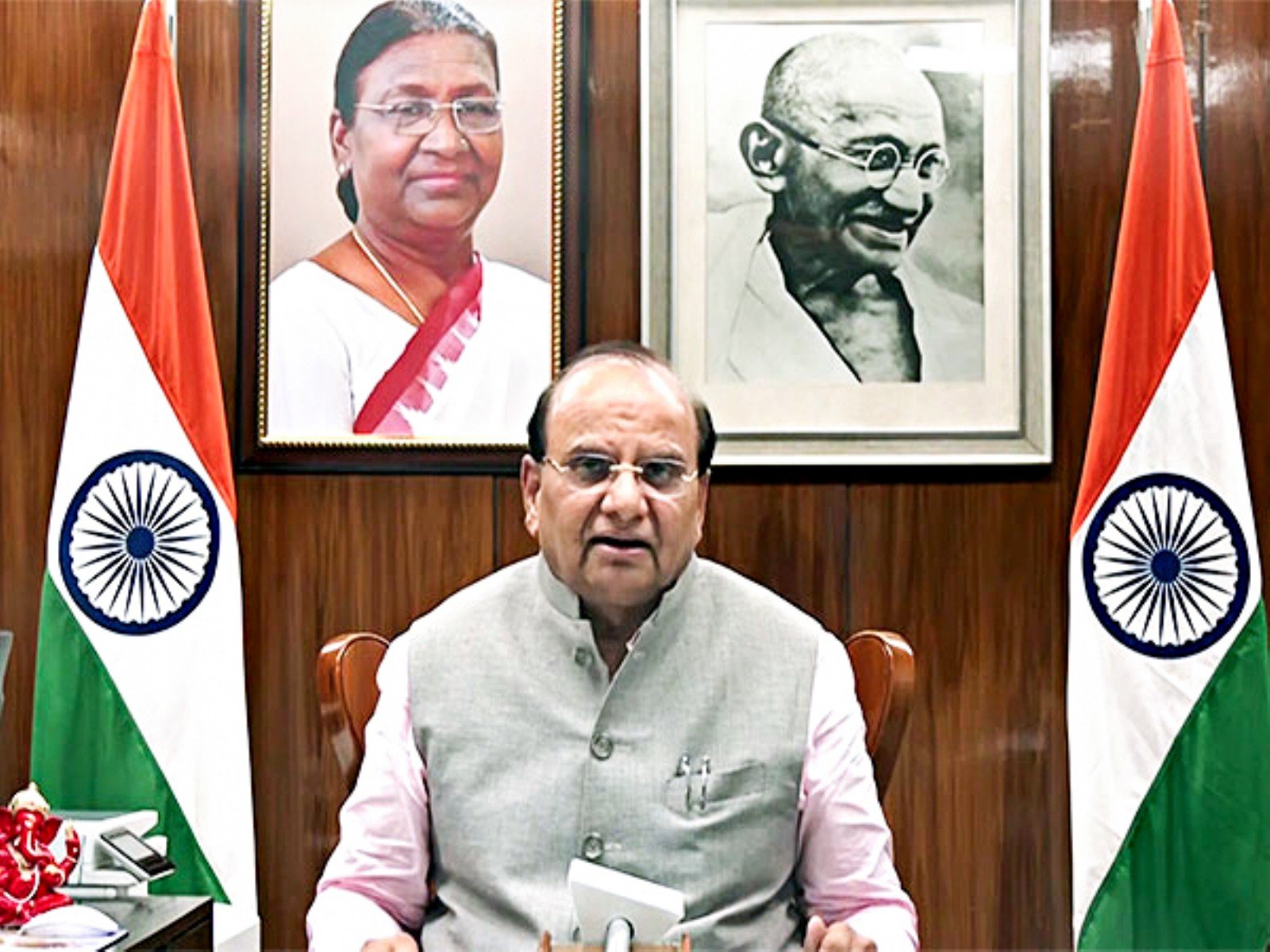
Leh (Ladakh), June 25 (ANI): In a significant administrative move aimed at improving governance efficiency and eliminating procedural delays, Lieutenant Governor Vinai Kumar Saxena has ordered a major overhaul of the Finance Department in Ladakh. The decision, widely referred to as the LG Saxena Finance Restructuring in Ladakh, includes the transfer of senior officers and a complete redesign of the internal financial approval mechanism.
The restructuring comes after the Lieutenant Governor reportedly expressed strong dissatisfaction over repeated delays in file clearances, unnecessary procedural queries, and lack of accountability within the department. Officials said the changes are intended to ensure faster decision-making and smoother execution of development projects across the Union Territory.
Administrative Shake-Up in Finance Department
The LG Saxena Finance Restructuring in Ladakh involves the transfer of Finance Secretary L Franklin along with nearly two dozen officers working in key positions within the Finance Department. The reshuffle also includes Chief Accounts Officers (CAOs), Accounts Officers (AOs), and Joint Directors who were handling financial concurrence and advisory roles.
According to official sources, the restructuring decision was taken after a detailed review meeting held on June 16, where the Lieutenant Governor examined the functioning of the Finance Department. During the review, he reportedly flagged serious concerns regarding delays in approvals of development projects and financial proposals.
The repeated delays, described as “unreasonable and avoidable,” were said to be impacting developmental works and public welfare initiatives in Ladakh. The LG Saxena Finance Restructuring in Ladakh is expected to directly address these bottlenecks.
Why the Restructuring Was Ordered
Officials familiar with the matter said the Lieutenant Governor observed a pattern of excessive scrutiny at multiple levels within the Finance Department. Files were reportedly being returned with repetitive queries, causing long pendency periods and slowing down approvals.
The LG reportedly emphasized that such delays were not due to policy constraints but due to procedural inefficiencies and lack of supervisory control. As a result, the LG Saxena Finance Restructuring in Ladakh aims to eliminate redundant layers of approval and introduce a streamlined workflow system.
Key concerns highlighted during the review included:
- Repeated and unnecessary queries on financial files
- Absence of effective oversight at senior levels
- Slow disposal of development-related proposals
- Duplication of scrutiny across multiple levels
- Procedural delays affecting public welfare projects
New Internal Finance Structure Introduced
As part of the LG Saxena Finance Restructuring in Ladakh, the Finance Department will now operate under a revised Internal Finance Division (IFD) system. Under this model, designated officers will be assigned specific departments and will handle all financial matters directly.
The new structure includes:
- Joint Directors and CAOs acting as designated IFD officers
- Department-specific allocation of financial responsibilities
- Direct processing of concurrence, advice, and financial opinions
- Simplified approval system to reduce delays
- Support from Accounts Officers for technical assistance
Officials said this new arrangement will significantly reduce the time taken for file movement and approvals. The LG Saxena Finance Restructuring in Ladakh is expected to make the system more accountable and performance-driven.
Focus on Speed, Accountability, and Governance Reform
The Lieutenant Governor has directed all departments to prioritize public welfare projects and avoid unnecessary procedural delays. He also instructed the Chief Secretary to closely monitor file clearance timelines and fix responsibility in cases of avoidable delays.
The LG Saxena Finance Restructuring in Ladakh reflects a broader push towards administrative reform, focusing on transparency, accountability, and efficiency in governance. The restructuring also aims to ensure that financial concurrence does not become a bottleneck in the execution of developmental projects.
Officials said the new workflow will allow designated officers to directly examine proposals, thereby reducing the dependency on multiple layers of scrutiny. This is expected to significantly speed up decision-making in key infrastructure and welfare schemes.
Impact on Development Projects in Ladakh
Ladakh, being a strategically sensitive and geographically challenging region, relies heavily on timely execution of infrastructure and development projects. Delays in financial approvals can have a direct impact on road construction, healthcare expansion, tourism development, and public utilities.
With the implementation of the LG Saxena Finance Restructuring in Ladakh, authorities expect a noticeable improvement in project execution timelines. Faster approvals are likely to benefit ongoing and upcoming projects in sectors such as:
- Road and transport infrastructure
- Tourism development initiatives
- Health and education projects
- Energy and utility expansion
- Administrative modernization programs
Officials believe that reducing bureaucratic delays will help Ladakh achieve better governance outcomes and improved service delivery to residents.
Strict Warning to Officials
As part of the overhaul, the Lieutenant Governor has reportedly issued a strict warning to departmental heads against deliberate delays in file processing. He stressed that accountability will be enforced in cases where avoidable delays are identified.
The LG Saxena Finance Restructuring in Ladakh also signals a shift toward performance-based administration, where efficiency and timely delivery will be key evaluation parameters for officers.
The LG Saxena Finance Restructuring in Ladakh marks one of the most significant administrative reforms in the Union Territory’s finance governance system in recent times. By restructuring the Finance Department, transferring key officials, and introducing a streamlined Internal Finance Division model, the administration aims to eliminate inefficiencies and accelerate development.
If effectively implemented, the reforms could lead to faster project execution, improved financial discipline, and enhanced governance outcomes in Ladakh, setting a precedent for administrative efficiency in other regions as well.
About The Author