
Gujarat’s ₹1,700-Crore Badalpur-Kareli Barrage-cum-Bridge to Redefine Development Across Three Districts
 admin
admin 
The Badalpur-Kareli Barrage-cum-Bridge on the Mahi River has emerged as one of Gujarat’s most ambitious infrastructure initiatives, receiving in-principle approval from the state government. Estimated at ₹1,700 crore, the Badalpur-Kareli Barrage-cum-Bridge is designed to integrate water conservation, transport connectivity, flood management, and regional economic development into a single large-scale project.
Located near Dhuvaran in Anand district, the Badalpur-Kareli Barrage-cum-Bridge is expected to impact Anand, Vadodara, and Bharuch districts significantly, making it a key driver of transformation in central and south Gujarat.
Strategic Approval and Vision Behind the Project
The Gujarat government’s approval for the Badalpur-Kareli Barrage-cum-Bridge reflects its long-term vision of sustainable infrastructure development. The project has been actively supported by State Food and Civil Supplies Minister Ramanbhai Solanki, who has pushed for its implementation to address long-standing regional challenges.
Under the leadership of Chief Minister Bhupendra Patel, the Badalpur-Kareli Barrage-cum-Bridge is being positioned as a transformative asset for water security and inter-district connectivity.
Officials have confirmed that survey work for the Badalpur-Kareli Barrage-cum-Bridge will be expedited to ensure timely execution.
Engineering Scale and Design Features
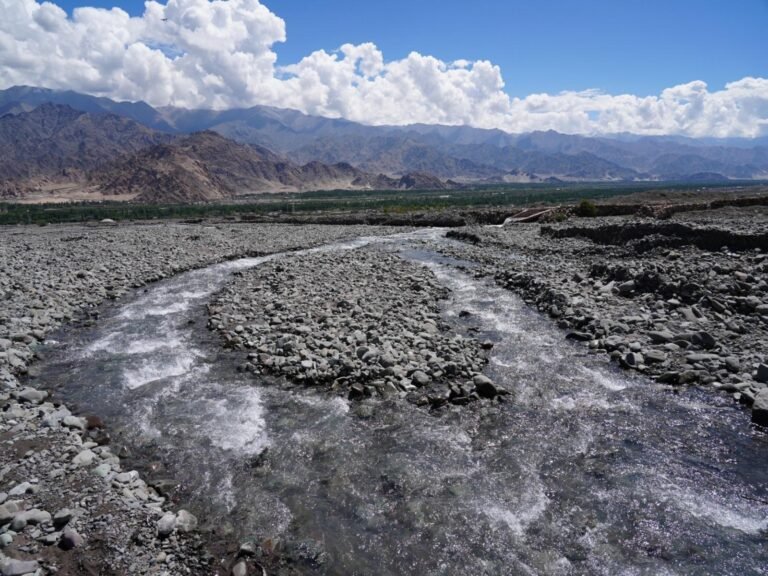
The Badalpur-Kareli Barrage-cum-Bridge will span approximately two kilometres within a 4.5-kilometre-wide riverbed of the Mahi River. The structure is designed to include around 70 water-regulating gates, enabling efficient control of river flow during monsoon seasons.
Engineers associated with the project have highlighted that will incorporate advanced flood-control systems to ensure safety during extreme rainfall events.
In addition, protective embankments will be constructed along remaining stretches to strengthen riverbank stability.
The Badalpur-Kareli Barrage-cum-Bridge is also expected to feature a robust crossway system, ensuring seamless vehicular movement even during peak water flow conditions.
Massive Freshwater Storage Capacity
One of the most critical benefits of the Badalpur-Kareli Barrage-cum-Bridge is its large freshwater storage potential. The project is expected to store nearly 183 million cubic metres of freshwater, preventing large volumes of water from flowing into the Arabian Sea during monsoon months.
This makes the Badalpur-Kareli Barrage-cum-Bridge a crucial water conservation asset for Gujarat.
At present, the region depends heavily on the Kadana Dam for drinking water supply. The Badalpur-Kareli Barrage-cum-Bridge will reduce this dependency and create a more stable and localized water source system.
Boost to Agriculture and Soil Restoration
The Badalpur-Kareli Barrage-cum-Bridge is expected to play a key role in addressing salinity intrusion, a persistent issue affecting large areas of land in central Gujarat.
Currently, seawater intrusion extends deep inland, impacting soil fertility. The reservoir created by the will help reduce salinity across nearly 16,000 hectares of agricultural land.
Improved groundwater levels and reduced salt content will allow farmers to increase crop cycles and enhance productivity. The Badalpur-Kareli Barrage-cum-Bridge is therefore expected to directly strengthen the rural economy.
Drinking Water Security for Over 1.5 Million People
The Badalpur-Kareli Barrage-cum-Bridge will significantly improve drinking water access for more than 1.5 million people across approximately 80 villages.
This includes 42 villages in Anand district, 30 in Vadodara district, and 8 in Bharuch district. Border villages will especially benefit from reliable freshwater availability.
By improving access to clean water, the Badalpur-Kareli Barrage-cum-Bridge is expected to enhance public health and reduce water scarcity issues in the region.
Transforming Regional Connectivity and Industry
Beyond water management,it will serve as a critical transportation corridor. It is expected to reduce travel distances between Khambhat-Tarapur and Jambusar-Dahej industrial regions by nearly 75 kilometres.
This reduction will significantly lower fuel consumption and travel time, making logistics more efficient.
Industrial zones such as the Dahej Petroleum, Chemicals and Petrochemicals Investment Region (PCPIR) will benefit from faster connectivity enabled by the Badalpur-Kareli Barrage-cum-Bridge.
Similarly, the Khambhat-Tarapur industrial belt will experience improved goods movement and reduced transportation costs due to the Badalpur-Kareli Barrage-cum-Bridge.
Economic Growth and Employment Opportunities
It is expected to influence over 409 villages directly or indirectly across the three districts. This includes 152 villages in Anand, 164 in Vadodara, and 81 in Bharuch.
Additionally, 32 lakes in the region are expected to benefit from improved water levels due to the Badalpur-Kareli Barrage-cum-Bridge.
Experts believe that enhanced agriculture, industrial growth, and better connectivity will generate new employment opportunities. They could also reduce rural-to-urban migration by strengthening local livelihoods.
Future Tourism and Regional Development Potential
The creation of a large freshwater reservoir through the Badalpur-Kareli Barrage-cum-Bridge could open new opportunities for tourism development. Riverfront areas may be developed into eco-tourism and recreational zones in the future.
Such developments would further enhance the long-term value , making it not only a functional infrastructure project but also a potential tourism hub.
A Landmark Infrastructure Initiative
The Badalpur-Kareli Barrage-cum-Bridge stands as a landmark initiative that integrates water conservation, agriculture support, transport infrastructure, and regional development into one unified project.
With strong political backing from Bhupendra Patel and administrative support from the Gujarat government, it is set to become a transformational milestone for central and south Gujarat.
Once completed ,It is expected to reshape the socio-economic landscape of the Mahi River basin and drive sustainable growth for decades to come.
About The Author