
 admin
admin 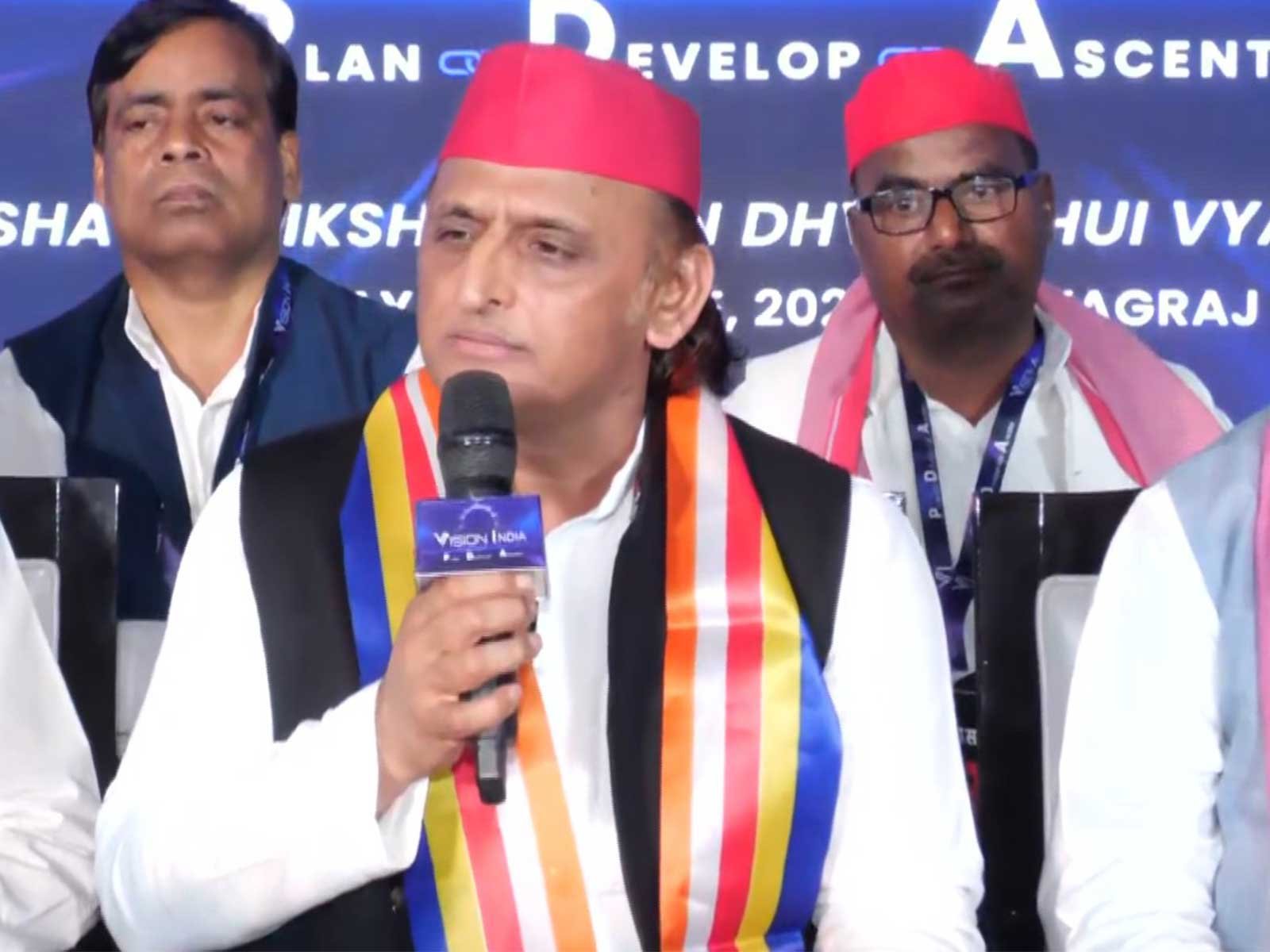
Samajwadi Party president Akhilesh Yadav has launched a strong political attack on the ongoing Special Intensive Revision (SIR) of electoral rolls, alleging that the process is being misused to harass voters and create administrative hurdles ahead of the crucial Uttar Pradesh Assembly elections 2027.
Speaking in Prayagraj, Akhilesh Yadav claimed that the SIR electoral roll revision exercise is not just a routine administrative process but is being strategically used to pressure citizens and weaken democratic participation. According to him, the opposition will take this issue directly to the public in the coming months.
The SIR electoral roll revision controversy has now become a major political flashpoint in Uttar Pradesh politics, with the Samajwadi Party alleging irregularities and the ruling establishment defending the process as a standard voter list cleanup exercise.
“Will Take All Issues to Public,” Says Akhilesh Yadav
Addressing supporters and media, Akhilesh Yadav alleged that the SIR electoral roll revision is being used as a tool to suppress dissent and discourage political mobilisation.
He said that the Samajwadi Party has been actively challenging the government and will continue to raise public awareness on what it describes as “systemic voter harassment under SIR.”
According to Akhilesh Yadav, the revision process is creating confusion among voters, especially when names are missing from the updated electoral rolls. He alleged that in some cases, individuals are being questioned about their citizenship due to discrepancies in voter data during the SIR exercise.
The Samajwadi Party chief also linked the issue to broader concerns about democratic rights, stating that voters should not be forced into bureaucratic complications during electoral roll verification.
Allegations of Citizenship Scrutiny and Administrative Pressure
One of the most controversial claims made by Akhilesh Yadav is that citizens are being subjected to unnecessary scrutiny during the SIR electoral roll revision process.
He alleged that even well-known individuals are facing questions about their citizenship status simply because their names were missing from the revised voter list. According to him, this reflects a deeper administrative failure in the SIR system.
The Samajwadi Party has argued that the SIR electoral roll revision should be transparent, voter-friendly, and error-free, but instead, it is creating fear and uncertainty among the electorate.
Political analysts note that such allegations are likely to intensify as Uttar Pradesh approaches the 2027 Assembly elections, where voter mobilisation will play a decisive role.
Background: What is SIR Electoral Roll Revision?
The Special Intensive Revision (SIR) is a structured electoral roll revision exercise conducted to update voter lists, remove duplicate entries, and ensure accuracy in electoral data.
As part of the SIR electoral roll revision process, officials verify voter details, remove deceased voters, update migration records, and correct duplicate registrations.
According to official data shared earlier this year, millions of names were removed during the SIR process due to various reasons including death, migration, and duplication. The Election Office stated that the objective is to ensure a clean and accurate voter database ahead of future elections.
However, the scale of deletions and the process of verification have triggered political debate, with opposition parties alleging that genuine voters are being affected.
Massive Voter List Changes Raise Political Debate
During the latest SIR electoral roll revision cycle in Uttar Pradesh, authorities reported significant changes in the voter list.
Officials stated that crores of enumeration forms were submitted, and a large number of entries were verified. However, the final draft electoral roll reportedly excluded millions of names due to various discrepancies.
The Election Office clarified that these deletions include:
- Deceased voters
- Migrated citizens
- Duplicate entries
- Untraceable or missing voters
Despite this explanation, the opposition continues to question the transparency and fairness of the SIR electoral roll revision process.
The Samajwadi Party argues that large-scale deletions could influence voter turnout and electoral outcomes, especially in politically sensitive constituencies.
Political Implications Ahead of UP Assembly Elections 2027
The controversy surrounding SIR electoral roll revision is expected to become a major issue in the run-up to the Uttar Pradesh Assembly elections 2027.
The political competition between the Bharatiya Janata Party and the Samajwadi Party is intensifying, with both parties preparing for a high-stakes electoral battle.
Akhilesh Yadav has indicated that the Samajwadi Party will use the SIR issue as part of its broader campaign narrative, focusing on voter rights and administrative accountability.
Opposition leaders within the INDIA bloc are also expected to highlight concerns regarding voter list management, potentially turning the SIR electoral roll revision into a national-level political debate.
Election Commission’s Position and Administrative Response
Election officials have defended the SIR electoral roll revision process, stating that it is necessary to ensure clean and updated voter data.
According to officials, the revision process is carried out with field verification, voter self-declaration forms, and booth-level officer checks to eliminate errors.
They have also emphasized that the objective of SIR is not to remove genuine voters but to ensure accuracy and transparency in the electoral system.
However, political criticism continues, with opposition leaders demanding greater oversight and independent verification mechanisms.
Growing Debate on Voter Rights and Electoral Transparency
The SIR electoral roll revision debate has now expanded beyond Uttar Pradesh politics and entered a broader discussion on voter rights and electoral transparency in India.
Supporters of reform argue that regular updates to voter lists are essential for fair elections, while critics warn that flawed implementation can disenfranchise eligible voters.
Akhilesh Yadav’s remarks have further amplified concerns about administrative accountability and the need for safeguards in large-scale voter verification exercises.
The allegations made by Akhilesh Yadav against the SIR electoral roll revision process have added a new dimension to the political landscape of Uttar Pradesh.
As the state moves closer to the 2027 Assembly elections, the issue of voter list integrity, transparency, and administrative fairness is likely to remain at the center of political discourse.
With both ruling and opposition parties staking strong claims, the SIR electoral roll revision controversy is expected to shape campaign narratives and influence voter sentiment in the months ahead.
About The Author