
PM-SETU Expands Nationwide: Centre Approves Rs 1,237.58 Crore for ITI Upgrades Across Odisha, Gujarat and Telangana
 admin
admin 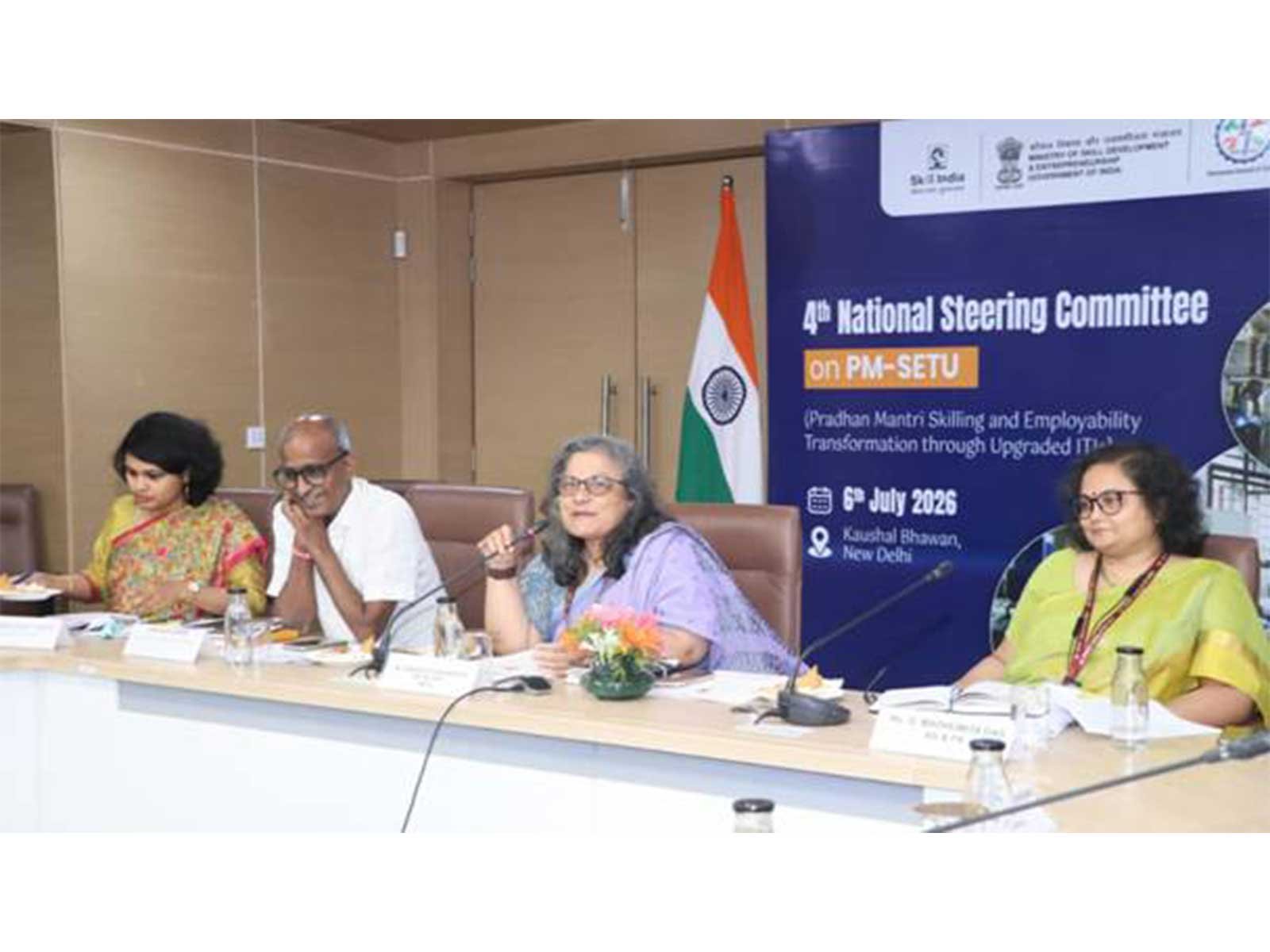
India has taken a significant step toward strengthening its vocational education and workforce development ecosystem with the nationwide expansion of PM-SETU. The Central Government has approved the rollout of the PM-SETU scheme across 200 Industrial Training Institute (ITI) clusters while sanctioning Rs 1,237.58 crore for infrastructure and skill development upgrades in Odisha, Gujarat, and Telangana.
The decision marks a major milestone for India’s skill development mission and reflects the government’s commitment to creating industry-ready talent capable of meeting the demands of a rapidly evolving economy. The expansion of PM-SETU is expected to modernize ITIs, improve employability, strengthen industry partnerships, and bridge the gap between classroom learning and real-world industrial requirements.
PM-SETU Expansion Approved at National Steering Committee Meeting
The announcement was made following the 4th National Steering Committee (NSC) meeting of PM-SETU, chaired by Debashree Mukherjee, Secretary, Ministry of Skill Development and Entrepreneurship.
The meeting brought together representatives from various State Governments, Union Territories, industry leaders, multilateral development agencies, and key stakeholders involved in India’s vocational education ecosystem.
One of the most important decisions taken during the meeting was the transition of PM-SETU from its pilot phase into a nationwide implementation model. The approval allows States and Union Territories to execute projects according to their industrial readiness and implementation capabilities.
This nationwide expansion is expected to accelerate the modernization of vocational education across India while ensuring better coordination between industries and technical institutions.
Rs 1,237.58 Crore Investment Approved Under PM-SETU
A major highlight of the meeting was the approval of Strategic Investment Plans (SIPs) worth Rs 1,237.58 crore.
These investments will support infrastructure modernization, advanced training equipment, digital classrooms, industry-standard laboratories, faculty development, and curriculum enhancement across selected ITI clusters.
The approved investments include:
- Odisha: Rs 240.21 crore
- Gujarat: Rs 240.18 crore
- Telangana: Rs 757.19 crore
The significantly larger allocation for Telangana reflects the state’s ambitious plans for expanding advanced skill development infrastructure and strengthening industry collaboration under the PM-SETU programme.
Industry Partners to Drive ITI Modernisation
An important feature of PM-SETU is its emphasis on industry participation.
Leading companies have been selected as Anchor Industry Partners to ensure that skill development remains aligned with real industrial needs.
The approved industry partners include:
- Jindal Naveen Avasar Limited in Odisha
- ArcelorMittal Nippon Steel India in Gujarat
- Apollo Medskills, along with two additional partners, in Telangana
These organizations will work closely with ITIs to design modern training programmes, introduce industry-specific technologies, support curriculum development, and create employment opportunities for students.
The collaboration is expected to produce a workforce equipped with practical skills that match current market demands.
What is PM-SETU?
PM-SETU stands for Pradhan Mantri Skilling and Employability Transformation through Upgraded ITIs.
The flagship initiative aims to transform India’s traditional Industrial Training Institutes into modern centres of excellence capable of producing highly skilled technicians for various industries.
The scheme focuses on:
- Modernising ITI infrastructure
- Upgrading workshops and laboratories
- Introducing smart classrooms
- Improving digital learning facilities
- Enhancing instructor training
- Strengthening industry partnerships
- Increasing placement opportunities
- Promoting entrepreneurship
- Encouraging innovation in vocational education
By modernising technical institutions, PM-SETU seeks to improve the overall quality of vocational education while supporting India’s long-term economic growth.
How PM-SETU Will Benefit Students
The nationwide implementation of PM-SETU is expected to bring several benefits to students pursuing technical and vocational education.
Students will gain access to:
- Updated industry-oriented curriculum
- Modern training equipment
- Advanced technology laboratories
- Better internship opportunities
- Improved apprenticeship programmes
- Enhanced placement support
- Exposure to emerging technologies
- Industry-certified training modules
These improvements will increase employability and prepare graduates for careers in manufacturing, healthcare, infrastructure, renewable energy, logistics, automation, and digital technologies.
States to Implement PM-SETU Based on Readiness
Unlike the pilot programme, the nationwide rollout allows each State and Union Territory to implement PM-SETU based on its own industrial ecosystem and administrative preparedness.
This flexible implementation model enables governments to prioritize ITI clusters where industry demand is strongest while ensuring efficient utilization of resources.
The strategy is expected to accelerate project execution and encourage greater participation from private industries.
Industry-Led Skill Development Becomes the Focus
A defining aspect of PM-SETU is the industry’s direct involvement in vocational education.
Rather than relying solely on academic institutions, the programme integrates employers into every stage of skill development.
Industry partners will contribute by:
- Identifying skill gaps
- Designing training modules
- Providing technical expertise
- Supporting faculty development
- Offering apprenticeships
- Creating employment pathways
- Introducing latest manufacturing technologies
This model ensures that students graduate with practical skills that employers actively seek.
Strengthening India’s Workforce for Future Industries
India’s economy is rapidly expanding across manufacturing, healthcare, construction, logistics, automotive, electronics, renewable energy, and information technology.
Meeting the workforce requirements of these sectors demands continuous improvement in vocational education.
The expansion of PM-SETU directly supports national initiatives such as:
- Make in India
- Skill India
- Digital India
- Atmanirbhar Bharat
- Manufacturing competitiveness
Modern ITIs are expected to become key centres for producing skilled professionals capable of contributing to India’s industrial growth.
Government’s Vision for Modern Technical Education
The Ministry of Skill Development and Entrepreneurship stated that the approved Strategic Investment Plans will strengthen India’s technical education infrastructure through industry-driven reforms.
The investment is expected to modernize multiple ITI clusters nationwide while encouraging innovation, technology adoption, and better employment outcomes.
Officials believe the transition from pilot implementation to nationwide rollout demonstrates growing confidence in the programme’s effectiveness.
The government also aims to encourage greater participation from industries across different sectors, creating sustainable partnerships that benefit both students and employers.
PM-SETU Signals a Major Boost for India’s Skill Development Mission
The nationwide rollout of PM-SETU, backed by an investment of Rs 1,237.58 crore, represents one of the most significant developments in India’s vocational education landscape.
By modernising ITIs, strengthening industry collaboration, improving infrastructure, and aligning technical education with market requirements, PM-SETU has the potential to transform skill development across the country.
As Odisha, Gujarat, Telangana, and eventually all 200 ITI clusters begin implementing the programme, millions of students are expected to benefit from improved training facilities, stronger industry connections, and enhanced employment opportunities.
With India’s demand for skilled professionals continuing to rise, PM-SETU is set to play a central role in building a future-ready workforce while supporting long-term economic growth.
About The Author