
 admin
admin 
The FIH Hockey World Cup 2026 is set to introduce a major change to the tournament structure when Belgium and the Netherlands jointly host the men’s and women’s competitions from August 15 to 30. The removal of the quarter-final stage has created a new and potentially exciting pathway to the title, making every match in the opening stages even more important.
The FIH Hockey World Cup 2026 will feature 16 teams in both the men’s and women’s competitions. The teams will initially be divided into four pools, with the competition then moving into crossover pools before the classification matches and semi-finals.
Unlike previous editions, there will be no quarter-finals. Instead, the top two teams from Pools E and F will advance directly to the semi-finals.
FIH Hockey World Cup 2026 Introduces New Format
The new format of the FIH Hockey World Cup 2026 is designed to provide a different competitive pathway for the participating teams.
The opening phase will feature four pools of four teams each. Every team will play three matches against the other teams in its respective pool.
The final standings in the opening phase will determine how teams are placed into the second stage.
The new structure means teams cannot afford a slow start. Results during the pool stage will have a direct influence on their position in the crossover pools and their chances of reaching the semi-finals.
For India, the revised structure adds another layer of importance to the opening matches.
India Men’s Team Placed in Pool D
The Indian men’s team has been drawn in Pool D alongside England, Pakistan and Wales.
The FIH Hockey World Cup 2026 draw therefore presents India with a challenging opening phase, with three important matches determining the team’s position for the next round.
India will need to collect strong results while also maintaining a healthy goal difference. Under the new format, every victory could prove valuable when teams move into the crossover stage.
The Indian men’s team will be looking to build momentum from the opening match and secure a favourable position before entering Phase 2.
Indian Women’s Team Also in Pool D
The Indian women’s team has also been placed in Pool D.
India will compete against China, England and South Africa during the opening phase of the FIH Hockey World Cup 2026.
The women’s competition will follow the same overall format, with the top-performing teams progressing into crossover pools before the semi-final stage.
India will therefore have to remain consistent across all three pool matches to maximise its chances of reaching the later stages.
Phase 1: Pool Stage
The first phase of the FIH Hockey World Cup 2026 will take place from August 15 to 20.
The 16 participating teams in each tournament will be divided into four pools — A, B, C and D.
Each team will play three matches, facing every other team in its pool once.
The results will establish the first-to-fourth positions in each pool.
These rankings will be particularly important because they will determine the composition of the crossover pools in the second phase.
Phase 2: Crossover Pools
The second stage of the FIH Hockey World Cup 2026 will take place from August 21 to 24.
Following the conclusion of the opening pool stage, the teams will be regrouped into four new pools — E, F, G and H.
Pool E will consist of the first- and second-place teams from Pools A and D, while Pool F will contain the first- and second-place teams from Pools B and C.
Teams finishing third and fourth in the opening pools will move into Pools G and H.
Each team will play three additional matches against opponents it did not face during the opening stage.
An important feature of the FIH Hockey World Cup 2026 format is that a team’s result against the other progressing team from its original pool will be carried forward into Phase 2.
This makes the opening pool matches particularly significant.
Direct Semi-Final Route
The biggest change in the FIH Hockey World Cup 2026 is the elimination of the quarter-finals.
The standings in Pools E and F will determine which teams progress directly to the semi-finals.
The top two teams from Pool E and the top two teams from Pool F will qualify for the final-four stage.
The semi-final fixtures will be:
- 1st Pool E vs 2nd Pool F
- 1st Pool F vs 2nd Pool E
This system gives teams a direct route to the semi-finals but also increases the pressure to finish near the top of their crossover pools.
Classification Matches for 5th to 16th
While the top teams compete for the title, the remaining teams will participate in classification matches.
The standings from Pools E, F, G and H will determine the matches for positions fifth through 16th.
This ensures that teams continue to have meaningful matches even after they are unable to qualify for the semi-finals.
The classification stage will take place on August 27 and 28.
Medal Matches on August 29 and 30
The women’s competition at the FIH Hockey World Cup 2026 will conclude in the Netherlands on August 29.
The women’s bronze medal match will be followed by the final, bringing the women’s tournament to its conclusion.
The men’s tournament will then conclude in Belgium on August 30, with the bronze medal match followed by the men’s final.
The separate finals will provide the climax to a tournament featuring a completely revised route to the title.
Sjoerd Marijne Discusses New Format
Indian women’s team chief coach Sjoerd Marijne acknowledged that the new format presents a different challenge.
Marijne said his preference would have been to retain quarter-finals because those matches are often among the most exciting contests of a major tournament.
However, he also stressed that teams must adapt to the format and identify the opportunities it provides.
His comments underline the importance of tactical flexibility during the FIH Hockey World Cup 2026.
With no quarter-final safety net, teams will need to perform consistently during the crossover stage.
Craig Fulton Highlights Importance of Strong Start
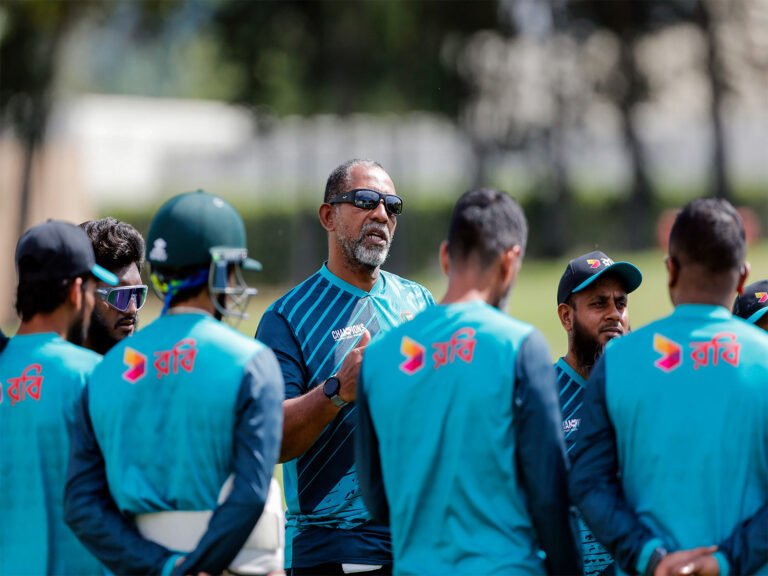
Indian men’s team chief coach Craig Fulton also highlighted the importance of starting strongly.
According to Fulton, the changed format makes the opening pool matches extremely important because results between teams that progress from the same initial pool can carry into the next stage.
He particularly emphasised the importance of head-to-head results.
If one team defeats another in the opening phase and both subsequently progress, the three points from that match can carry into the next round.
Fulton also stressed the importance of goal difference and defensive discipline.
Under the tournament’s ranking criteria, the number of wins will be considered first, followed by goal difference if teams are level.
Every Match Could Shape the Title Race
The new structure of the FIH Hockey World Cup 2026 means teams will have little room for error.
A strong opening phase can provide an important advantage in the crossover pools, while a poor result could make the route to the semi-finals significantly more difficult.
For India, both the men’s and women’s teams will be aiming to take advantage of their pool-stage opportunities and build momentum.
The revised structure could also produce greater tactical intensity as teams seek to protect goal difference while simultaneously chasing victories.
FIH Hockey World Cup 2026: Format at a Glance
Phase 1 — Pool Stage: August 15-20
16 teams divided into four pools of four, with each team playing three matches.
Phase 2 — Crossover Pools: August 21-24
Teams regroup into Pools E, F, G and H according to their Phase 1 positions.
Phase 3 — Classification and Semi-Finals: August 27-28
Classification matches determine positions fifth to 16th, while the top two teams from Pools E and F reach the semi-finals.
Medal Matches: August 29-30
The women’s bronze medal match and final will take place on August 29, followed by the men’s bronze medal match and final on August 30.
The FIH Hockey World Cup 2026 promises an exciting competition under its new format. With quarter-finals removed and the crossover pools playing a decisive role, teams will need consistency, strong goal difference and smart tactical decisions to secure a place in the final.
For India’s men’s and women’s teams, the challenge begins in Pool D, where strong performances against England, Pakistan, Wales, China and South Africa could set the foundation for a successful campaign
About The Author