
 admin
admin 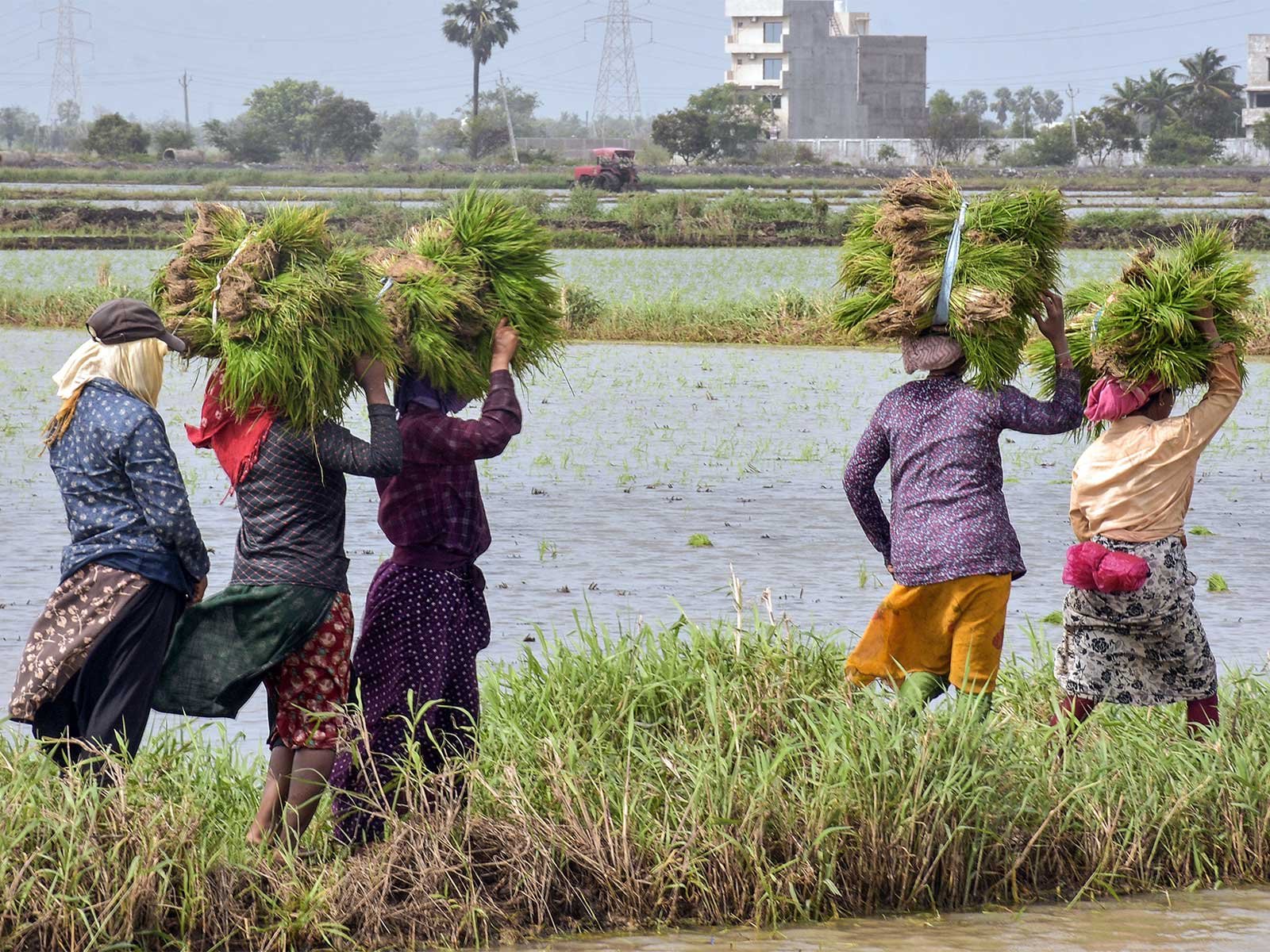
The Gujarat Government has taken a major step towards expanding natural farming in Gujarat by approving the establishment of Centres of Excellence in four districts. The initiative aims to provide farmers with modern training, technology, agricultural guidance and affordable natural farming inputs at a single location.
Under the guidance of Governor Acharya Devvratji, the centres are expected to strengthen the state’s natural farming campaign and encourage more farmers to adopt sustainable agricultural practices.
The Gujarat Government has allocated Rs 20 crore for 2026-27 for establishing the Centres of Excellence in Navsari, Morbi, Bhavnagar and Chhota Udepur, according to the Chief Minister’s Office.
Gujarat Expands Natural Farming Initiative
The new initiative is expected to give a significant boost to natural farming in Gujarat by creating dedicated centres where farmers can receive practical training and technical assistance.
The Centres of Excellence will not function only as training facilities. They will be developed as model campuses where farmers can learn different natural farming techniques through demonstrations and practical activities.
Modern facilities will be established at the centres with the capacity to train 100 farmers at a time.
Farmers who are already practising natural farming, as well as those interested in shifting from conventional agricultural practices, will be able to access training, guidance and farming-related facilities.
Four Districts Selected in First Phase
The first phase of the natural farming in Gujarat programme will cover four locations.
A Centre of Excellence will be established at Nani Bhamti village in Vansda taluka of Navsari district. Another centre will come up at Halvad in Morbi district.
The third centre will be established at Valavad village in Sihor taluka of Bhavnagar district, while the fourth will be located at Chudel village in Jetpur Pavi taluka of Chhota Udepur district.
The responsibility for implementing the scheme has been assigned to the Gujarat Prakrutik Krishi Vikas Board.
The selection of locations across different districts is expected to help take natural farming knowledge and resources closer to farmers.
Training Farmers in Natural Farming Techniques
A major objective of the Centres of Excellence is to provide practical knowledge about natural farming in Gujarat.
Farmers will be trained in the preparation and use of various bio-inputs, including Jeevamrut, Ghan Jeevamrut, Beejamrut and Neemastra.
These bio-inputs are important components of natural farming practices and can help farmers reduce dependence on externally purchased agricultural inputs.
The centres will also demonstrate how these inputs can be prepared correctly and used according to crop requirements.
The training will focus on practical implementation rather than theoretical knowledge alone, allowing farmers to understand the complete process of adopting natural farming methods.
Affordable Bio-Inputs for Farmers
The Centres of Excellence will also produce bio-inputs and make them available to farmers at nominal prices.
This facility could help address one of the important challenges faced by farmers who want to adopt natural farming in Gujarat but require access to appropriate agricultural materials.
Along with bio-inputs, the centres will produce and sell different types of mulching materials, crop seeds, horticultural crop saplings, cuttings and grafts.
Other planting materials will also be made available through the centres.
By bringing these resources together, the government aims to make it easier for farmers to access the materials needed to implement natural farming practices.
Focus on Soil and Product Quality
The Centres of Excellence will provide farmers with guidance related to soil testing and quality testing of agricultural products.
Understanding soil conditions can help farmers make more informed decisions about crops, inputs and farming practices.
Farmers will also receive assistance regarding new agricultural technology, primary agricultural materials, value addition and post-harvest processing.
These services are expected to make the natural farming in Gujarat initiative broader than simply promoting farming without chemical inputs.
The focus will also be on improving the overall agricultural value chain and helping farmers obtain better outcomes from their produce.
Demonstrations of Five-Layer Farming
Practical demonstrations will be an important part of the new Centres of Excellence.
Farmers will be introduced to various natural farming methods, including the five-layer natural farming model, mixed cropping and intercropping.
These techniques will be demonstrated at the centres so that farmers can understand how different crops and farming practices can work together.
Officials and experts will also provide demonstrations and guidance through visits to farmers’ fields.
This field-based approach is expected to help farmers understand how natural farming techniques can be adapted to different agricultural conditions.
Farmers to Learn Bio-Input Preparation
The natural farming in Gujarat programme will also focus on developing farmers’ skills in preparing their own agricultural inputs.
Training will cover the preparation of Beejamrut, Jeevamrut and various natural pesticides, along with guidance on their proper application.
Farmers will also receive training in standard natural farming practices for different crops.
The aim is to provide farmers with practical knowledge that they can apply directly on their farms.
Such training could help farmers become more self-reliant in preparing certain agricultural inputs while potentially reducing cultivation expenses.
Reducing Cost of Cultivation
The Gujarat Government expects the new initiative to help farmers reduce the cost of cultivation.
Access to affordable bio-inputs, planting materials, technical guidance and natural farming training at a single location could make the transition easier for farmers.
The proper preparation and use of bio-inputs may also reduce dependence on costly external inputs.
For farmers adopting natural farming in Gujarat, the Centres of Excellence could therefore become important resources for improving farm management while controlling expenses.
The initiative also aims to promote better agricultural practices that can support long-term farming sustainability.
Improving Farmer Income Through Value Addition
The government initiative is not limited to cultivation.
Farmers will also receive training related to value addition, processing, storage and packaging of agricultural products.
These activities can help farmers improve the marketability of their produce and potentially achieve better returns.
Value addition can allow agricultural products to reach consumers in more processed or market-ready forms.
Through the Centres of Excellence, farmers will therefore receive support beyond the production stage.
This broader approach could strengthen the overall impact of natural farming in Gujarat by connecting cultivation with post-harvest management and market opportunities.
Centres to Become Model Campuses
The four Centres of Excellence are expected to become important hubs for natural farming training, experimentation and demonstrations.
Instead of limiting their activities to classroom-based training, the centres will function as model campuses where farmers can observe different techniques in practice.
They will also provide solutions to agriculture-related challenges and create opportunities for farmers to learn from practical experiences.
The initiative could eventually help expand natural farming practices across more parts of Gujarat.
Gujarat Targets Wider Natural Farming Adoption
The establishment of the four Centres of Excellence represents a significant step in the state’s efforts to promote natural farming in Gujarat.
With an allocation of Rs 20 crore for 2026-27, the government is creating infrastructure designed to support training, technology, bio-input production and agricultural experimentation.
Farmers will have access to multiple services at a single location, ranging from soil testing and planting material to training in natural farming techniques and post-harvest processing.
The initiative is expected to provide farmers with greater access to knowledge and resources while encouraging more sustainable approaches to agriculture.
As the four centres become operational, they could serve as demonstration hubs for farmers across their respective regions and help create a stronger ecosystem for natural farming.
The Gujarat Government’s latest decision is therefore positioned as an important step towards expanding natural farming in Gujarat, improving access to agricultural resources and supporting farmers in reducing cultivation costs while seeking better returns from their produce.
About The Author