
Vaishno Devi Yatra Security Review: DIG Leads High-Level Meeting to Strengthen Pilgrim Safety Ahead of SANJY 2026
 admin
admin 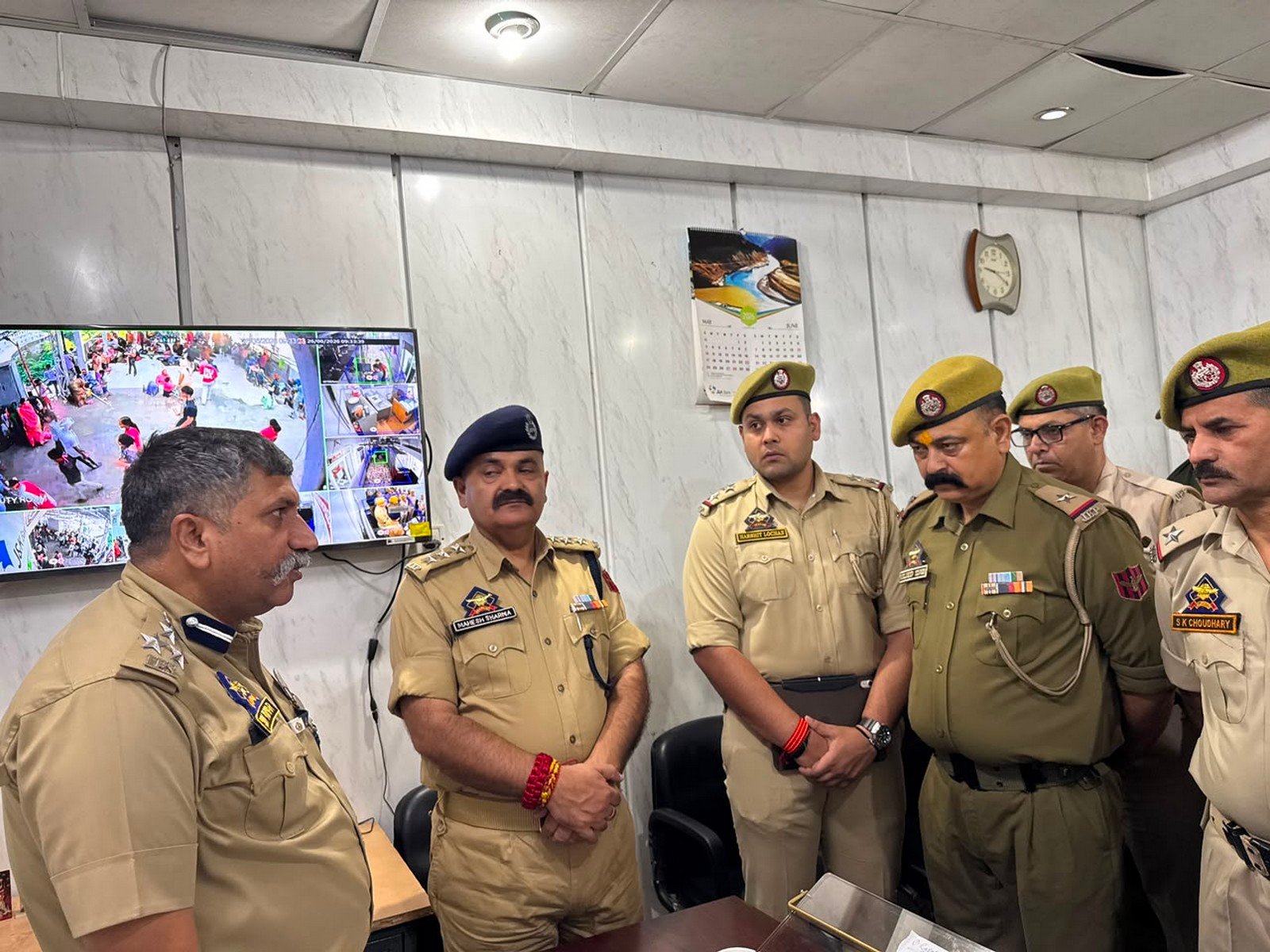
Katra, Jammu and Kashmir, June 26 (ANI): A high-level Vaishno Devi Yatra security review meeting was chaired by Deputy Inspector General of Police (DIG) Shiv Kumar Sharma, Udhampur-Reasi Range, in Katra on Friday to strengthen safety arrangements for devotees and ensure smooth pilgrimage operations ahead of SANJY 2026.
The meeting focused on enhancing security deployment, surveillance systems, crowd control measures, and inter-agency coordination across the entire Shri Mata Vaishno Devi Yatra route, as authorities prepare for an expected rise in pilgrim footfall.
Senior officers from the Jammu and Kashmir Police, Army, CRPF, Intelligence Bureau, CID, Railways, Traffic Police, and the Shri Mata Vaishno Devi Shrine Board participated in the Vaishno Devi Yatra security review, discussing operational readiness and security upgrades.
Strong Security Grid and Surveillance Plan
During the Vaishno Devi Yatra security review, officials presented a detailed security grid covering Katra town, the yatra route, and the Holy Shrine at Bhawan. CCTV surveillance systems, monitoring mechanisms, and emergency response setups were reviewed to ensure continuous tracking of movement along the pilgrimage path.
The DIG stressed the importance of strengthening surveillance in vulnerable and hilly terrain areas, including ridges and forest zones surrounding the route. Security forces were directed to maintain strict vigilance and improve real-time monitoring capabilities.
Focus on Sensitive Zones and Deployment Strategy
A major highlight of the Vaishno Devi Yatra security review was the assessment of high-risk and sensitive zones. The DIG instructed security personnel to intensify patrolling at strategic heights and vulnerable locations to prevent any security breach.
Deployment along the entire Katra–Bhawan route was carefully reviewed, ensuring adequate manpower at all critical points. Officials were also asked to enhance area domination exercises and maintain constant presence in isolated stretches.
Crowd Management and Emergency Preparedness
With increasing pilgrim numbers expected, crowd control emerged as a key priority in the Vaishno Devi Yatra security review. Authorities discussed strategies to regulate pilgrim flow, prevent overcrowding, and avoid emergency situations such as stampedes.
Random checkpoints, vehicle inspections, and queue management systems were reviewed to improve overall safety. Emergency response teams, medical support units, and communication systems were also evaluated for readiness.
Inter-Agency Coordination Strengthened
The Vaishno Devi Yatra security review emphasized seamless coordination between multiple agencies, including police, paramilitary forces, intelligence units, and shrine authorities. Officials agreed to strengthen intelligence sharing and ensure faster response to any threat.
Joint patrols by J&K Police and CRPF, along with activation of Village Defence Guards in sensitive areas, were also discussed to enhance ground-level security.
Accommodation and Infrastructure Checks
Authorities also reviewed the security and registration of hotels, lodges, guest houses, and homestays in Katra. The Vaishno Devi Yatra security review stressed strict monitoring of accommodation facilities to ensure pilgrim safety and prevent unauthorized activities.
Traffic management, parking arrangements, and inspection systems were also discussed to ensure smooth movement of devotees during peak seasons.
Commitment to Safe Pilgrimage
Concluding the meeting, DIG Shiv Kumar Sharma reaffirmed that ensuring devotee safety remains the top priority of the Vaishno Devi Yatra security review. He directed all agencies to remain alert, improve coordination, and maintain high operational readiness.
The meeting concluded with a collective commitment from all stakeholders to provide a secure, peaceful, and well-managed pilgrimage experience for devotees visiting the Shri Mata Vaishno Devi Shrine ahead of SANJY 2026.
Vaishno Devi Yatra Security Review: Multi-Agency Strategy Strengthened to Ensure Safe Pilgrimage Ahead of SANJY 2026
Katra, Jammu and Kashmir, June 26 (ANI): The administration has intensified preparations for the upcoming pilgrimage season as a detailed Vaishno Devi Yatra security review was conducted under the leadership of Deputy Inspector General of Police (DIG) Shiv Kumar Sharma, Udhampur-Reasi Range, in Katra on Friday.
The high-level review focused on strengthening the overall security architecture for the Shri Mata Vaishno Devi Yatra, which witnesses millions of devotees every year. With SANJY 2026 approaching and an expected surge in pilgrim footfall, authorities emphasized a proactive, technology-driven, and coordinated security approach.
Senior officers from multiple agencies, including Jammu and Kashmir Police, Army, CRPF, Intelligence Bureau, CID, Railways, Traffic Police, and the Shri Mata Vaishno Devi Shrine Board, participated in the Vaishno Devi Yatra security review, ensuring a unified operational strategy.
Detailed Assessment of Yatra Route Security
During the Vaishno Devi Yatra security review, officials carried out a detailed assessment of the entire pilgrimage route from Katra base camp to Bhawan. The focus remained on identifying gaps in deployment, improving response time, and ensuring uninterrupted surveillance across critical stretches.
The DIG directed that security arrangements must remain dynamic and adaptive, especially in areas prone to congestion or difficult terrain. Special emphasis was placed on ensuring that all entry and exit points are fully monitored and reinforced with adequate personnel.
Officials also reviewed night security operations, ensuring continuous patrolling and illumination along the track to prevent any untoward incidents during low-visibility hours.
Technology Integration and Surveillance Expansion
A key highlight of the Vaishno Devi Yatra security review was the integration of advanced surveillance technologies. Authorities reviewed the functioning of CCTV cameras, drone monitoring systems, and centralized control rooms to ensure real-time situational awareness.
The DIG emphasized upgrading surveillance infrastructure in remote and high-altitude zones where traditional monitoring is difficult. Plans for expanding camera coverage and improving connectivity in blind spots were also discussed.
Security agencies were instructed to enhance coordination between field units and control rooms so that intelligence inputs can be acted upon without delay.
Strengthening High-Altitude and Forest Area Security
Given the geographical complexity of the region, the Vaishno Devi Yatra security review placed strong focus on high-altitude ridges, forest patches, and narrow pathways along the route. These areas were identified as sensitive zones requiring intensified monitoring.
Security personnel were directed to increase foot patrols and maintain strategic positioning at dominating heights. The deployment of quick response teams was also reviewed to ensure rapid intervention in case of emergencies.
Officials highlighted the importance of terrain-specific training for deployed personnel to improve operational effectiveness in challenging environments.
Crowd Regulation and Pilgrim Flow Management
With rising pilgrim numbers expected during peak seasons, crowd regulation remained a central agenda of the Vaishno Devi Yatra security review. Authorities evaluated measures to streamline movement at key junctions, resting points, and entry gates.
Plans for improved queue systems, holding areas, and staggered movement of devotees were discussed to avoid overcrowding. The administration also stressed the importance of clear signage and real-time communication with pilgrims.
Special attention was given to emergency evacuation routes and ensuring that these pathways remain unobstructed at all times.
Emergency Response and Medical Preparedness
The Vaishno Devi Yatra security review also focused on strengthening emergency response systems. Medical aid centers along the route were assessed for staffing, equipment availability, and response time efficiency.
Officials reviewed the deployment of ambulances, first aid units, and disaster response teams to ensure immediate assistance during health emergencies or accidents.
Communication systems between base camps, control rooms, and field units were also evaluated to ensure uninterrupted coordination during critical situations.
Intelligence Sharing and Inter-Agency Coordination
A key outcome of the Vaishno Devi Yatra security review was the reinforcement of intelligence-sharing mechanisms among various agencies. The DIG stressed the importance of real-time information exchange to prevent any potential security threats.
Joint coordination between Jammu and Kashmir Police, CRPF, Army units, and intelligence agencies was strengthened to ensure unified command and control during the pilgrimage season.
Village Defence Guards were also integrated into the broader security framework to support ground-level surveillance in vulnerable areas.
Infrastructure Checks and Accommodation Safety
Authorities also conducted a detailed review of accommodation facilities in and around Katra. Hotels, lodges, guest houses, and homestays were inspected to ensure compliance with safety regulations and proper registration protocols.
The Vaishno Devi Yatra security review emphasized strict monitoring of visitor records and ensuring that all lodging facilities adhere to security guidelines.
Traffic movement, parking management, and entry control systems in the town were also reviewed to ensure smooth flow of pilgrims and prevent congestion.
Commitment to Safe and Peaceful Yatra
Concluding the session, DIG Shiv Kumar Sharma reiterated that ensuring the safety of devotees is the highest priority of the Vaishno Devi Yatra security review framework. He urged all departments to remain vigilant, proactive, and fully coordinated throughout the pilgrimage season.
The meeting ended with a collective assurance from all participating agencies to maintain a secure, peaceful, and well-organized pilgrimage experience for devotees visiting the Shri Mata Vaishno Devi Shrine ahead of SANJY 2026.
About The Author